What will the BNR decide today? Isărescu stands between the two Romanias: one with high inflation and the other in recession

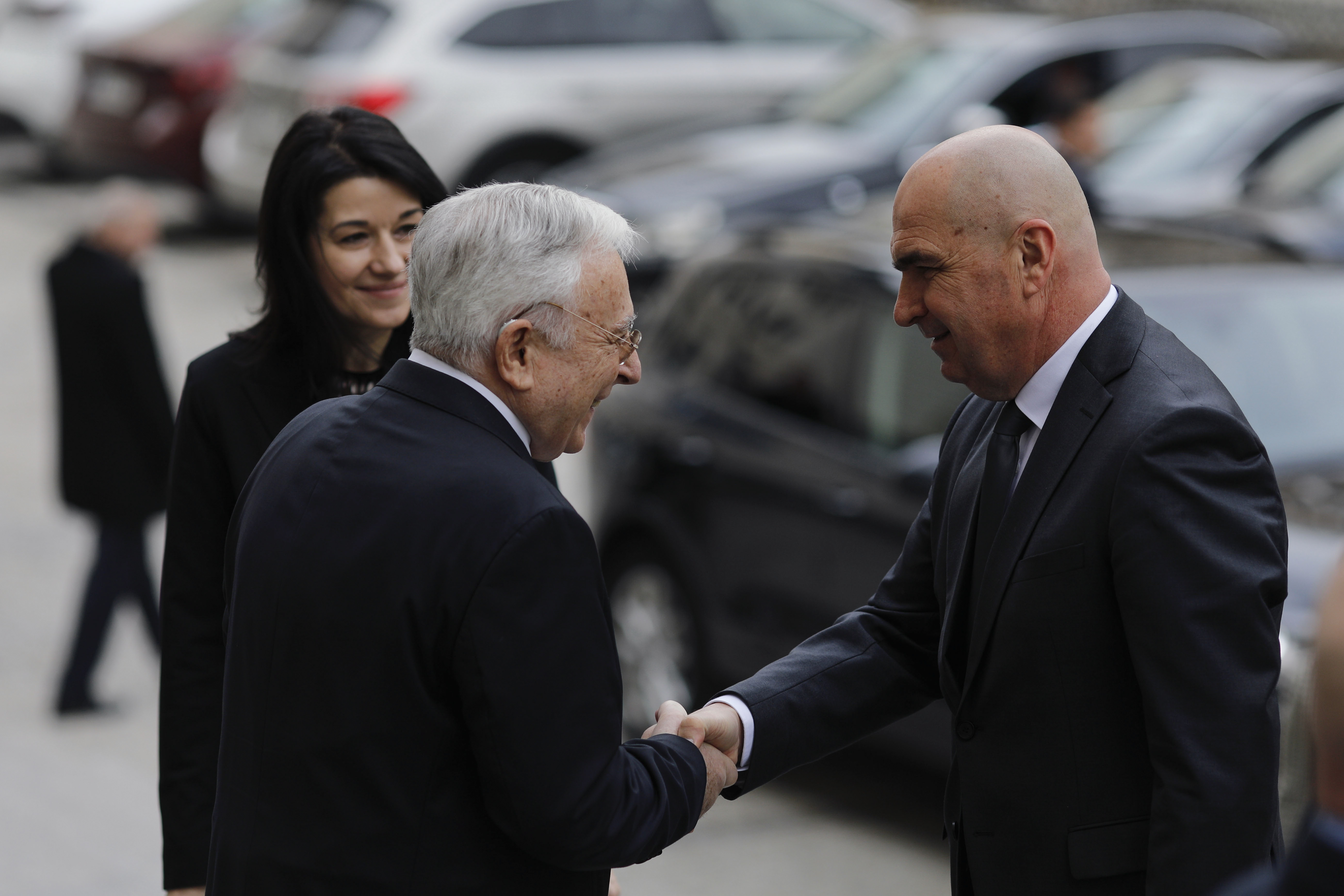
On Tuesday morning, the Board of Directors of the National Bank will once again sit around the huge table in the Board Room, with the decision already in mind. At 15:00 the official communiqué will arrive. On paper, the decision looks trivial: the key rate will remain at 6.50%, where it has been stuck since mid-2024. In reality, the February meeting is not about a number. It is about the message that the Governor will give.
When they climb the stairs to the elegant Boardroom, with furniture ordered in Paris in the style of Louis XVI, the 9 members of the BNR's Board of Directors have already set in their minds which of the proposed scenarios would be the best for the economy.
The meeting of the Board of Directors, led by the Governor, begins in the hall. It is discussed on the side of the analyzes with which the 9 luminaries have become familiar. Sometimes, Isărescu states his point of view from the beginning, but most of the time he keeps it for the end of the debates. Each member of the CA motivates his option for one of the scenario variants proposed by the Monetary Policy Committee.
The central bank must decide whether to talk more about inflation — or about the economy's weakness — on Tuesday. And about how much Mugur Isărescu can afford to open the door to a future relaxation cycle, without losing control over the expectations of people and companies.
If Isărescu were to increase the interest rate today, it would make credit more expensive, and companies and the population would find it even harder to borrow, practically deepening the recession, although it would help on the inflation side.
If they lowered the interest rate, it would make money easier to access, but that would lead to higher inflation, which is the last thing the Governor would want right now.
So it will more than likely maintain the current key interest.
Today's decision: rate remains, but forecast changes, experts say
BCR, for example, expects the BNR to keep the interest rate unchanged, in line with the analysts' consensus: 6.50%.
But the real stake is different: at this meeting, the NBR approves the Quarterly Inflation Report, with a forecast that they will probably update, after January's inflation exceeded expectations.
BCR anticipates that this forecast will be revised slightly upwards in the short-to-medium term, with a more visible adjustment for core inflation – the component that, in recent months, has “consistently surprised the central bank on the rise”, as BCR economists note in a note sent to investors on Monday.
In other words: even if headline inflation appears to be “standing still,” what's happening inside the basket—services, wage pressures, inertia—continues to show a fragile disinflation process.
Inflation: 9.6% and an inconvenient truth
January brought a number that the BNR cannot ignore: inflation is 9.6%, slightly above market expectations. The surprise comes from natural gas prices, which fell much less than expected.
ING, however, sees another “culprit”: water and sewage bills, which increased by 9.1% monthly and which, in 2026, also have a greater weight in the CPI basket (2.8% compared to 2.2% last year).
But both banks are essentially saying the same thing: January's high inflation is not a sign that the economy is overheating. It is a sign that Romania still lives in the world of administered price increases, supply shocks and taxation.
BNR is not only fighting with prices. They struggle with the calendar
Beyond the numbers, the BNR has a time problem.
BCR says inflation remains “largely supply-driven” and linked to fiscal consolidation. At the same time, the central bank has to decide whether to wait for the indirect tax shock to “get out of the statistical base” — or whether to start easing earlier.
Why does this matter?
Because in Romania, interest is not just an economic tool. It is a political, social and psychological signal.
A reduction too soon can be interpreted as weakness in the face of inflation, a “gift” to the government, or an attempt to stimulate an economy that has entered a technical recession
ING: the economy is already contracting. The BNR must change its tone
If the BCR is talking about “prudence”, ING is talking about “reality” and says the data shows that the economy is already facing a notable contraction, after weaker than expected GDP.
This matters enormously, because an economy that slows down sharply should, over time, become an ally of disinflation.
ING says that the BNR could operate the first interest rate cut in May. The difference between the two banks' estimates is that, while BCR sees a cumulative easing of 125 basis points in 2026 (taking the rate to 5.25% at the end of the year), ING sees a total easing of 100 basis points in 2026.
Their message is the same: Romania could enter a cycle of interest rate cuts — only if the BNR gets the “strong conviction” that disinflation is irreversible.
This is where Isărescu enters the scene: the man who never says “yes”, but also “no”
Those who have been following Mugur Isărescu for years know one thing: he is not the governor of spectacular decisions. It is the governor of the phrases that are read between the lines.
His “political” messages are delivered through allusions, metaphors and ironies, actually addressed to the Government and Parliament, not just journalists.
The press has noted for years that many conferences are, in reality, open letters to decision-makers: “The NBR has done its homework, now the ball is in the Government's court”, “money has lower and lower returns, be very careful how you use it”, “let's do our homework with the reforms, otherwise we will move away from the euro zone”.
Examples of “subtext messages”. When he criticizes populist fiscal policies, Isărescu does it apparently technically (“pay attention to the dosage of consumption stimulation”), but not infrequently with sharp inserts – “propaganda for two money”, “forget who gives us advice”.
Regarding the exchange rate or interest rates, he avoids categorical statements, but slips in memorable formulations (“to drop the euro below 5 lei? There's no way!”), signaling to the markets more than he can write in an official statement.
Why is he forced to speak like that? The BNR is independent and “does not give or receive advice”. In practice, the governor must issue warnings about the dangers of rising wages, taxes and deficits without seeming to enter the political fray.
The result: a style of speech in which the numbers are official, but the “mass punch” is masked in metaphors, jokes, ironies – perfect to be decoded by insiders, but ambiguous enough not to cause direct political crises.