The European Union through the eyes of Poles. We see the benefits, but we do not hide our concerns [SONDAŻ]


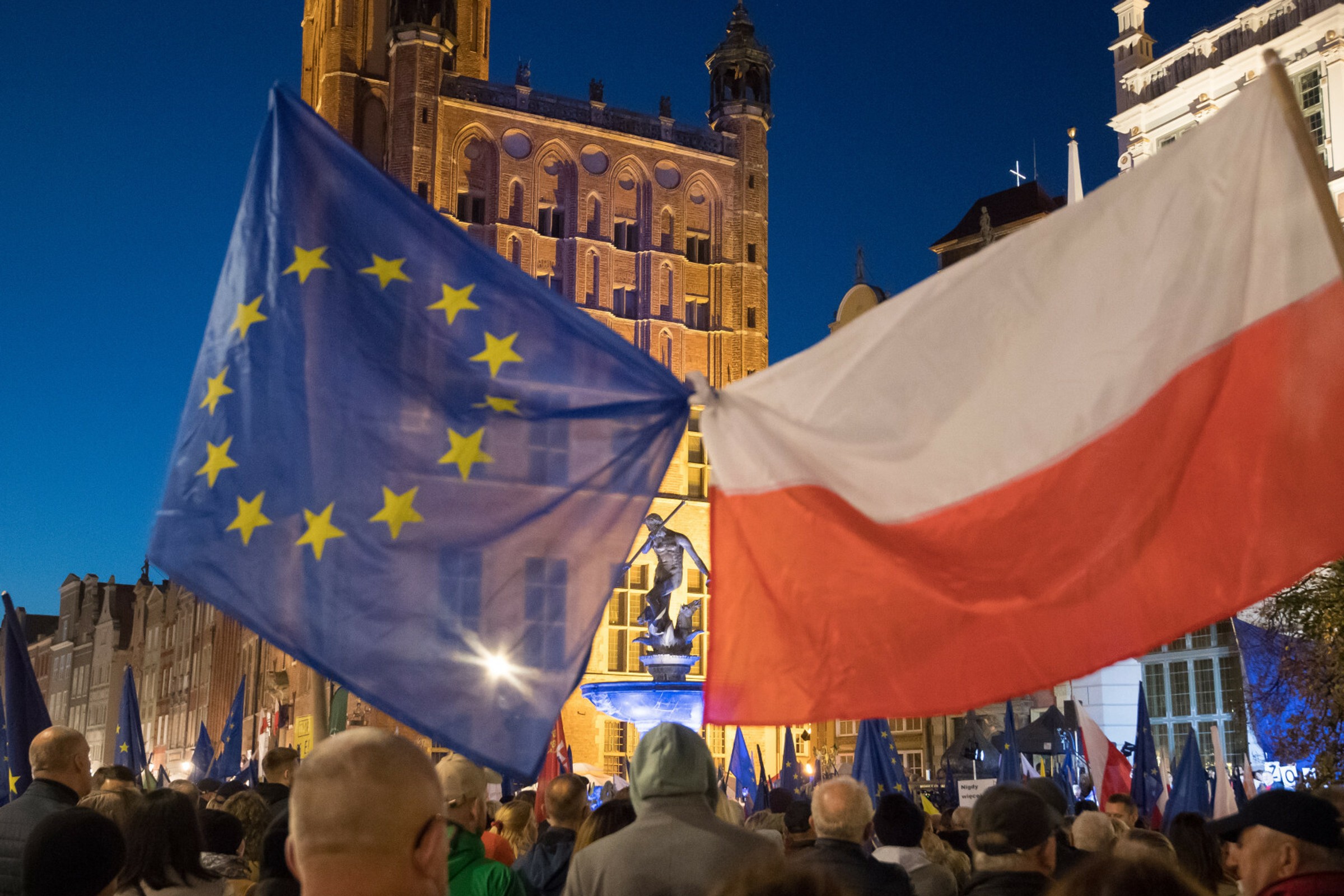
In the survey, CBOS asked respondents about issues related to European integration, including: for support for Poland's membership in the European Union, assessment of its effects, expectations regarding the direction of changes in the EU and attitude towards a possible Polexit.
82 percent respondents declare their support for Poland's membership in the European Union, 14% are against it. respondents. According to CBOS, the highest level of approval for Poland's membership in the EU was recorded in June 2022, when the percentage of its supporters reached 92% and the percentage of opponents was 5%.
What are Poles' main concerns about the EU?
How many percent of Poles support EU membership?
What benefits do Poles mention from EU membership?
What do Poles think about the agreement with Mercosur?
As noted by CBOS, the attitude towards membership is differentiated to the greatest extent by socio-economic status: support for presence in the EU is supported by higher status, higher education, high level of income per capita and – above all – satisfaction with the financial conditions of the household.
Poland in the European Union. These groups contain the most Eurosceptics
Relatively most opponents of membership are among people with basic vocational education (20%) and skilled workers (27%), respondents with monthly income per capita below PLN 2,000 (24%) and those who assess their standard of living poorly (26%). CBOS points out that one of the groups with a relatively high percentage of opponents of EU membership (26%) in the January survey are business owners, who are better-than-average well-off and educated people.
However, CBOS points out, the attitude towards EU membership is determined primarily by political orientation. 97 percent respondents identifying with the left and 86 percent defining their views as centrist, supports membership in the EU. People declaring right-wing political views have a less favorable attitude towards membership in the EU – 67% of them support it. of them, and to its opponents – every fourth.
For 60 percent respondents, Poland's presence in the EU brings more benefits to our country than losses. 21 percent believes that the opposite is true: Poland loses rather than gains from EU membership. 15% of respondents are convinced that both the positive and negative effects of Poland's membership in the EU are balanced. subjects.
As CBOS points out, the personal effects of membership are less clearly perceived, although also in this case positive assessments predominate (53%). 17% of people see losses rather than benefits related to membership in the EU. 21 percent tends to believe that he personally gains as much as he loses from his presence in the EU.
Poland's membership in the European Union. Benefits and concerns
According to the CBOS survey, the main benefits of Poland's membership in the EU include: open borders and freedom of travel (73%), freedom to work within the EU (49%), the possibility of using EU funds (47%) and improvement of infrastructure in the country (52%). Other advantages include: increased country security, economic development and benefits for agriculture and farmers. 3 percent does not see any benefits from Poland's presence in the EU.
The survey shows that the belief in the limitation of our country's sovereignty due to EU membership has weakened compared to previous years. Currently 38 percent respondents believe that EU membership limits Poland's sovereignty and independence too much, and 50 percent no worries about that. For comparison, in 2024 this belief was expressed by 44 percent. respondents, and 43 percent didn't see it as a threat.
Respondents could specify their concerns about limiting Poland's sovereignty in open questions. The answers mainly concerned agriculture and agricultural policy, environmental and climate protection, as well as the related energy transformation. Respondents are also afraid of the collapse of companies and entire industries. The signing of the agreement with Mercosur, restrictions related to the justice system, migration policy, and cultural values and standards were also critical.
European Union. Mercosur is a reason for Poles' concerns
The signing of a trade agreement between the European Union and the Mercosur bloc was spontaneously pointed out as an example of limiting Poland's independence. 56 percent respondents are against this agreement, and 16 percent supports her. 13 percent they have no opinion on this topic, while 15 percent respondents had not heard of such an agreement. According to the survey, the mentioned free trade agreement has more opponents than supporters in all socio-demographic groups.
CBOS research shows that although support for Poland's EU membership has remained high for years, its opponents have recently increased. This corresponds to changes in expectations regarding the future of the Union, which prove the polarization of attitudes towards the development of European integration.
As noted, in studies from 2017–2022, the percentage of supporters of deepening integration ranged from 35%. to 41%, significantly higher than the percentage of those supporting limiting it and increasing the role of nation states or even leaving the EU (a total of 16% to 19% depending on the survey).
Currently, the percentage of supporters of deepening integration is slightly lower (26%) than the percentage of those calling for an increased role of nation states or Poland's exit from the EU (28% in total). Despite increasing skepticism towards the development of civic integration, support for Polexit remains low (5%). The largest group (32%) are people who support maintaining the current state of integration. 6 percent considers the best solution to be the creation of a “multi-speed Europe”, in which some countries cooperate more closely than others.
Polexit is back in the public debate
CBOS also pointed out that although the percentage of supporters of Poland's exit from the EU is small, the topic of Polexit returns in the public debate and on social media.
Therefore, study participants were asked about the possible consequences of implementing this scenario. For 62 percent respondents would be rather negative, 9%. sees the benefits associated with it. The majority of respondents' answers indicate that the hypothetical results of Polexit would include: less security for Poland (64%), worse development (62%), or a weakening of our country's position on the international arena (58%).
The study was carried out from January 8 to 20, 2026 on a sample of 938 people (including: 55.5% using the CAPI method, 26.4% – CATI and 18.0% – CAWI)