Houses up to 150 sqm, without authorization. The new Urbanism Code arouses waves of criticism


The new Urbanism Code, which enables rural land owners to build houses of up to 150 square meters without a building permit, has provoked wide reactions from specialists in construction, architecture and even real estate and business lawyers.
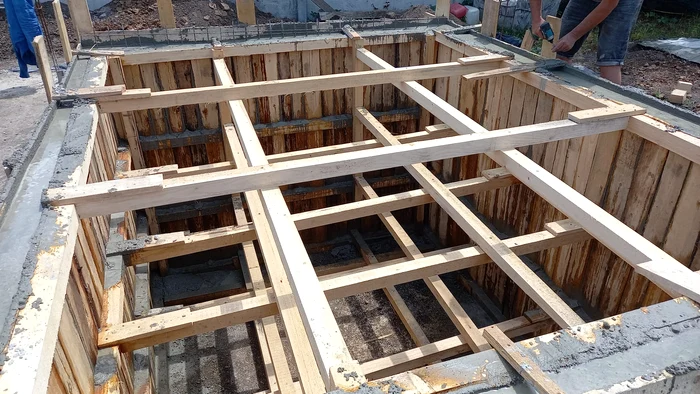
Houses of up to 150 square meters will be able to be built without authorization in the countryside. The Truth photo
The specialists consulted by “Adevărul” declared that the reduction of bureaucracy is welcome, but with it comes a series of risks.
Architect: Everyone will build by ear
“From a designer's point of view, constructions with a low degree of importance, i.e. annexes (garages, sheds, animal stables, etc.), can be built without a building permit. However, the problem is different when building a flag boarding house or an individual home. In 150 square meters, you can make a P+1E home. Building “by ear” a ground floor or ground floor + 1 floor building is a risk assumed by the beneficiary. From a builder's point of view, the situation can be “strange” to say the least. He will be faced with the fact of having nothing to build, in the absence of a technical project, and he will have to make an effort of imagination and build according to what the beneficiary “tells” him. Leaving aside the specific characteristics of the actual execution process — concrete pouring, formwork execution, the minimum percentage of reinforcement, the times required for the concrete to set, the machining of metal elements, etc. — all these processes will be done empirically by the “village craftsman”, which can be wrong in many cases. In conclusion, if you make a pig shack or a garage for Dacie, it goes without a project. But if you have proposed to make an agrotourism guesthouse where you will accommodate tourists, the risk is rather high. Surely this measure will lead to a real estate boom. But unfortunately of poor quality. Everyone will build according to their ear!”said for “Adevărul” Petrică Răzvan Oancea, architect.
Construction Expert: It's a double-edged sword
Asked what he thinks about the elimination of the mandatory construction permit for houses built in rural areas, construction expert Sorin Lăpădatu told “Adevărul” that the measure is a double-edged one.
“I think the idea of simplifying the building process in rural areas is a good one in principle, but it needs to be done very carefully. Completely removing the permit for houses up to 150 m2 would be a double-edged measure. On the one hand, it is clear that people in the villages are often discouraged by the bureaucracy and costs, many just want to build a decent house on their land, without running into months of paperwork and approvals days. On the other hand, the lack of any technical control can lead to unsafe constructions, wrong locations or even legal problems between neighbors.
I would go for a balanced solution: a simplified authorization, to be done quickly, digitally, and based on self-declaration, not on the complete waiver of the rule. In addition, the state could provide verified prototypes for small and medium-sized houses, so that people can build safely without paying for complex projects. In this way, we would have real rural development, but without urban chaos.
In essence, Romania needs less bureaucracy, but not less responsibility. Urbanism is not a fad, it's a framework that protects communities and ensures that what we build today will be sustainable and safe tomorrow.” the construction expert stated.
Real estate lawyer: The measure comes with a lot of risks
The measure comes with a lot of risks, said Elisabeta Stan, a lawyer specialized in real estate.
“The new proposal that allows the construction of a house in the village, of up to 150 square meters, without a building permit, but only on the basis of a notification to the town hall and a project made by a specialist, presents both advantages, but also important risks”she pointed out.
On the positive side, the lawyer explained, the measure significantly simplifies the procedure: people will no longer waste months with approvals, studies, projects and authorizations, and administrative costs decrease. “Basically, whoever has a plot of land, makes a project and respects the urban planning rules will be able to start construction”Stan told “truth“.
“On the other hand, the lack of authorization can lead to problems with neighbors regarding the distances, alignments and access to the road and to constructions made without complying with the essential legal and technical conditions – for example without a geotechnical study or without checking the connections to the utilities. That means a real risk of non-compliant homes, which can cause damage and litigation. Currently, many people from rural areas build without authorization, considering the procedure cumbersome and expensive. By implementing this simplified procedure, the Urbanism Code has the possibility to legalize an already existing reality, but it is mandatory to do it in a controlled and responsible manner. In this sense, I appreciate that it is essential that the town halls keep a public register of the notifications and projects carried out and also establish a procedure to verify the compliance of the constructions carried out with the submitted project, so that the construction can be correctly registered in the land register. Without these safeguards, the risk is that the good intention – that of encouraging legal construction in the countryside – turns into urban sprawl and serious long-term problems. These provisions are contained in a draft law on the Urbanism Code, which is currently under debate in the Chamber of Deputies and do not represent legal provisions applicable at this time. Consequently, the final form of the law may undergo significant changes until the moment of publication in the Official Gazette“, explained the lawyer.
According to her, there are situations when the construction of an illegal construction can be classified as a crime if the house is built in the protection zone of a utility network.
Business lawyer: Rights come with a series of obligations
“The legislator understood that time has no more patience with the authorities and regulated the administration's silence as an administrative “yes”. However, the responsibility assumed by the designer should not be underestimated, which could translate into higher professional fees borne by the beneficiary“, lawyer Dumitru Lazăr declared for “Adevărul”.
According to him, the main advantage is the reduction of waiting time and administrative costs for constructions smaller than 150 square meters. By applying the “permit by notification” system, citizens will be able to build faster, and municipalities will free human resources from a bureaucratic process that often consumes more energy than the value of the project itself.
The new procedure could encourage a culture of professionalism, where the architect and designer become quasi-guarantors of legality and safety, but if the design is flawed or the execution of the works deviates from the plans presented to the authorizing authorities, the liability can be a costly one.
“Therefore, in the first years after the entry into force of the provisions discussed in this article, the competent authorities in work safety and construction quality should have an intense activity with the aim of educating the beneficiaries of the simplified procedure and sending a clear message – rights come with obligations, and the safety of citizens cannot be affected”explained Dumitru Lazar.
In conclusion, he added, the new Urbanism Code, currently under parliamentary debate, promises a reform of the relationship between the citizen and the administration: less paper, more responsibility. “If implemented correctly, this change could mean the end of unnecessary red tape for small houses and the beginning of an administrative normality based on trust and professionalism.” the lawyer declared for “Adevărul”.
Cseke Attila: The City Hall decides
The Minister of Development, Cseke Attila, provided details on the new construction rules.
“In this Urban Planning Code there are some simplification mechanisms on the part of executing these investments. There are some simplifications related to the procedure that must be followed for these types of investments. For summer kitchens, garages or annexes that do not exceed 20 square meters, the need for the existence of a project is kept, but the procedure will be simplified, in the sense that a construction permit is no longer needed”explained Cseke Attila, stating that the local authorities are not excluded from the decision-making process, but, from the submission of the project, they will have a period of 15 days to respond if the construction requires authorization.
“If the town hall does not respond within this interval, the beneficiary can start the work. Not to mention the pile of documents so far“, the official added, emphasizing that this is also valid for local communities, specifically, rural communities, for residential houses up to 150 square meters, single-family for own housing, not for sale, on one level, without overstory, based on a project submitted to the town hall.
“If the mayor's office considers that the work can go ahead, then the investment can begin. It is a model that we take from other parts, without removing a certain control of the local community” Cseke Attila also said.
The draft of the new Urbanism Code is currently under debate in the Chamber of Deputies.
The rural environment, to which the minister refers, includes the spaces outside the cities, characterized by a lower population density, predominating in settlements such as villages and hamlets.