16 February 17:40
Researchers from Novosibirsk State University used computed tomography to study the skull of a woman from Pazyryk burials.
The tomograph made it possible to virtually “delete” mummified soft tissue and create an accurate three-dimensional model of the skull, reports Om1 Novosibirsk. It turned out that during her lifetime the woman received a serious injury: the right temporal bone was depressed to a depth of eight millimeters, which led to the complete destruction of the temporomandibular joint. As explained by Doctor of Medical Sciences Andrei Letyagin, such damage should have deprived the patient of the ability to speak and eat normally.
Two perfectly even channels with a diameter of just over one and a half millimeters, drilled at right angles to each other, were found in the bone. Inside, there are remains of elastic material – presumably horsehair or tendon, which served as a surgical ligature, stabilizing the damaged joint.
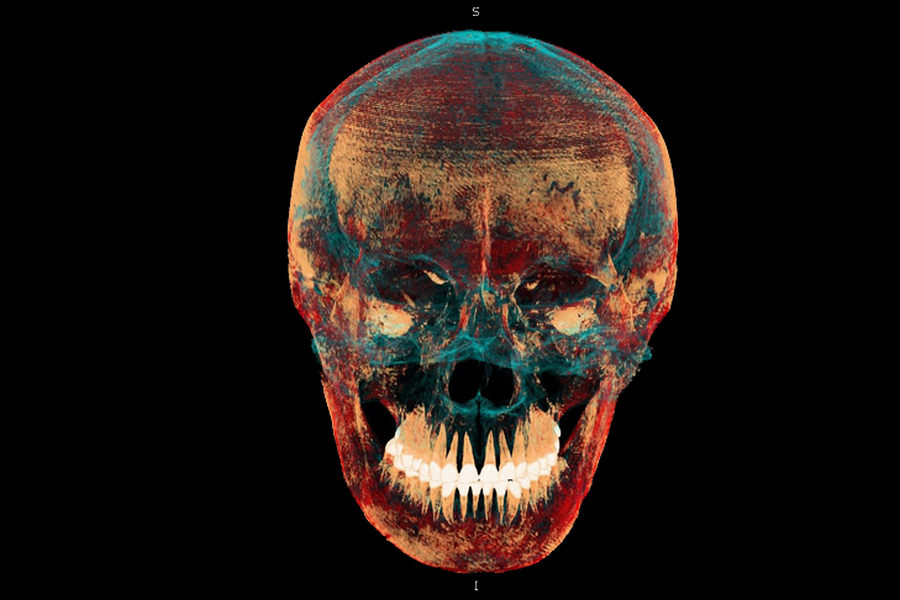
A bone ring-like seal formed around the holes – a sure sign that after the operation the woman lived for many more years. This is indirectly confirmed by the teeth: on the injured side they were almost undamaged, but on the healthy side they were worn down almost to the roots due to the fact that the entire chewing load had to be transferred to the left jaw.
Scientists suggest that the Pazyryk people developed surgical skills thanks to the tradition of mummifying the dead – this required deep knowledge of anatomy. Moreover, in the harsh conditions of the Altai Mountains, where communities were small and every person counted, life was especially highly valued.
The woman was about 25-30 years old at the time of death. She was buried with honor – in a massive wooden frame, which in a treeless area required enormous efforts from her fellow tribesmen.
Newslab is now at MAX. News is also published in OK | VK | Zen | Telegram
Related links:
- Archaeologists have explained why the first inhabitants of Siberia rarely hunted mammoths
- “Evidence of a winter tragedy”: medical experts will show the faces of the first settlers of the Krasnoyarsk prison and reveal the cause of their death