The country that “cuts” from highways to invest in railways – the road from the “pie line” to tunnels tens of kilometers long

Switzerland is not discovering the railway in 2026, nor is it reacting to a momentary crisis. The country has been investing in trains as far back as 175 years ago and, perhaps more importantly, plans for them decades in advance. From lines considered crazy at the end of the 19th century, to record-breaking tunnels in the Alps, Switzerland has always treated the railway as a basic infrastructure, and not as an “appendix” to the road.
The Swiss executive recently announced the extension of the rail network until 2045 and the abandonment of more than 30 road projects. It's not a change in direction, but a natural continuation of a strategy that works.
Switzerland has the longest tunnel in the world, has the densest rail network, excels at punctuality and also has one of the most famous electric train manufacturing companies. In Switzerland, in 2026 decisions made a century ago still influence train travel for the better.
The Swiss Executive (Federal Council) presented the main plans to expand Switzerland's transport network for the next 18 years, with a focus on increasing rail capacity and reducing pressure on the main highways. It is also proposed to abandon some road projects, and a public consultation is to be launched in June, swissinfo.ch writes.
In the rail sector, the Federal Council (Le Conseil fédéral) wants to improve the connection between Biel, Lausanne and Geneva by 2030. By 2035, the aim is to introduce trains every 15 minutes between Zurich and Bern, as well as trains every 30 minutes on the Bern–Lucerne and Basel–Zurich lines. Regional lines would switch to half-hourly staggered timetables.
As for the highway network, the Federal Council wants to prioritize projects that can be done a little faster, and a section of the A1 will be widened to six lanes. Not all highway projects will be cancelled, but only a part.
Switzerland, from the “pie line” to rail excellence
Switzerland currently has one of the most efficient railway networks and is number 1 in Europe in terms of population to number of train journeys. The red trains and fantastic alpine scenery are famous, and it's no wonder that over 25 years ago there were TV channels broadcasting hours of footage of Swiss trains.
Switzerland is out of this world if we look at the data on delayed trains. Last year was a new record, with 94 percent of trains being on time, and on the best day, 99 percent of trains arrived on time, official data shows. A punctual train (by Swiss standards) is one that arrives at its destination less than three minutes late. The worst year in recent history was 2021 with a 92% punctuality rate! The SBB company also has a page where problems in the network are announced in real time.
In 2024, in Romania, passenger trains were delayed 6.6 million minutes
For Romania we do not have precise percentage data for delays, but the CFR SA documents indicate for 2024 total delays of 6.6 million minutes for 2024 for passenger trains, a 40% increase compared to 2023. As a curiosity, there are no direct trains from Romania to Switzerland, but if someone wanted to go by train from Bucharest to Zurich it would take 26 hours (with a change in Vienna).
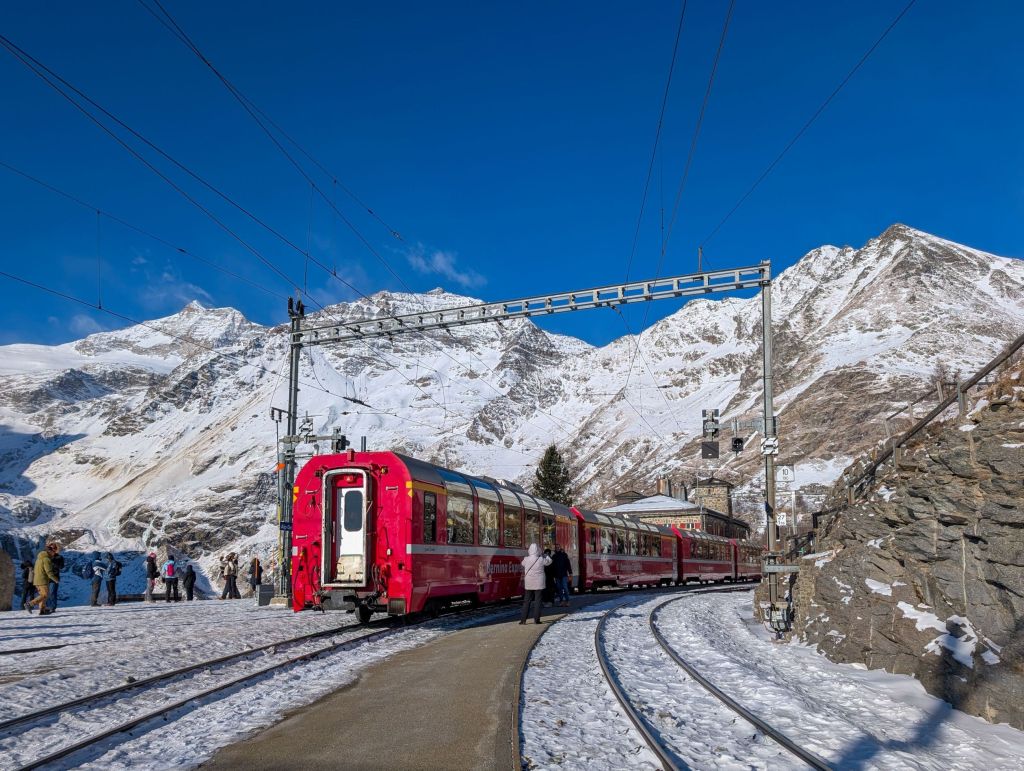
Any list of the world's most beautiful railways includes a few from Switzerland, such as the Glacier Express (290 km between St Moritz and Zermatt) and the Bermina Express (150 km between Chur and Tirano, Italy).
Performance costs, but also reflects service quality. In the “Land of the Cantons” they are also among the most expensive train tickets in Europe, along with countries such as Great Britain, Norway, France and Austria. An example: trains take 3 hours on the 279 km between Geneva and Zurich, and a ticket bought before the trip is 80 euros. However, the Alpine state also has an annual subscription valid for almost all means of public transport in the country (it costs the equivalent of 4,400 euros).
It is important to note that Switzerland also has a complicated relief for the construction of railways, but the country overcomes all obstacles through long tunnels, through cogwheel trains and through electrification that began more than 125 years ago.
The first railway line in Switzerland was built in 1847 between Zurich and Baden and was “nicknamed” the “Spanisch-Brötli bahn” because the “hand-holding” people of Zurich sent their servants to bring them the pies called brötli from the town of Baden bei Zurich.
They finished the electrification when Romania had just started it
If in other European countries the development of the railway network was dictated by industrial needs (for example, the first railways connected large cities with ports, mining operations or other important industrial places), in Switzerland tourism played an important role. In 1863, when the British Thomas Cook brought the first group of tourists, Switzerland was not doing well compared to its neighbors, having only 650 km of railway.
Switzerland has almost the entire network electrified (99.8%), while Romania is around 38%, and the EU average is 57%, according to data from the European Commission.
Switzerland started the electrification of the network since the end of the 19th century and finished it in 1960, when Romania had just started (in 1960 the first pole was installed in Predeal station, and electric trains have been running between Brașov and Predeal since 1965). In 2016, Switzerland also finished the construction of the Gotthard Base tunnel (57 km), after 17 years of work and without exceeding the budget of 12.5 billion dollars. Through this tunnel, the test trains reached 275 km/h.
The first electrified line was opened in 1899, being the first line of this type in Europe. The distance was 41 km, and the maximum speed, 36 km/h. Between 1900 and 1920, the Swiss also laid catenary on very complicated lines in the Alps, at a time when other large countries had no such plans even on paper.
Visionaries on rails, since over 100 years ago
But why was it decided that this ultra-modern “treatment” should be applied to the entire network? One reason is that there was a severe coal crisis during the First World War and Switzerland realized that steam locomotives were not viable in the long term, only electrification was worth doing. Given the many mountain stretches, steam locomotive operation was not viable, there was a smoke hazard in the tunnel, and the steepest slopes were difficult to climb.
Electrification was a strategic, state decision, a very long-term one, and after it was decided that there would be an extensive electrification of the grid, this actually happened, regardless of who was in power. Not a plan was left unfulfilled.
In their style, the Swiss meticulously calculated everything and it was clear that electric traction was more efficient in the long run, operating costs were much lower than if diesel locomotives had been used. Electric locomotives can haul much longer and heavier trains through the network full of tunnels and mountainous areas. And the lifespan of an electric locomotive is longer than a diesel one.
Switzerland also has the highest rail network density in Europe, which means that it has the best ratio of land area to total network length. The railway density in Switzerland is three times that of Romania. Of all EU countries, the Czech Republic has the highest rail density, according to data from the European Commission.
Switzerland also built the line leading to the top of the Jungfrau where Jungfraujoch is located, the European railway station located at the highest altitude – 3,454 m. The works lasted 16 years, between 1896 and 1912.
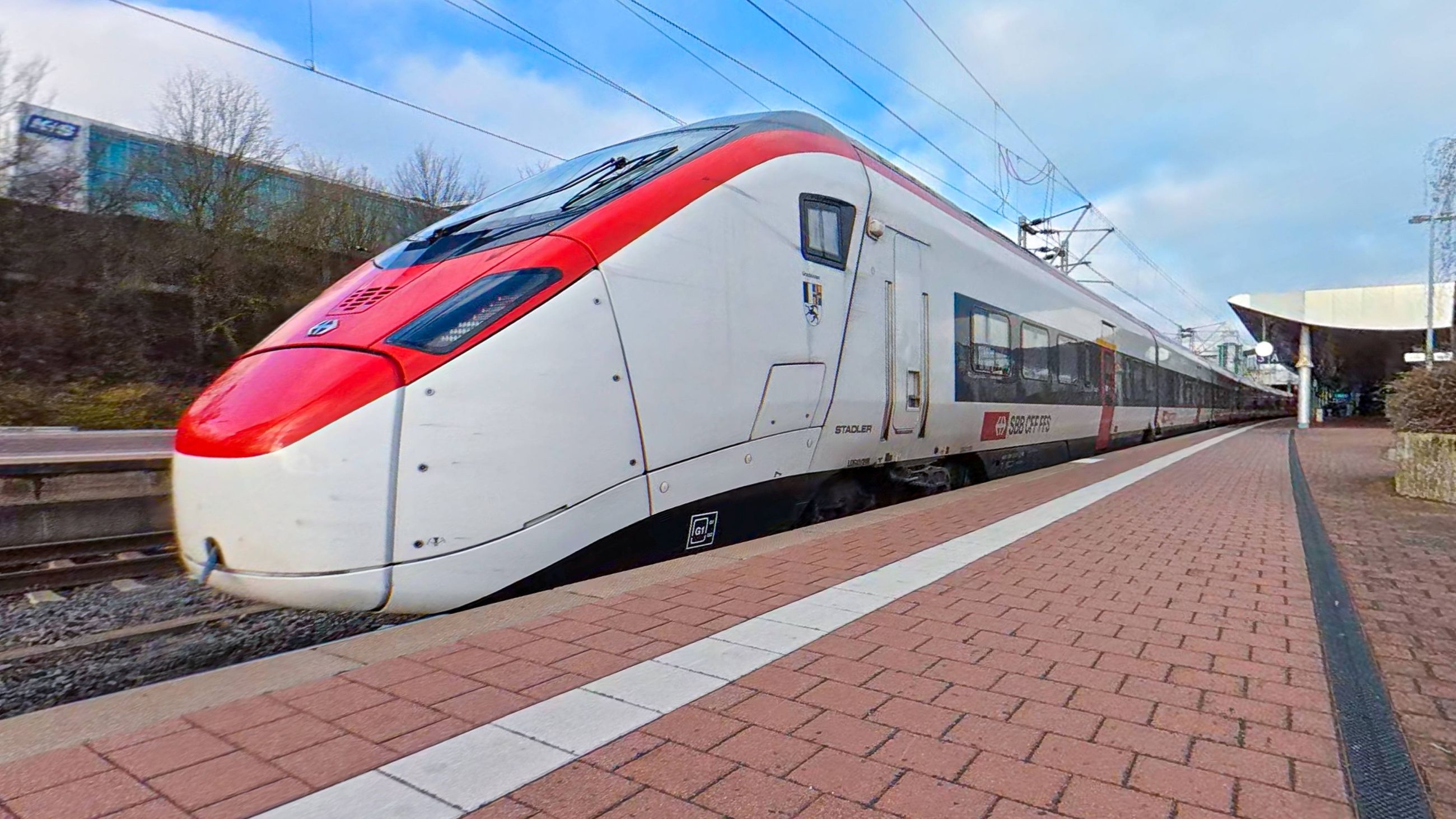
Although Switzerland does not have “TGV-style” lines for 300 km/h, it has many stretches where 250 km/h can be reached, but the speed is limited to 200 km/h. The country also has one of the most prestigious train manufacturing companies, Stadler Rail, famous for its premium electric frames that also run in countries such as Hungary and Serbia. Giruno, the most modern train in Switzerland, is produced by this company.
Specialists in record length tunnels
Also as part of plans thought out long before, the Swiss built ever longer, more complicated tunnels adapted for ever higher speeds. The logic was clear: a tunnel, although it takes many years to build and costs enormously, can boost the development of a region, because passengers, as well as cargo, can be moved much faster from point A to point B.
The first huge railway infrastructure project in Switzerland was the 15 km Gotthard tunnel, built between 1872 and 1882. The work took ten years, due to the complicated geology of the place, and the construction also used dynamite, invented in 1867 by Alfred Nobel.
In 1992 the public voted for a huge program called AlpTransit which simply said: railways are the priority, not roads, and we will move as much freight as possible from road to rail.
The construction of three large railway tunnels was successful in which 25 billion dollars were invested, of which the Gotthard Base Tunnel, 57 km long, is the longest railway tunnel in the world, like from Bucharest to Ploiesti, It was opened in 2016, it was worked on for almost 20 years, the costs were 12.5 billion dollars and passenger trains can run at 200 km/h, and freight trains at 100 km/h
And in the development plan until 2045 there is a long tunnel, the Grimsel, which is supposed to be 8.3 km and about which much has been written in Switzerland in the last decade, because there were divergent opinions, from those who said it was necessary to those who talked about waste.
Obviously, these tunnels shorten travel times enormously, compared to the winding and long versions that were used until the opening of tunnels such as the Simplon or the Gotthard. .
It wasn't just passenger trains that benefited. In Switzerland, it has always been difficult to transport freight because of the complicated terrain and the need for super-powerful locomotives. The new tunnels allow high speeds of over 90 km/h even for freight and have no sharp curves.
The conclusion would be that Switzerland got this far because it had vision, it stuck to the plans drawn up for the next 15-20 years, it had the inspiration to electrify the grid when no other country was doing it, and it had the money, patience and skill to dig long tunnels that changed the face of several regions.