Pellets are becoming more expensive and disappearing from stores. What's next for home heating?

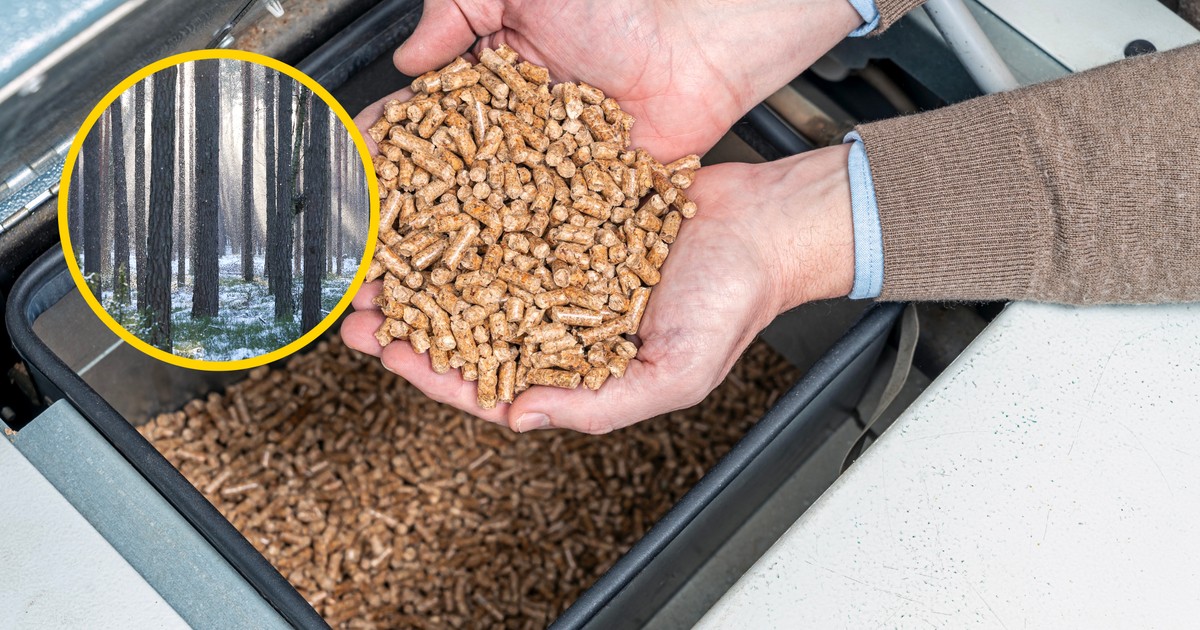
Today, the problem of pellet prices and its shortage in stores and warehouses is not only faced by people who heat their homes with this fuel, but basically all of Poland. The topic is commented on by the Ministers of Energy and of Climate and Environment, who say that the market is not prepared for winter, and the Office of Competition and Consumer Protection has also been notified about the matter.
The rest of the article is below the video:
Read also: Record prices for pellets. There is a notice to the Office of Competition and Consumer Protection
Crisis on the pellet market. Are we short of wood?
The industry itself sees the main source of the problem in the insufficient amount of wood on the market, as Agnieszka Kędziora-Urbanowicz, vice-president of the Polish Pellet Council, said in a comment for our editorial office. He is responsible for, among others, forest policy of the Ministry of Climate and Environment, which limited the extraction of raw materials in selected places in Poland.
Do we have enough wood in Poland to meet the needs not only of people heating with pellets, but also of the wood industry and the professional heating and energy industry, without cutting down more and more forest areas?
According to an analysis prepared by the Ministry of Climate – no. The opinion of the local Department of Strategy and Analysis was attached to the draft National Energy and Climate Plan and it follows that in Poland the so-called there is simply too little sustainable biomass, recognized in EU law as a renewable source.
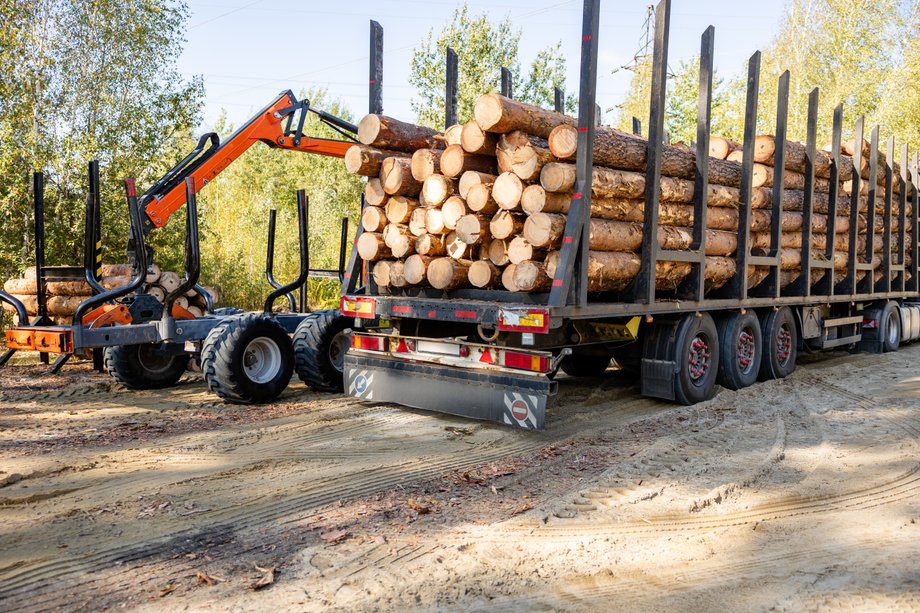
Woody biomass
|
Sherbak_photo / Shutterstock
Pellet shortages. The energy industry takes the raw material?
Experts from the Ministry of Environmental Protection argue that with the growing consumption of wood in the energy and heating sectors, there would be a shortage of wood for the wood industry, and at the same time the pressure on forests, which have important natural and social functions, would constantly increase.
They also add that priority in access to biomass should be given to individual customers – including: users of pellet heating boilers.
Katarzyna Wiekiera from Pracownia na Wszystkich Stotch, an organization known for its criticism of plans for the extensive use of biomass in the production of heat and electricity, also tells us about the problem.
— Large energy companies suck from the market the same raw material from which pellets for households are produced. On the one hand, the state is developing the bioenergy sector, more biomass heating plants are being built, on the other hand, the government's Clean Air program supports pellet boilers for households, as if the raw material were unlimited. With increased demand, price shocks are inevitable, he says.
Read also: Will we pay PLN 5 billion a year for wood imports? Biomass poses challenges
Crisis on the pellet market. “It was predictable”
We also hear in the heating industry that professional power and heating industries sometimes compete with households when it comes to access to biomass.
— This crisis was unfortunately predictable. Waste or processed biomass may be useful to some extent in individual heating, or in smaller, dispersed heating plants, or as a peak source at times of greatest demand in hybrid installations, but using it in “large” professional power plants is a mistake, mainly for logistical reasons – says Janusz Starościk, president of the Association of Producers and Importers of Heating Devices (SPIUG).
Our interlocutor points out that the market of pellet producers is very fragmented and depends on the limited availability of chips and sawdust from which fuel is produced. Additionally, difficulties with the supply of pellets were influenced by, among others, problems of one of the large producers – a manufacturer of wooden floors, whose factory in Vinnytsia, Ukraine, was bombed by the Russians last year. — The company's pellet production capacity has been significantly reduced as a result. In turn, some of the pellets produced in Poland did not stay in the country, but were also exported – adds Starościk.
Where to get pellets? “It would be possible to destroy half of the forests in Poland”
Supply chains on the pellet market could become more stable and predictable if the State Forests were directly involved, but Janusz Starościk warns against such a solution.
— If we decided to do so, we would need very clear fuses to protect forests against a return to predatory forest management. The exploitation of woody biomass carries environmental threats, and under the pretext of the need to increase its extraction, half of the forests in Poland could be destroyed. — the president of SPIUG does not bite his tongue.
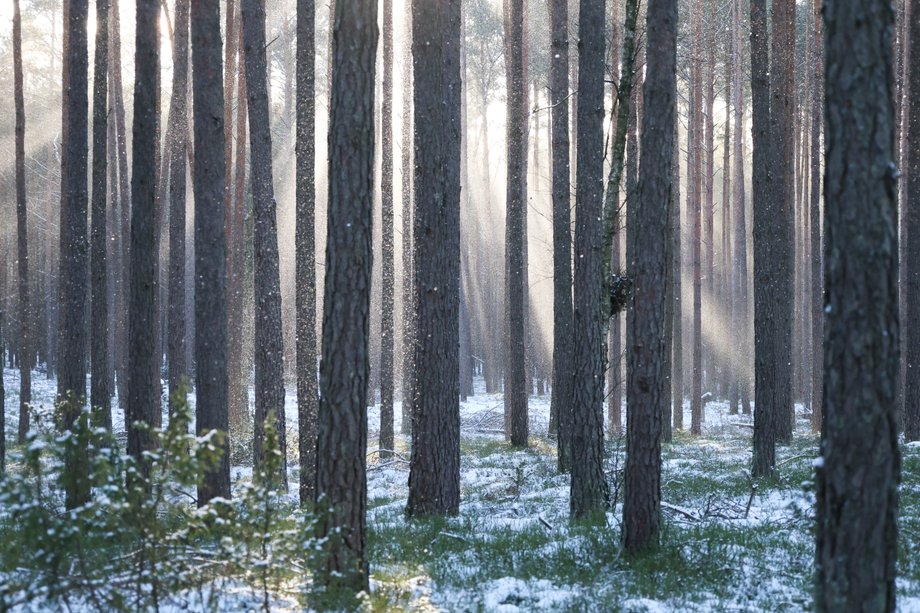
Increased logging threatens to put greater economic pressure on forests
|
abbadon1067 / Shutterstock
Crisis on the pellet market. “No technology is universal”
According to Starościk, the problem is not the pellet heating technology itself, but its overuse – similarly to other heating technologies.
— There was simply a disturbance in the balance. Sales of pellet boilers under the Clean Air subsidy increased to 120,000 last year. annually. The market was not prepared for this, and the demand given the current supply of pellets is simply too high, he says.
— No technology or heat source can be universally applicable. The energy and technological mix must be diverse – in different proportions and in different areas there will be room for heat pumps, district heating, pellet boilers, gas boilers, solar collectors and other technologies. The state should take this into account when arranging various support instruments and subsidy programs, because our security of heat supply at costs acceptable to consumers and the achievement of goals related to the transformation of heating and district heating depend on it, adds Janusz Starościk.
What to connect a pellet boiler with? Hybrid solutions
Hybrid installations are also a solution that can be used by residents of single-family houses. Connecting, for example, a solar collector with a pellet or gas boiler allows you to obtain heat for heating and hot water practically for free when the sun is shining and switch to the second source when solar radiation is too weak or absent. It also saves a lot of fuel or electricity, depending on which peak heat source we have chosen in our hybrid installation.
— Many people think that collectors are only suitable for heating water, but this is not true – they can also be used to support the heating of the entire house. Especially when combined with a heat storage facility, such a solution can work very well, enabling savings and reducing dependence on fuels such as pellets or gas, as well as electricity – advises Janusz Starościk.
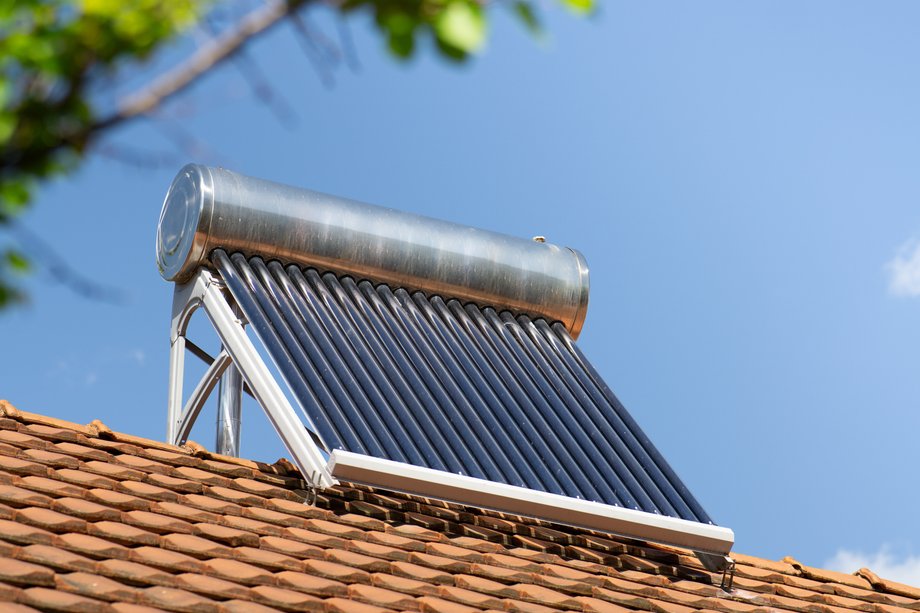
Solar collector
|
Stefan.Simonovski / Shutterstock
Where did the crisis on the pellet market come from? “There is a lack of stable raw materials policy”
Two opposite conclusions can be drawn from the pellet crisis. Augustyn Mikos from the Workshop for All Beings considers the current shortages to be a “warning signal” against relying on biomass, a higher share of which is envisaged by the Ministry of Energy in the draft National Energy and Climate Plan.
According to activists, in heating and heating we should rather opt for electrification (for households, especially heat pumps) and the use of renewable sources such as sun, wind or biomethane. IN In this version, the government should not increase the supply of wood in order to avoid competition with the industry, excessive forest clearing and import costs.
Read also: “Unfavorable scenario” and “economic illusion”? Question marks around Poland's energy transformation plan
A different perspective is presented by the Chamber of Commerce for Renewable Energy Equipment and Polish Industry (IGU RES), an organization representing, among others, pellet boiler sellers.
— Problems with the availability of pellets do not result only from the physical lack of wood in Poland, but primarily from the lack of a stable raw materials policy of the state. – says Dr. Adam Nocoń, president of the Chamber, for Business Insider Polska. He explains that the fuel is produced from sawmill residues, so the trees for pellet production are not specifically cut down.
Pellet boilers. “You can't promote one technology”
According to Noconia, after the energy crisis four years ago, when the demand for pellets increased significantly, the state did not ensure a stable framework and strategic approach to this fuel, and as a result, we observe increased exports and other market fluctuations.
– We need a systemic approach in which the municipal and housing sector, i.e., among others, households and local heating plants will be considered a strategic pillar of the country's energy security, he adds.
What does this mean in practice? The president of IGU OZE talks about the need for a “stable and predictable raw material policy of the State Forests with priority for domestic processing and pellet producers” – sawmills would have constant access to wood, and pellet producers would have access to chips and sawdust produced from it.
He also advocates support for investments by domestic producers of equipment and fuels – and therefore also producers of pellet boilers. — You cannot promote only one technology, ignoring national value chains – says Dr. Adam Nocoń. He also wants stable regulations.
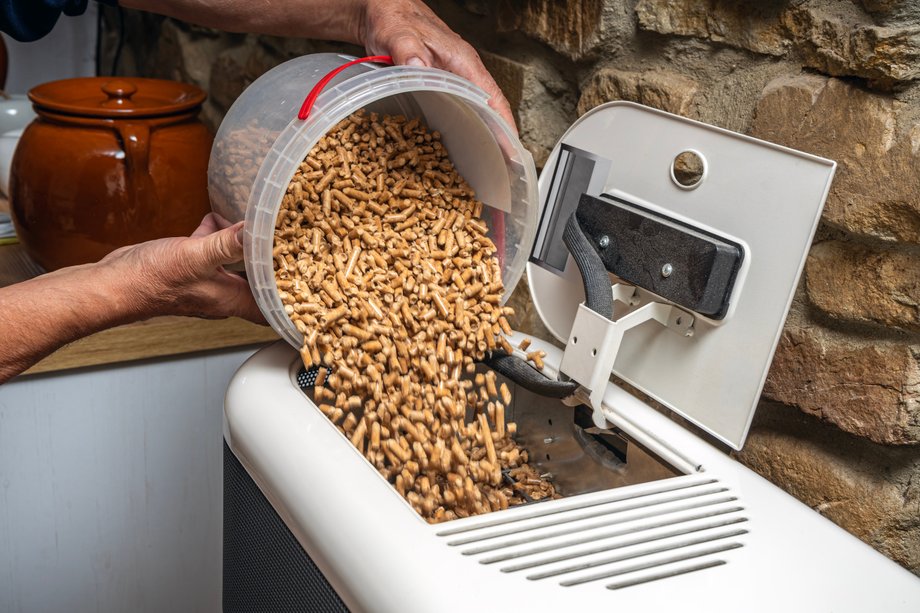
pellet boiler
|
jodar reef / Shutterstock
Pellet as local fuel?
As we hear, although pellets require purchases and storage and are not available “on demand” like when heating with gas or electricity, they are supposed to provide their users with true independence.
— Having a fuel supply for several months is a safety buffer that neither gas nor grid electricity can offer, argues Nocoń. He argues that pellet heating does not depend on infrastructure or administratively shaped tariffs. — Recent years have shown that electricity prices can also increase rapidly and require state intervention, he adds.
Pellets are also supported by their local character – domestic, but also simply “from the area”. – In this sense, it strengthens the energy sovereignty of households – says Dr. Adam Nocoń, citing the examples of Scandinavian countries and Austria, where biomass in heating and district heating is treated as one of the pillars, and not only a supplementary fuel.
The president of IGU OZE distances himself from the concept of state interference in pellet prices. — Price regulations are extraordinary and short-term. In crisis situations, they can stabilize the market, but they do not solve systemic problems – says. The key issues in the opinion of our interlocutor are predictable rules for the sale of raw materials, development of production capacity and diversification of biomass sources.