The elephant in the room on the EU agenda. How old divisions risk derailing efforts towards autonomy

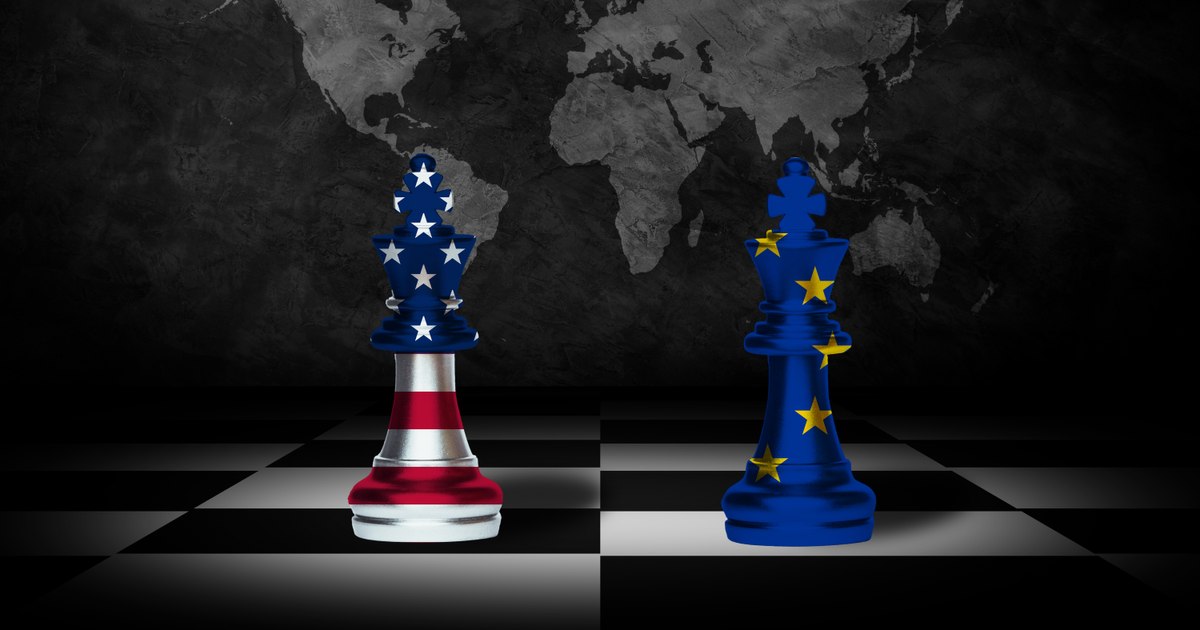
EU leaders are preparing for major talks on topics ranging from joint defense projects to economic reforms, but efforts to reduce Europe's dependence on the US are exposing deep divisions among the 27 member states, writes Politico.
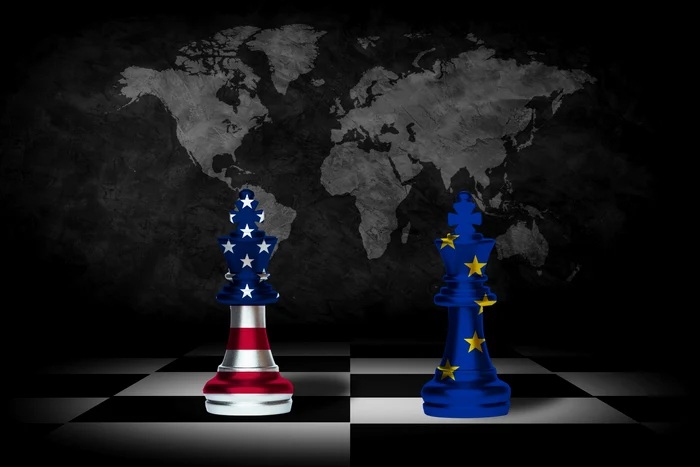
PHOTO shutterstock
Ahead of an informal meeting of European leaders on Thursday focused on competitiveness, capitals pledged to show unity to chart a path to greater European autonomy after the US president's threats to Greenland sparked the worst transatlantic crisis in decades.
But fractures are already beginning to appear in that united front, as long-standing disagreements over how ambitions of “strategic independence” can be translated into concrete action are emerging.
While the meeting is not expected to produce commitments, it will set the broad political lines on which the European Commission will draw up proposals for the summit in late March.
“All those present at the negotiating table must face the moment of truth,” emphasized Manfred Weber, the leader of the European People's Party, whose members include, among others, the German Chancellor Friedrich Merz and the President of the Commission, Ursula von der Leyen. Instead of “complaining about each other”, leaders should do their “homework” and ensure reforms can be completed, he added
“Europe has considerable influence. We just have to stand together and make decisions… we have to understand that through force, Europe will actually have a strong position],” pointed out the Estonian Minister of Foreign Affairs, Margus Tsahkna.
Politico recalls the recent clash of views between France and Germany after Emmanuel Macron refused to approve the EU-Mercosur trade deal.
In an interview published on Tuesday, the French president insisted that joint European loans would be needed to finance ambitious industrial and defense projects – but his call was quickly rejected by Germany.
“You probably saw the interview with the French president,” a senior German government official commented on condition of anonymity.
Different priorities
Other capitals have made similar observations.
“It's good that Macron sees the need to invest in Europe's future economy,” said a diplomat from a medium-sized country, stressing, however, that the proposal risks being reduced to “daydreaming” given the possibility of spending from the EU's long-term budget
Macron also threatened to suspend a Franco-German battle tank development program amid mutual accusations over the lack of progress on the joint fighter jet program.
“You can imagine that if the German partner were to question the future of the jointly developed aircraft, we would have to question the tank project as well.”
These are just a few examples of the fractures emerging ahead of Thursday's meeting in a series of position papers arriving in EU capitals.
For example, while France is advocating “Buy European” policies that would prioritize EU industries in terms of subsidies and public procurement contracts, the Nordic and Baltic countries have opposed the idea: in a joint position paper, they argue that it would add unwanted complexity at a time when Europe is trying to deregulate.
At the same time, Germany joined forces with Italy to reject French initiatives, instead promoting an agenda focused heavily on deregulation. Merz and Italian Prime Minister Giorgia Meloni are calling for an “emergency brake” on new EU legislation, giving capitals the right to prevent Brussels from drawing up rules they don't like.
On the other hand, diplomats from other countries argue that the Berlin-Rome initiative loses sight of the more important aspect, namely that Europe must free itself from external dependencies. “Simplification (deregulation) is important”said a second EU diplomat. “Dit cannot be the alpha and omega of our European policy. Bureaucracy isn't everything. We urgently need to think about the issue of supply chains and how we can reduce dependencies.”
A third EU diplomat described the situation in even starker terms: “We have the diagnosis, we have the prescription, but we haven't gone to the pharmacy.”
European leaders have long avoided difficult discussions about domestic reforms, and these disagreements very clearly reflect this reality that can no longer be ignored.
Old problems
Trump's threats to Greenland forced a reassessment at an extraordinary Council meeting in January, during which von der Leyen delivered a verdict: Europe must now follow the path of independence.
“Without GDP growth, we will be very vulnerable to external shocks”said the Polish Minister of Finance, Andrzej Domański.
The Commission and other EU policymakers, he said, will need to “focus on growth, deregulation and be more ambitious”.
The problem is that translating this rhetoric into reality carries potentially huge political costs for leaders.
Reforms to strengthen the bloc's fragmented single market or build a genuine European deterrence capacity have been mooted for years, in some cases even decades.
But the leaders chose to politely ignore them, as any implementation of the reforms would endanger national industries.
For example, the idea of uniting the EU's fragmented capital markets and thus creating a vast pool of investable capital was first proposed more than a decade ago. It won the support of former European Central Bank president Mario Draghi as a crucial step towards independence.
But the idea has not progressed at all due to opposition from Berlin and Rome, among other capitals, which have blocked the initiative because of the threat it poses to regional banks.
When the leaders meet on Thursday, the sensitive topic on the table will be Europe's relationship with the Trump administration. Despite the consensus on the need for Europe to forge its own path, many countries are unwilling to risk drifting away from Washington — or see their companies prevented from selling in American markets — because of the EU's protectionist policies.
Some diplomats say it is possible that relations between Brussels and Washington will return to normal after the crisis over Greenland.
But for leaders like Macron there is no turning back. “When we got out of the worst of the crisis, we felt a cowardly relief. There are threats and intimidation, and then all of a sudden Washington pulls back and we think it's over. But don't believe that for a second…every day there are new threats“.