Romania has 30 billion euros allocated from European funds. Behind the scenes of the battle in Brussels to save money from PNRR


MEP Victor Negrescu reveals the details behind the discussions in Brussels to save money from the PNRR and warns that Romania risks missing out on major financial opportunities in the absence of a coherent strategy. In an interview given to “Adevărul”, the vice-president of the European Parliament explains why extending the deadlines until 2027 is an economic necessity for the entire Union, how online betting can be taxed to finance health and what is PSD's position regarding the EU-Mercosur agreement.
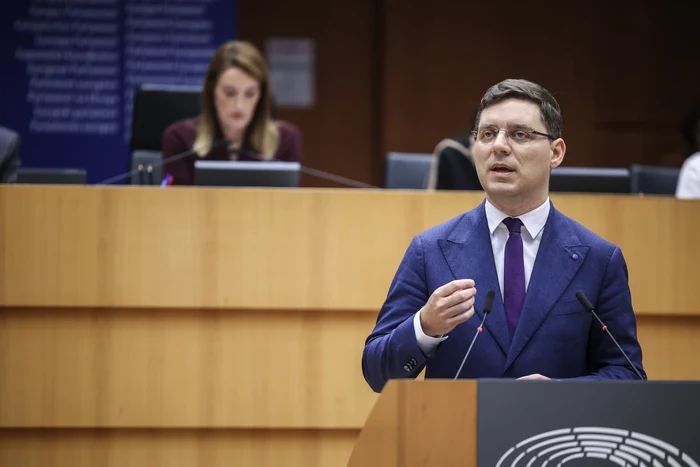
Victor Negrescu. PHOTO: Facebook
The truth: What were the main arguments with which you tried to convince the European Commission that this flexibility of PNRR is vital not only for Romania, but for the entire Union?
Victor Negrescu: We proposed the flexibility of the National Recovery and Resilience Plan. On the one hand, so that unfinished projects can continue within other instruments of the European Union, something that is already happening and from which Romania has benefited. We also proposed that the plans be modified more easily, which Romania took advantage of, as well as the possibility to move projects from the loan area to the grant area more easily, a mechanism that, once again, Romania benefited from.
At the same time, we proposed extending the financing period by 18 months for mature projects, which can be completed within this term. This proposal was approved by the European Parliament, with 121 votes “for”, 180 “against” and 65 abstentions. The arguments were as follows:
– On the one hand, the implementation rate of the Recovery and Resilience Mechanism at the European level is below expectations.
– Secondly, many states have made changes, and in recent months dozens of amendments to the plans have been proposed, which confirmed the correctness of this approach.
– Thirdly, there are overlaps between different European funding, which generated implementation difficulties.
I also had the problem of suppliers. When there is a very large volume of projects, especially from certain categories, the number of suppliers is limited at European level. There were also problems on trade flows, including in the context of conflicts in several areas of the world, which led to normal delays on the part of suppliers, delays that affected the implementation of some categories of projects. For example, projects in the innovation area, where there are very few suppliers, or those in the energy area, where also only a few suppliers can deliver the products and services needed by the member states.
From this perspective, the European Commission was asked, and the answer was that there is some technical flexibility for this year. The mechanism is finalized at the end of August 2026, but until the end of the year bills can be submitted. We have obtained a technical extension, but we would like this extension to be longer. However, the European financial mechanisms, including the multiannual budget, end at the end of 2027 and there is no reason why the NRDPs should not be rolled out until the end of 2027. This would not affect the mechanism itself, as the necessary loans are already contracted and cover the potential funding requested by the states.
Does the European Parliament currently have leverage to enter into a negotiation with the Commission for the extension of the PNRRs?
Victor Negrescu: In order to have this extension, a decision at the level of the Council is necessary. The initiative can come from the Council or the European Commission, and the European Parliament must support this approach, as it involves amending the regulation. In the European Parliament we have demonstrated that there is a majority for this proposal. I would have liked that, in the last months, taking advantage of the report that I promoted, Romania would have taken the initiative on this subject.
I cannot help but notice the lack of ambition of the Romanian authorities, who could have identified other partners. There are many states that face implementation difficulties. The average degree of achievement of reforms and targets at European level is around 30%. There are states that are advancing rapidly, such as France and Germany, but also states that are stagnating, such as Luxembourg or Sweden, which may not be as interested in this mechanism. We would certainly have had allies, especially since there will be no new PNRR, at least not on the current components. A possible new joint loan would be much more targeted and would target other sectors, such as the SAFE program, dedicated to defense, not economic recovery.
The truth: I read that you proposed an amendment to allocate 90 billion euros for health policies in the next multiannual budget. What would this mean for Romania?
Victor Negrescu: We are currently in negotiations for the future multiannual financial framework. The European Commission has come up with a consistent budget proposal, but it is based on new European own resources and increased member state contributions. For these collections, consensus is needed at the European level, and this consensus does not exist at the moment.
We proposed the identification of new own resources, including the taxation of profits generated by the online betting industry, which takes advantage of the European common market and is taxed differently from one state to another, including a significant underground economy component.
In addition to this proposal, we supported appropriate allocations for two areas of major interest for Romania: health and education. In the area of health, we proposed an amendment supported by the Social-Democratic Group in the European Parliament, through which we request the allocation of 20 billion euros. These funds would be included both in European programs such as Horizon or the European Competitiveness Fund, as well as in national envelopes, such as structural funds.
It is an important amendment, as the allocations proposed by the Commission are currently insufficient, below the required level. Romania needs these resources, as most important health investments are made with European funding: PNRR, structural funds or the European Investment Bank.
The year 2026 is crucial for accessing European money for Romania. We have the PNRR, we have the structural funds, we also have the SAFE program, we also have the European Social Fund for Climate. Romania has 30 billion euros allocated this year, which we can access. Romania must be ambitious. The government says it wants access to 10 billion euros, under the conditions that we could access at least 20 billion euros. We have PNRR, where we take at least 10 billion euros, but the potential is 17 billion euros. We annually access about 5 billion euros through the cohesion program, but now we are towards the end of the implementation and we could go to 7 billion easily. We have 2 billion for agriculture, including subsidies and rural development. We have 1-2 billion euros for defense, through the SAFE program, which we can access. We have the programs available directly in Brussels, where we have applicants from Romania, between 1 and 2 billion euros. We have 1 billion euros through other European programs, such as the one on the protection of external borders. We have loans from the EIB of several hundred million. We also have the Social Fund for Climate, where there are 5 billion. We won't access all of that money, but we can access substantial amounts. We need a national pact to capitalize on this moment. In 2027 there will be less money. Gradually, there will be fewer European resources for Romania. Instead of focusing only on cuts, the Government should focus on attracting European money.
What is the position of the PSD MEPs regarding the EU-Mercosur Agreement?
Victor Negrescu: The European Parliament voted to send the trade agreement with Latin American states to the Court of Justice of the European Union. It is a normal, pro-European approach, through which we request a clear legal point of view. The trade agreement has been separated from the political one and could enter into force without consulting the European Parliament or national parliaments, which we consider contrary to the European Treaties.
There was no real consultation with SMEs, farmers or consumers, and some provisions were negotiated on the last hundred meters without clear rules of application. Also, certain control mechanisms are not detailed enough. The vote in the Parliament was given on a proposal initiated by more than 140 pro-European MEPs, not on one of the extremists, and the votes of the Romanian social democrats were decisive.
We expect a quick ruling from the Court of Justice and clarifications from the European Commission, especially regarding guarantees for farmers, consumers and public health. In Romania, a clear commercial strategy is needed for the regions with which the EU signs agreements, such as Latin America or India, so that we can protect our economic interests. Most Member States have such strategies. Romania does not have one yet, and this is an opportune moment to build one and reduce risks.