Parliamentarians, champions at rest. After 45 days of vacation, the first week of the new session had three days of “work”

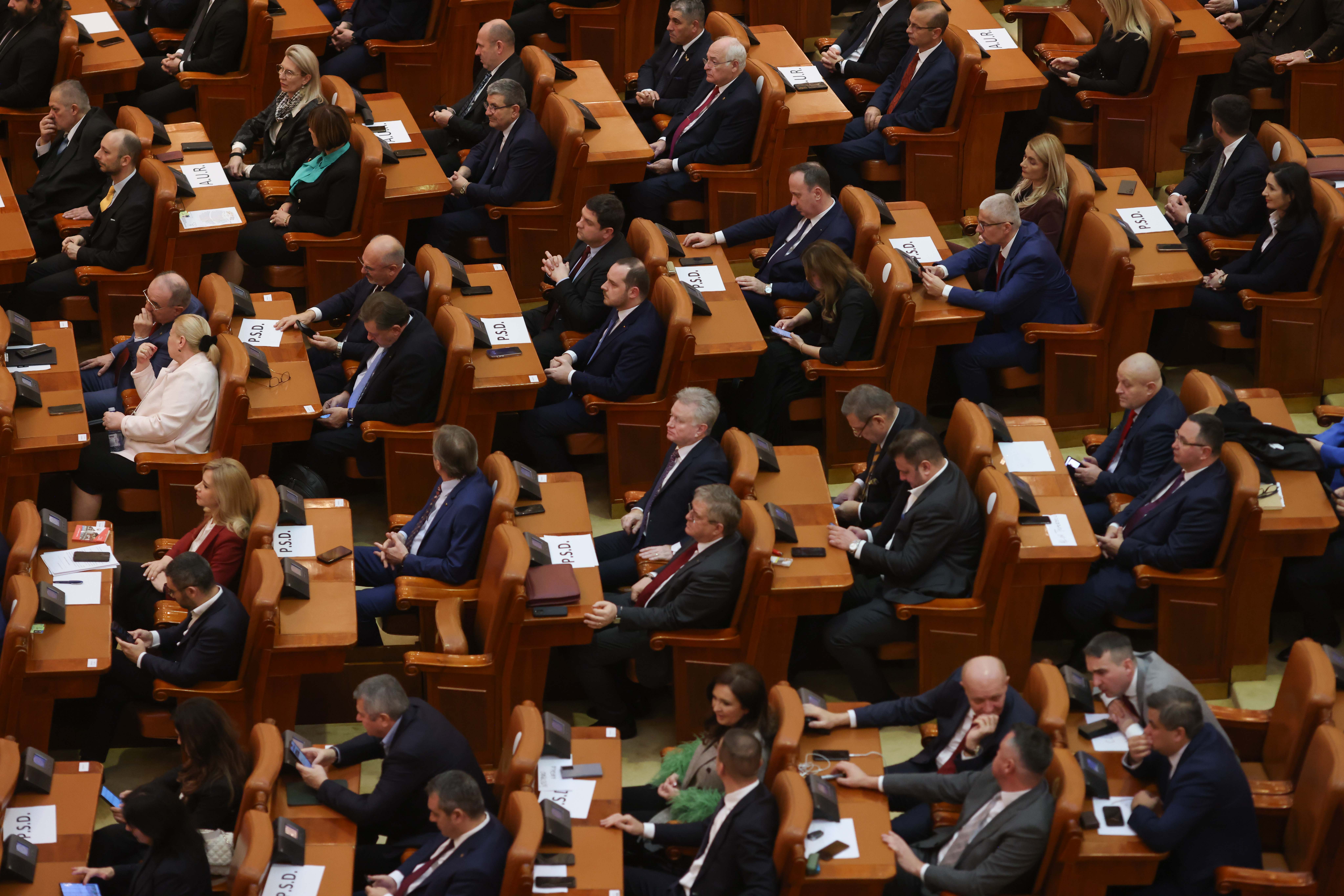
It's been a week since MPs returned from the more than month-long parliamentary break and began the spring session, but the pace has remained fairly relaxed, with plenary sessions scheduled only in the latter part of the day, after 4pm. But the new parliamentary session brings stricter rules for senators, requiring physical presence at plenary sessions.
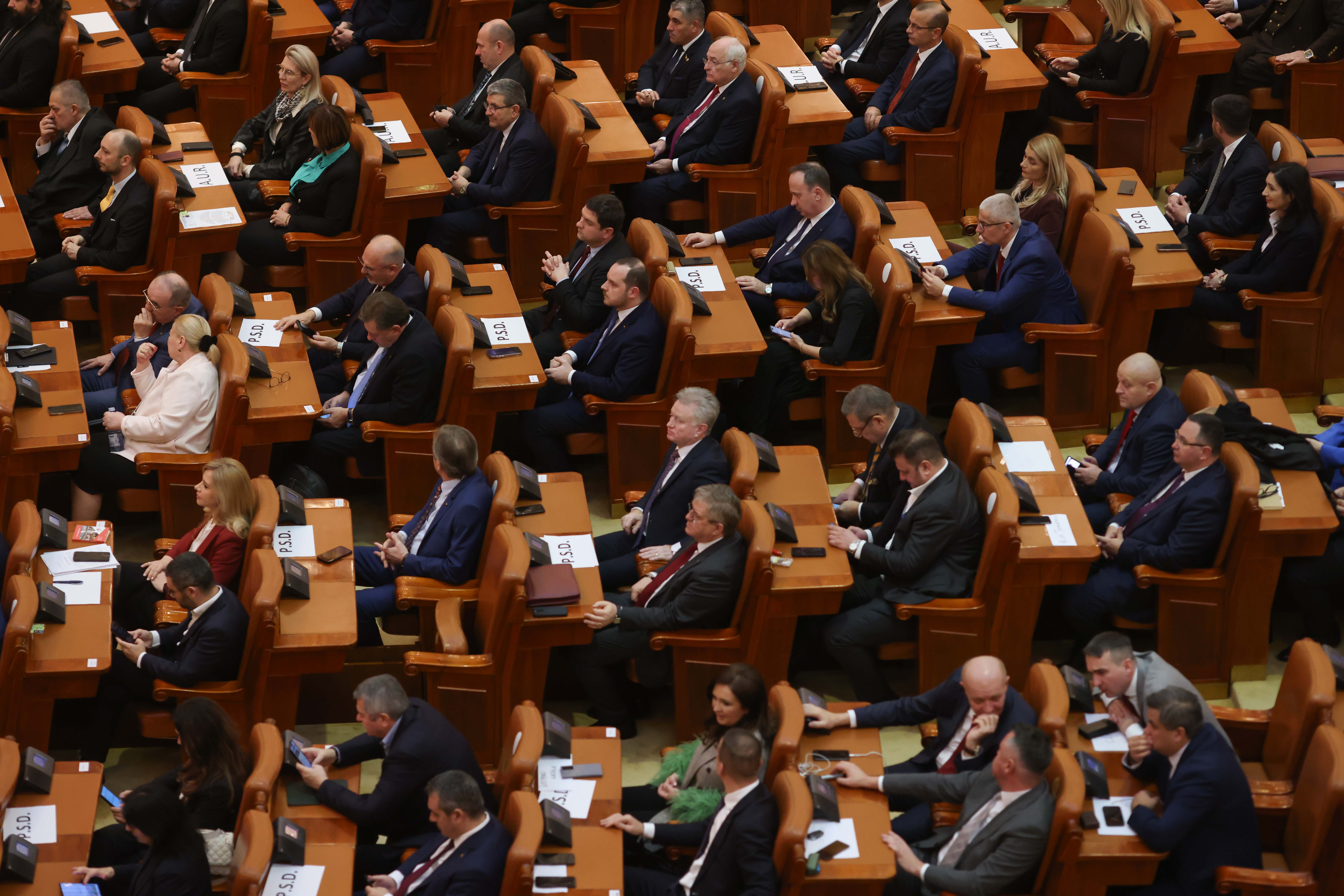
Parliamentarians come approximately 3 days a week to their “work place” PHOTO Inquam / George Călin
Practically, in the first working week after the holiday, the parliamentarians were present at work only three days: Monday, Tuesday – when they only had committee meetings and Wednesday. At the first plenary meeting of the spring session, on Monday, February 2, which also started at 16:00, the highest attendance in the Senate was 112 senators. However, the initial enthusiasm waned by Wednesday, when the highest number of senators present in the plenary session was 108 out of the total of 130 members of the Chamber. And the only full working day was Wednesday, with plenary sessions and committee meetings. In the following days, although meetings of some commissions appear in the program, they did not actually take place, being noted as documentation and consultations.
Stricter rules
In the case of the Senate, however, the spring session began with a change in the rules regarding attendance: this year, senators must be physically present at all plenary sessions. Otherwise, they will be considered absent and will be sanctioned with the cutting of 5% of the gross monthly allowance, i.e. approximately 950 lei.
Thus, at the first plenary session of the spring session, on Monday, February 2, which also started at 4:00 p.m., 112 senators were present in the Senate. However, the initial enthusiasm waned by Wednesday, when the highest number of senators present in the plenary session was 108 out of the total of 130 members of the Chamber.
Tuesday, February 3, was a much lighter day for MPs, as the schedule included only committee meetings: the Committee on Economic Policy, Reform and Privatization and the Joint Special Committee of the Chamber of Deputies and the Senate on Combating Human Trafficking.
A deputy forgot his card at home
At the Chamber of Deputies, presence remains physical and online, both in the case of committees and in plenary. 284 deputies were present, on Monday, on the first day of the plenary session at the Chamber of Deputies, for the vote on the new composition of the Permanent Bureau. And in Wednesday's meeting, there were 290 deputies at the last vote on the agenda, out of a total of 330 deputies. At least that's what the electronic vote indicated, because, in reality, a deputy was at work without being able to record it.
Specifically, the leader of the AUR deputies, Mihai Enache, came to the microphone to announce that the deputy Florea Gabriel, his group and party colleague, forgot his card at home. The Vice-President of the Chamber, Natalia Intotero, explained to him that he cannot vote, without the card and the special tablet for online participation in the meetings. “I am very sorry for our colleague, who forgot his card. The time to make a new card is 24 hours. He had the possibility to have his tablet with him and vote from the tablet”she said. In the Senate, however, those who forgot their card at home were allowed to vote. It is about: Daniela Ștefănescu, Graur Cătălin and Paul Gheorghe.
The cost of democracy
Parliamentarians (deputies and senators) receive a net monthly allowance of about 10,000 lei (about €2,000) as a basic salary. But in addition to the basic salary, a parliamentarian can also receive: accommodation allowance in Bucharest – up to approximately 4,600 lei per month for those who do not live in Bucharest or Ilfov; lump sum for the activity of the parliamentarian and the parliamentary cabinet (for the office, employees, etc.) – around 25,000–35,000 lei per month, half deductible, half on self-declaration; transport allowance to the electoral district – about 1,400 lei per month; per diem for attendance in Parliament (approximately 200 lei/day); plus other facilities such as phone, tablet and free CFR transport, including first class or sleeping car.
Thus, the cost for a parliamentarian can exceed 40,000 lei per month (over €8,000) for the state budget. And the money received in addition by MPs who also hold other positions in the state and who can accumulate salaries (for example, minister + MP), as admitted by a politician who receives two separate salaries, was not counted.
Political scientist Andrei Țăranu claims, however, that democracy cannot be reduced to numbers and measurable efficiency. “Democracy costs,” he says.
The discussion regarding the efficiency of parliamentarians should rather be directed towards the parties that propose them, says political scientist George Jiglău. “That's why we have elections, to change them with others who will do a better job. And if they don't do those either, we change them with others and so on. So they are 465 divided into two chambers and they have the devices they have behind them so that they can fulfill their mandate properly and they are so many because there is a calculation that leads us to that representation norm”, he explains.
We should have fewer MPs
In November 2024, the current prime minister, Ilie Bolojan, who had just arrived at the interim leadership of the PNL, demanded the reduction of the number of parliamentarians to 300, according to the 2009 referendum, which proposed a more flexible and unicameral Parliament. Later, at the end of last year, the prime minister announced that the number of parliamentarians could decrease by 13% from 2028, based on the latest census data. Thus the Parliament could have 50 fewer seats.
Regulating the number of parliamentarians based on the data of the last population census is a discussion that must be held, adds political scientist Andrei Țăranu. “But, as you will see, it will not decrease by an extraordinary amount. And this for a very simple reason. Romania has 33 MEPs. This is its level of representation in the European Parliament. It would be normal, if it were, that the vote in the European Parliament is also proportional, we should lose about 2 or 3 MEPs, if we strictly look at the proportional figure that elects a MEP”.
Regarding representation, the political scientist recalls the uninominal vote, which was applied in Romania only to the parliamentary elections of 2008 and 2012. “The system that was proposed then, the mixed vote, has a logic. Because the parliamentarian should represent a very clear number of citizens”says Andrei Țăranu, noting the political influence in the result of the system applied then.
The political class adopted in 2008, after a failed referendum, the uninominal vote, which directed attention from the party to the candidate. However, after the 2008 election, problems also appeared. Many front-runners missed Parliament, but the system benefited the USL alliance, which won the 2012 election, a runoff that brought 117 more members to Parliament. In 2016, party list voting returned, with the support of PNL and PSD.
Reducing the number of parliamentarians, from the start, regardless of the electoral system, reduces proportionality – George Jiglău, political scientist
However, the name was used in the wrong way, explains political scientist George Jiglău, who points out that “reducing the number of parliamentarians, from the start, regardless of which electoral system it is, reduces proportionality and benefits the big parties”. It warns about the type of mixed voting used in Hungary, which does not ensure proportionality.
However, a change in this direction is not excluded. At the end of last year, in November, the president of the social democrats, Sorin Grindeanu, announced that the PSD agrees with a reduction in the number of parliamentarians to 300, but with a return to uninominal voting.