“A child needs a living mother, not perfect.” What do psychologists say about the effects of prolonged maternal leave


Although it is often perceived as a period of peace and joy, the long maternity leave can become, in the absence of support and social contact, a true psychological trap. The first months are natural, full of emotion and adaptation, but gradually, the routine and absence of external validation can lead to emotional exhaustion, anxiety or depression.
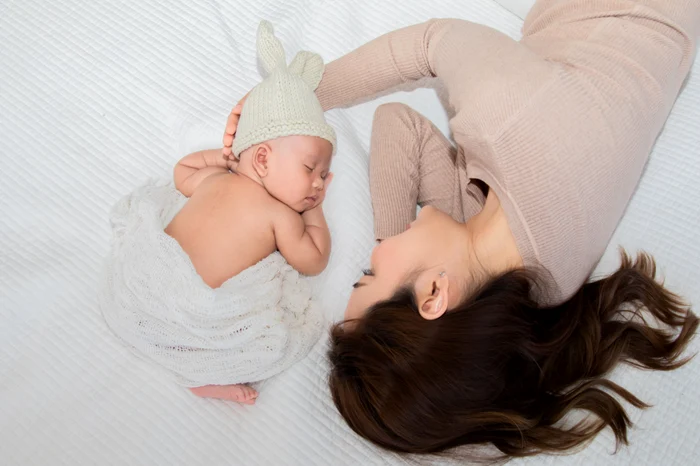
Photo source: Shutterstock
“A mother needs to be anchored in itself, in her own identity, in order to be truly available to the child. When she is lost in the role, she loses that inner force that makes her a support and safety figure.” Explains for the truth of Dr. Gabriela Marc, main clinician psychologist and university lecturer associate at the Faculty of Psychology and Education Sciences.
According to him, the healthy relationship between mother and child is not based on symbiosis, but on a connection that breathes: a connection that allows closeness and autonomy.
Lost identity after birth
Birth completely changes a woman's inner hierarchy. Career, friends, projects and wishes seem to fade, replaced by a new total identity: the mother. In the first months, this dedication is natural, but when the personal space completely disappears, the woman begins a silent process of interior dissolution.
“The authentic attachment does not require a total sacrifice, but a balanced presence. The child needs a safe mother, capable of providing protection without losing the role of caretaker.”says the psychologist. “A mother who remains connected to her own needs: at rest, meaning, identity, gives the child not only care, but the model of a whole and healthy adult”, athis gives it.
The social pressure of the sacrifice
The model “perfect mother”, always available and smiling, is, in reality, toxic. “The continuous sacrifice does not prove love, but marks the loss of contact with their own limits. A emotionally exhausted mother transmits to the child, even if she loves him sincerely. Authentic love implies presence, not perfection”, says Dr. Gabriela Marc.
She emphasizes that sometimes the best thing a mother can do for her child is to give her a few moments of breath: “Self -care is not selfishness, but a mature form of love, the one who teaches the child that the mother also has the right to rest, emotions and her own space. “
The myth of the maternal sacrifice perpetuates the guilt. “We have been told that a good mother has to give up itself, that love turns out through exhaustion. But in reality, a child needs not a tired mother, but a living, present, capable of enjoying it, and itself,” explains the psychologist.
When the mother claims her personal time: a few minutes of peace, a conversation, an activity that belongs to her, she does not move away from the child, but reconnects with itself, to return warmer and more patiently. “The healthy attachment is built around a mother who knows how to be there, but also to return to himself when she needs it. A mother who takes care of her shows the child that he will be entitled, once, to take care,” add it.
The risk of isolation
Isolation transforms motherhood into a silent form of loneliness. Without a support network, the woman becomes the only emotional adjustment system for the child and itself. “No person can support so much intensity alone. The attachment is not built only between the mother and the child, but also between the mother and the world that surrounds her.” warns Dr. Gabriela Marc.
She adds that the mere reconnection to the world: a coffee with a friend, an hour of professional activity, a sincere meeting, does not diminish the connection with the child, but makes it safer: “An adult who feels seen and sustained becomes calmer, more stable, more capable of giving the child what he has the most: a quiet and confident presence.”
Maternal leave as a growing space
“By conscious presence and balance, maternity finds its true strength. It does not make perfection, but authenticity”, emphasizes the psychologist. “The child does not need a mother without mistake, but one who knows how to reconnect with himself when he is lost”, mentions it.
Little daily rituals: a few minutes of tranquility, a hurry, a short walk, an open book, become anchor that helps the mother to remain present and balanced, completes the specialist. Equally important is the support of the partner, the family, the friends: no mother should be alone in this role.
“Asking for help does not mean weakness, but a form of lucidity and courage. Maternity is not a test of resistance, but a process of relationship. The relationship with the child blooms when the mother has a space to be a living, warm, present adult, who loves not from exhaustion, but from fullness,” added Gabriela Marc.
Mother's emotional balance, the condition of safe attachment
The clinician psychologist and psychotherapist Geta Udrea add that the period of two -year maternity leave should be viewed not only in the light of the benefits for the child, but also the mother's mental health. “Although the time spent at home favors the formation of a strong affective connection, it can also bring the risk of losing identity. Many women feel overwhelmed, isolated, misunderstood and tired, and these experiences, if not managed, can lead to anxiety or depression,” Geta Udrea told the truth.
She points out that although studies clearly show the importance of the mother's presence to form the secure attachment, the quality of interactions matters more than the time spent together: “It is not enough for the mother to be physically present; it is essential that her presence is authentic, empathetic and emotionally connected. An exhausted mother, although well -intentioned, cannot offer a safe attachment if she does not have the necessary internal resources.”
According to the specialist, society and family play a crucial role in supporting women during this period: “The real support means the father's participation in the child's care, the mother's emotional validation and the access to the support networks: from friends and family to psychological counseling. A supported and listened mother has a higher chance of being connected to her own identity and avoiding exhaustion.”
The cultural norms and the ideal of the perfect mother can accentuate the psychological pressure. “The guilt that you want a moment of peace or activity just for you is one of the biggest traps. Being a good mother does not mean giving up, but taking care precisely to stay available to the child,” said Geta Udrea, who believes that the mother's emotional well -being should be viewed as a public priority, not just personal.
“A two -year maternity leave is a huge danger to mothers”
The theme was brought back to the public's attention and by actress Laura Cosoi, who spoke openly about her own experiences in the podcast “is my weather”, broadcast on the YouTube channel 2.0.
“A maternity leave for two years is a huge danger to mothers, unfortunately, because they do not find their place and they do not find after two years, nowhere! I felt alone and I was afraid that I would not find myself.” said the actress, confessing that she learned to ask for help and give time for himself.
“I have to eat first, if I am hungry! In my bed, I do not want children! I need sleep, because the balance of the family depends on me”, said Laura Cosoi in the dialogue with Laura Ivăncioiu, one of the hosts of Podcast.
Beyond the differences of perspective, the common message of psychologists and female voices who choose to speak honestly remains the same: a balanced mother is the one who takes care of the child, and self. “Maternity is not a test of resistance, but a living relationship. And the child needs a living, not perfect mother,” concludes Dr. Gabriela Marc.