How to get Trump to change his mind? Republicans look at the polls and panic

A second term is both a curse and a blessing for every US president. The fact that he no longer has to run for re-election makes him, on the one hand, a “lame duck” (a politician with no real influence while his current supporters will be looking for his successor – ed.). On the other hand, it gives him this greater freedom to make important, although often unpopular, decisions. This second option, in particular, raised concerns among Democrats that Donald Trump would decide to push his agenda without regard to the costs.
Although Trump is pursuing a much more radical policy in his second term and surprising both the media and political opponents with the pace of his decisions, recent days and weeks show that he does not have a free hand. Even for him, there are limits that force a change of direction.
Trump had to make the last such change last weekend. On Thursday evening, he posted a video on his Truth Social platform about alleged 2020 election fraud that ended with a graphic of two apes with the heads of Michelle and Barack Obama. Rarely has Trump faced such harsh criticism as after the release of this video.
“This is the most racist thing I've ever seen in the White House,” said Tim Scott, the only black Republican senator. Other party colleagues who usually stand unconditionally behind Trump also sharply criticized the video, including: Katie Britt from Alabama and John Curtis from Utah.
While the White House initially tried to dismiss the criticism as “the feigned outcry of outraged leftists,” Trump had to backtrack on that line over the weekend. The video was deleted without comment, the president called Tim Scott and he answered affirmatively when asked whether he condemns racism. However, he did not intend to apologize – after all, as he said, the material was published by his employee, and he himself only saw the beginning of the recording.
Trump realized he had gone too far
Also after ICE officers shot Alex Pretti in Minneapolis in late January, the White House initially adopted a now-familiar defensive tactic: counterattack.
— The 37-year-old is a “domestic terrorist,” said Kristi Noem, the secretary of homeland security, while Stephen Miller, the White House deputy chief of staff, called Pretti a “bomber.” Gregory Bovino, the head of the border guard, accused him of wanting to “massacre” the officers.
After 48 hours, however, Trump had to discipline his people and change course. Bovino was recalled from Minnesotaand in his place, a “border czar”, Tom Homan, was appointed to ease tensions. Noem was summoned to the Oval Office for an interview, and Trump announced a 700-person reduction in the number of federal officers in Minnesota.
According to the Wall Street Journal, this withdrawal was mainly driven by pressure from within the party. Images of Minneapolis circulated nonstop on television, distracting from the president's successes — that was the message. However, he was probably decisive for the intervention of his party colleagues disastrous Reuters pollconducted after the death of Alex Pretti and published a few days later.
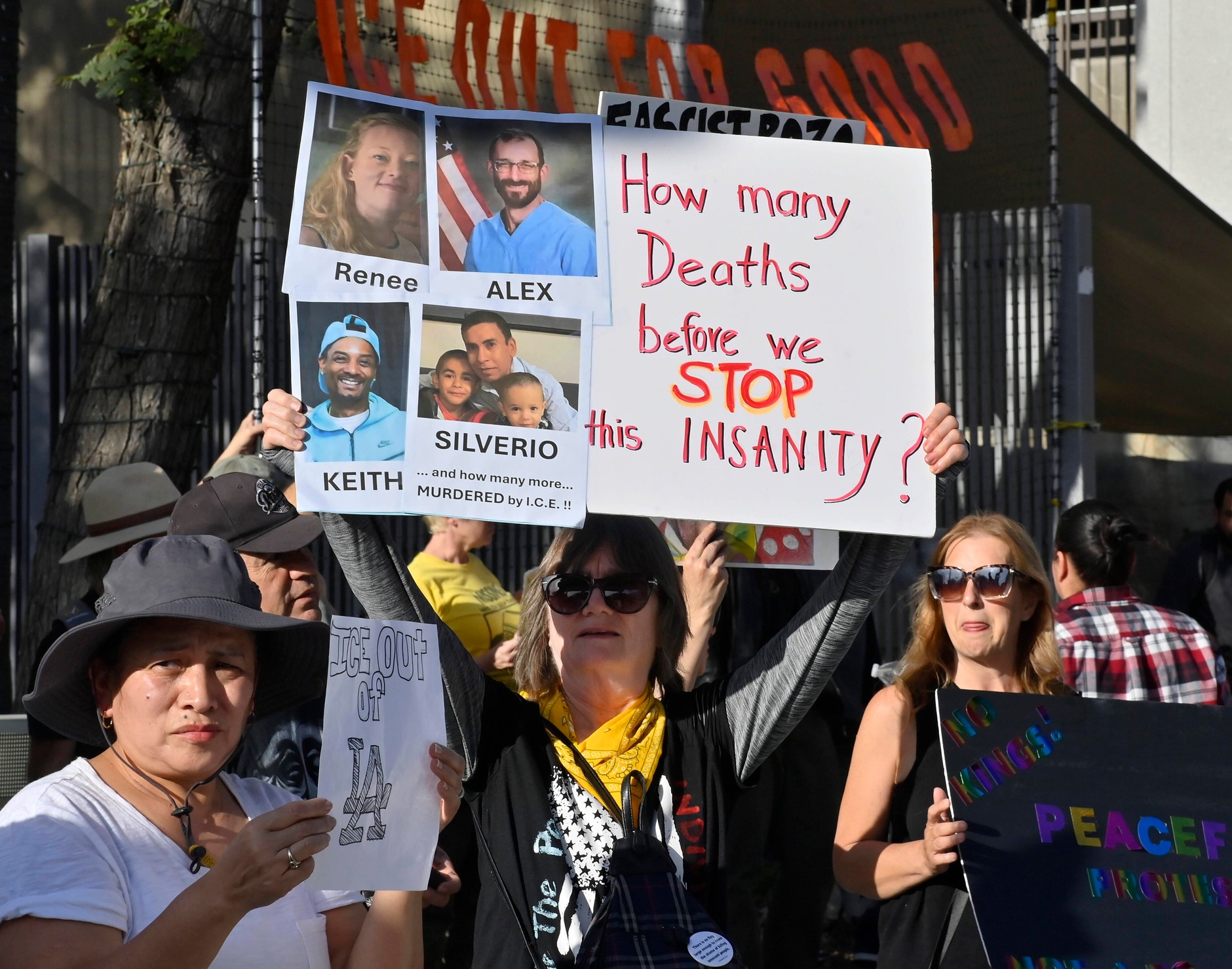
“How many more deaths before we stop this madness?” Protest against ICE actions. Los Angeles, January 31, 2026Jim Ruymen/UPI Photo via Newscom / PAP
Only 39 percent Americans expressed satisfaction with Trump's actions on migration – two percentage points less than at the beginning of the year. Almost 60 percent people who consider themselves undecided voters said ICE had gone too far.
— Their first priority is to maintain the coalition among voters, says Frances Lee in an interview with “Die Welt”. A political scientist from Princeton University, she researches the balance of power in Congress. — The president's policy was simply here contrary to the will of voters.
Therefore, Trump was forced to further retreat from his current course. Last week, he almost humbly stated in an interview with NBC that he learned that a different tone is needed in a tense situation. “I've learned that maybe we should be a little more gentle,” he said.
In foreign policy, too, Trump had to step back. Just a few hours after speaking at the World Economic Forum in Davos, where he spoke about the need to “own” Greenland, he resigned from this position. The announced sanctions against Europeans for supporting Denmark were removed from the agenda, and information suddenly appeared about the agreement regarding the stationing of US troops on the island.
Once again, Trump faced powerful criticism from within his own party. However, it turned out to be decisive unity of Europeans. Their threats of trade retaliation led to major fluctuations in the US stock market. “Iceland has already cost us a lot,” Trump said in Davos, referring to Greenland.
“Trump doesn't mince words when he feels betrayed.”
The events described show that although Trump no longer has to court voters, his party colleagues do. Unpopular decisions even force them to put pressure – publicly or behind the scenes – on the president to change course.
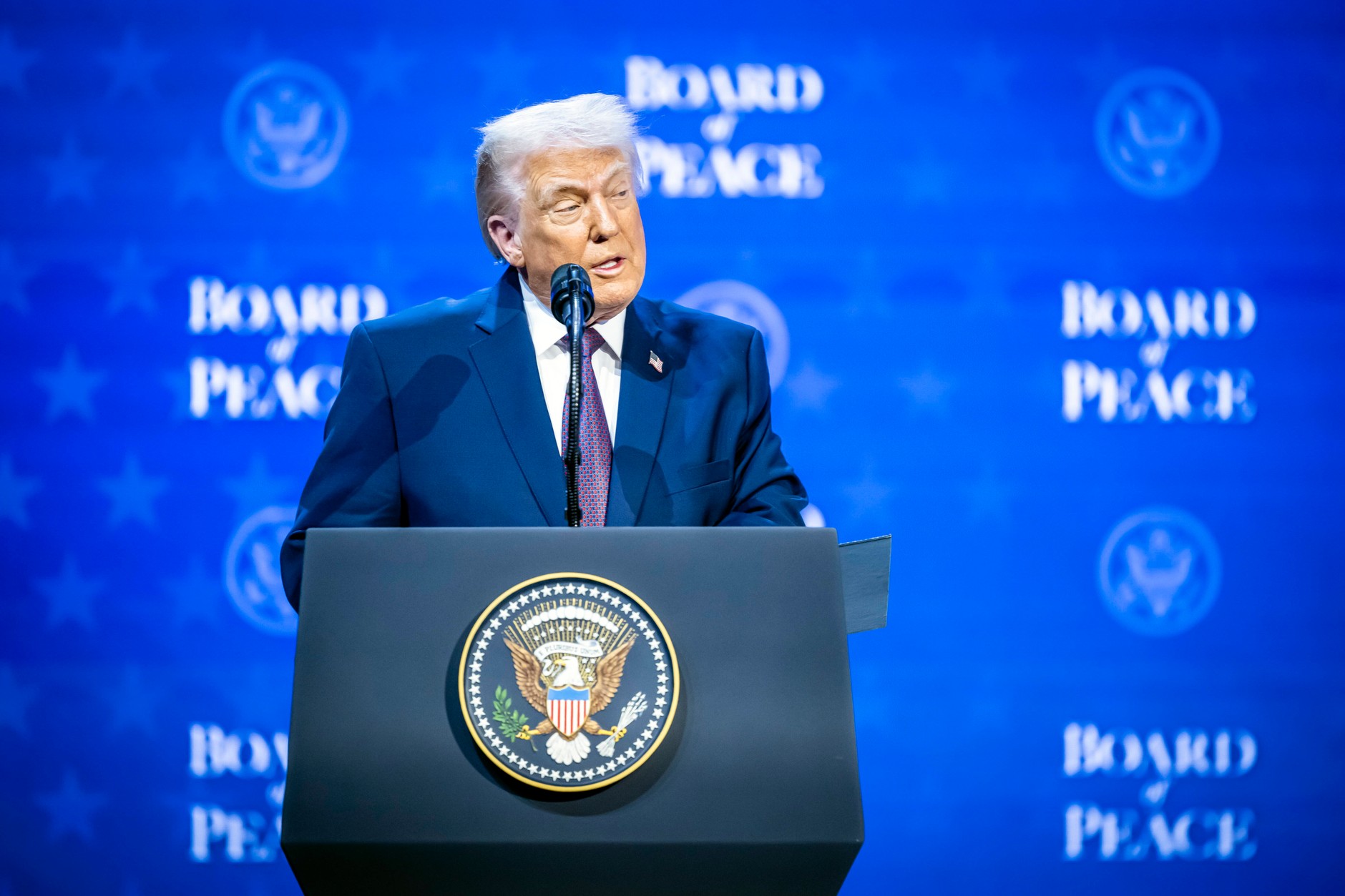
Donald Trump, President of the USA, during a meeting of the newly established Peace Council. Davos, January 22, 2026EPA/GIAN EHRENZELLER / PAP
Public opinion acts as a corrective factor less and less often – and when it does, it is limited to verbal criticism. Theoretically, Congress, as an equal authority and control toolhe should proceed much more confidently. However, when it comes to voting and actual control, MPs and senators are much less likely to oppose Trump.
After the military operation in Venezuela, the US Senate wanted to adopt a resolution requiring the president to obtain congressional approval before taking any further action. Initially, five Republican senators opposed Trump and led to a vote on the resolution.
In addition to notorious party rebels Susan Collins, Lisa Murkowski and Rand Paul, they also included Todd Young and Josh Hawley. However, on the final vote, these two withdrew and spared Trump defeat. Earlier, the president harshly attacked them.
— Opposing the president during the vote is a risk, because Trump does not choose any means when he feels betrayed – says prof. Lee. As a result, fewer and fewer MPs and senators are ready to decide on this.
As journalist Gabe Fleisher calculated, of the 493 Republican congressmen and senators who have served or are currently serving in Trump's first term in 2017, only 94 have ever voted against him. Today there are only 40 of them left after the November elections there will be at most 22. Everyone else retired, lost their mandate, resigned or died.
For prof. Lee is no surprise. — Senators and congressmen who voted against Trump they had to take into account serious negative consequences for their careers – he explains. — Trump has exceptional influence over his own electorate. Nobody wants to risk losing support.