The invisible medicine that heals our whole body. What kind of music can help us reduce stress and improve our overall health

From the rituals of ancient civilizations to modern hospital studies, music is increasingly proving its power over the body and mind. Research at McGill University and the University of Helsinki shows that melotherapy can reduce stress, improve memory and recovery.
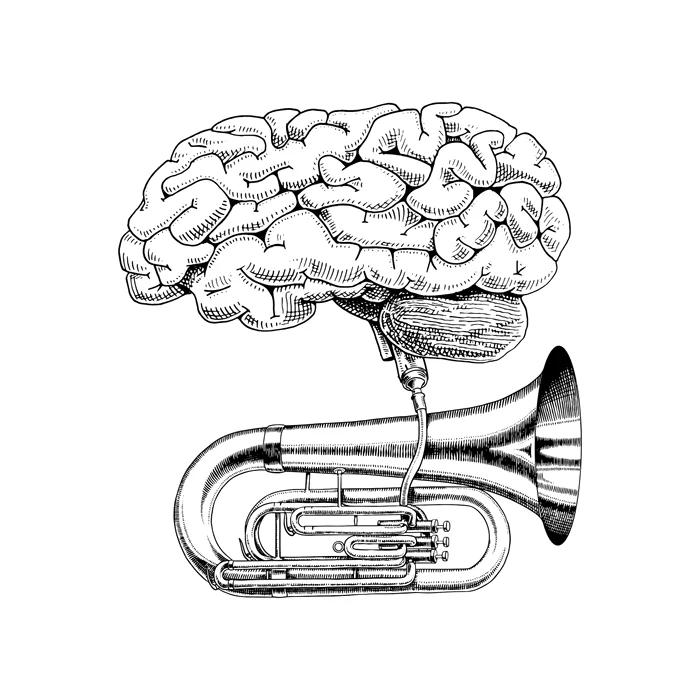
Music has effects on the human brain PHOTO shutterstock
Music is probably man's first form of artistic expression, from simple humming sounds to the first musical instruments around 100,000 years ago. Music is considered one of the most complex forms of art, but also the most accessible to all human beings, regardless of intellectual training or social condition. Throughout history, man has been accompanied by music, both in the happy moments of his existence, but also in moments of balance, sadness, despair and even death.
The influence of music on man has been studied from many points of view, including medical. Scientific studies undertaken over time, but especially in the 20th century, have unequivocally demonstrated the healing power of music on the human body. This is how melotherapy was born, a form of alternative medicine used mainly in psychiatric therapy, but with wide applications in the area of cardiovascular and neurological diseases, but also in the post-operative phase, speeding up the patient's recovery. Through scientific experiments, the genres of music with the greatest healing power have also been found, with classical music playing an essential role.
Healing sounds
For thousands of years man has been aware of the therapeutic power of music. Pythagoras, for example, considered music a remedy for both body and soul. For his part, another ancient Greek philosopher, Democritus, said that “in many diseases, the flute is an excellent remedy”. Egyptian frescoes are proof that in the 4th millennium BC, music was used to increase fertility in women. The shamans of the tropical forests of Peru consider their ritual songs as their main method of healing, and the Ashanti people of Ghana use the rhythm of drums in all their healing rituals.
It was only after the Second World War that interest in the scientific application of music in the therapy of various mental disorders steadily increased. The first scientific studies of melotherapy appeared in the post-war period, in the United States of America, as a need to improve the mental state of war veterans who suffered from post-traumatic stress, but also from other mental disorders caused by the great conflagration. In the 1950s, in Sweden, experimental music was used, and then, after the 1960s, in Germany, music associated with dance became a therapeutic method also in the field of psychiatry. Melotherapy developed strongly after the 2000s, widening its spectrum, but also the area of therapeutic coverage. For example, in 2008, psychologist Teppo Särkämö from the University of Helsinki was able to demonstrate the power of music in neurological treatments.
“Music influences our whole body through sound waves”
Scientific studies have proven that music influences us substantially. “Music influences our whole body through sound waves – obviously, through the effect it has on the brain level, but also on the heart level. The frequency, the number of decibels – are very important. It is proven that music can also change the brain waves, but also the heart rate”, says for “Weekend Adevărul” the doctor from Botoșani, Corneliu Saradan, also involved in the promotion of complementary therapies in medicine.
According to studies, sound waves have a particular impact on brain regions dedicated to emotion and sensation, but rhythm and tempo are processed differently by the brain. The frontal lobes process rhythm and tone, evoking emotions and sensations spread throughout the body with effects on various organs. Just listening to music can lower blood pressure, but also the level of cortisol, the stress hormone. Even the heart rate can be adjusted with the help of music. At the same time, research in the field of music therapy has shown that just listening to your favorite music increases the level of dopamine, a neurotransmitter associated with pleasure and reward. The study conducted by “McGill” University in Montreal, Canada, reveals that subjects who were asked to listen to their favorite music had a very high level of dopamine. This is precisely why melotherapy is accessible to anyone, without musical studies or the ability to sing.
Because of its effects on the brain, melotherapy has been used in particular to relieve or treat certain mental conditions, such as post-traumatic stress, depression and anxiety. Music relaxes, stimulates the feeling of well-being in the brain and also improves sleep, essential not only for patients with mental disorders, but for a healthy life. “That relaxing, restful music to which you can put children to sleep, the lullaby highlights these benefits, present in all cultures of the world. Before going to bed we can induce sleep with melotherapy, with aromatherapy, with lavender essential oils or with conifers, fir, spruce. Let's create a relaxing, restful atmosphere through which we can fall asleep very well”, says doctor Corneliu Saradan.
In addition, American researchers have found that music has an exceptional effect on those suffering from post-traumatic stress, those who have suffered from various types of abuse. It was concluded that music can access pleasant memories that can replace traumatic ones, providing a feeling of optimism and hope. Studies have also shown that patients with deep trauma who listened to music regularly had improved sleep quality, decreased blood pressure and stress and pain levels, and improved immune systems.
Mens sana in corpore sano
Beyond the proven effects, with outstanding results, in the field of psychiatry, melotherapy has also found application in other areas of medicine, also with remarkable results. In 2008, researcher Teppo Särkämö from the University of Helsinki and his team recruited 60 stroke patients with damage to certain areas of the brain that affected their walking and speaking. They divided the patients into two equal groups. One group was intensively applied melotherapy. After two months, the effects were remarkable. Those who listened to therapeutic music demonstrated an incredible ability to verbally recover attention and memory.
Observing that music can restore memory, the Finnish specialists went further and observed that by having the patients sing, move to the rhythm of the music, obviously as much as possible, and even make up pieces of music, the ability to speak can be recovered, as well as motor function in people with cerebrovascular accidents.
Other studies indicate that music has beneficial effects in the post-operative recovery process, especially in open heart surgery patients. “By listening to music after open heart surgery, relaxation effects of the body were recorded, mainly due to the level of oxytocin. This effect is a causal relationship starting from the psychological level (listening to music and relaxing the patient) to the physical level (the release of oxytocin). Music therapy should be used as an integral part of the multi-modal regimen administered to patients who have undergone heart surgery”, says the study developed by doctor Ulrica Nilsson, professor at the Department of Chemistry, Stockholm University.
The Mozart effect
Every individual is different and has different tastes, even in music. Some people are relaxed by heavy metal music, others by electronic or pop music. However, studies point to a certain type of music as being truly healing. It is mostly about classical and pre-classical music. Thus, the music of Bach, Vivaldi, Händel or Telemann is recommended.
One of the most important classical composers who created scientifically proven healing music is Mozart. “It is even described in medicine as the Mozart effect. It has been scientifically proven that this music positively influences the psyche and the human body. There is also pre-classical music, such as Bach. But we can also listen to Beethoven or Wagner, if we need something heroic, uplifting”, says doctor Corneliu Saradan.
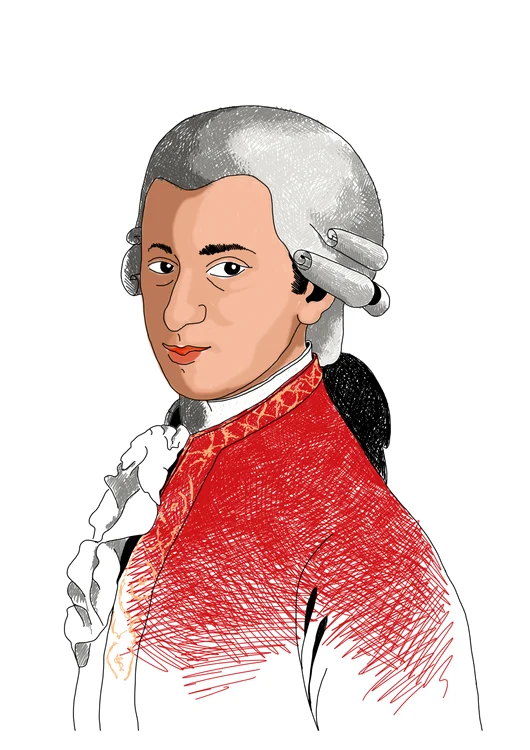
The Mozart effect is scientifically verified PHOTO shutterstock
Studies have shown that classical and meditative music can improve the quality of life and even prolong life: “The greatest health benefit is provided by classical music, but also by meditation music. The music of many composers can effectively improve the quality of life, contribute to good health and most likely prolong life. Especially the music of Bach, Mozart, but also that of Italian composers”, writes Hans Joachim Trappe in “The effects of music on the cardiovascular system and cardiovascular health”.
The same specialist says that electronic music, on the other hand, or too harsh in sound, such as hard rock music, does not have the same effects. In addition, if the music is played too loud or too close to the speakers it can have a detrimental effect. “It's about those decibels. For example, the noise produced by airplane engines, 130 decibels, breaks the eardrum. Our chest vibrates because of the music played too loud. Those vibrations are harmful. They damage hearing and, over time, even the nervous system”, says Corneliu Saradan. At the same time, music specialist Maria Renold stated in her work “Scales, Tones and the Concert Pitch” that the best frequency of music is 432 hertz.