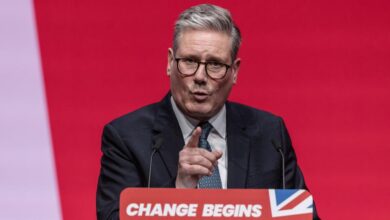
On Monday evening in Warsaw, the think-tank Center for Development Strategies (CSR) organized the presentation of the “Trends 2026” report, which was edited by the president of KGHM during the PiS government, Marcin Chludziński.
The rest of the article is below the video:
The event was attended by, among others, Deputy Speaker of the Sejm Krzysztof Bosak, former Prime Minister of the PiS government Mateusz Morawiecki and Minister in the Chancellery of the President Karol Rabenda.
The report defines the current moment as “the calm before the storm.” – This is not a time of catastrophe or a golden decade, it is rather a moment of strategic decisions – said Marcin Chludziński during the event. In his opinion, good short-term data mask growing structural challenges, such as the growing public finance deficit, the demographic crisis that limits the potential of the labor market, or energy prices for business, which – as he said – are currently the highest in the EU in Poland.
As a result, he emphasized, it is more profitable to import steel from Germany or France than to produce it in Poland.
The presidential minister warns against growing problems in the energy sector
During the debate accompanying the publication of the report, Presidential Minister Karol Rabenda emphasized that challenges in areas such as energy should be counted not even in years, but in decades, and they are gigantic. Meanwhile, as he assessed, there is no strategic discussion on this topic.
– This problem will grow year by year and will cause crisis situations – warned Karol Rabenda.
In his opinion, in the next several months one of the key topics in the energy sector will be the second big one nuclear power plant. – How will these talks proceed and who will build it also in this aspect, will Polish companies be involved – he said in an interview with Business Insider.
Among the challenges, he also mentioned the stability of the system due to the growing share of renewable energy in the Polish energy mix. He also recalled that the Presidential Palace had put forward a proposal to reduce energy prices.
Read also: Politicians publicly differ on this issue. What does the war over renewable energy and coal mean for Poles?
In his opinion, the recipes contained in this proposal can also be used at the EU level. — European industry will not be able to cope without reducing prices or fees related to system security, Rabenda noted.
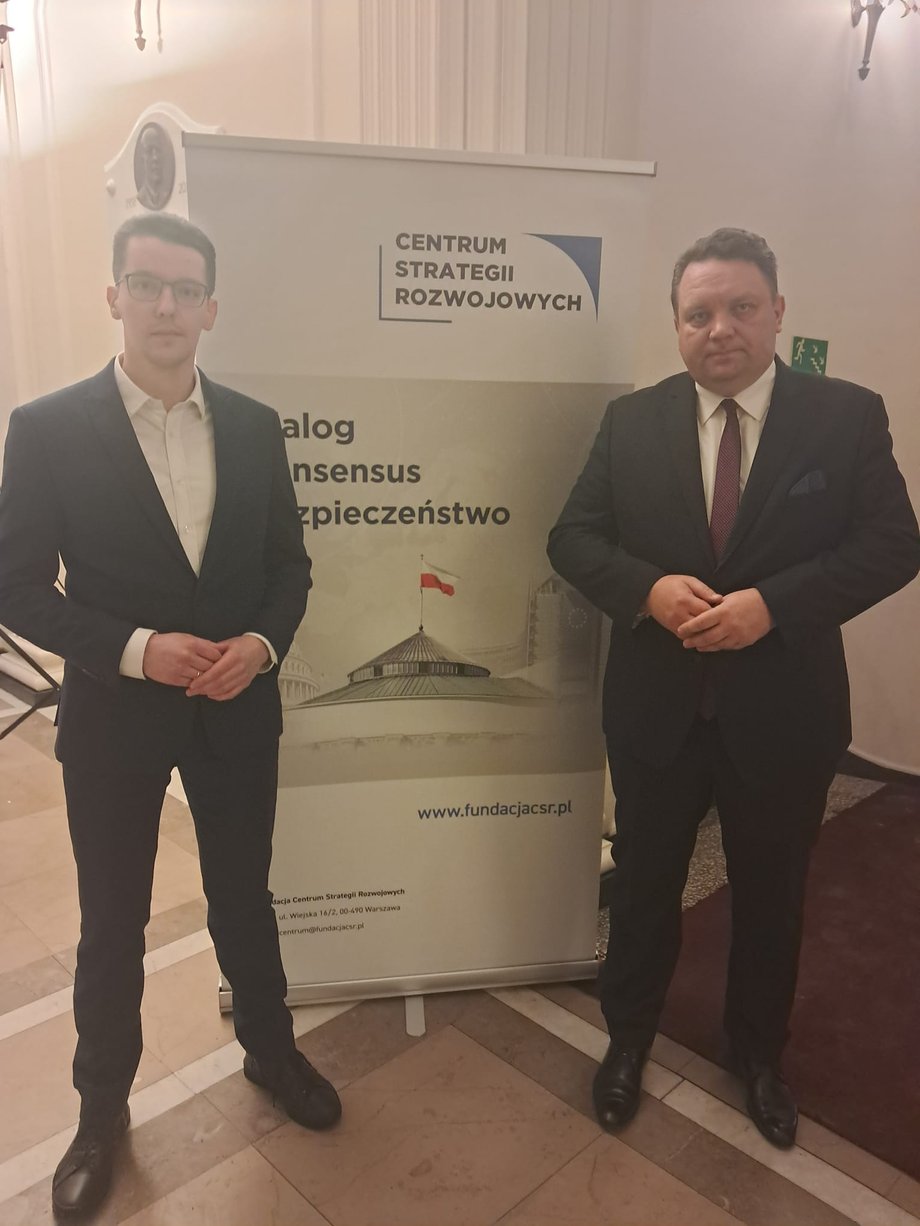
Head of the energy team of the Center for Development Strategies, Marcin Izdebski (left) and head of the council of the Center for Development Strategies foundation, Marcin Chludziński
|
Press materials / Center for Development Strategies
The EU, and especially Poland, is at risk of deindustrialization
The part of the “Trends 2026” report devoted to energy was written by the head of the energy team of the Center for Development Strategies, who also chairs the Council for Energy and Natural Resources under the President, Marcin Izdebski.
In the report, Izdebski predicts that this year we will observe a deteriorating situation in the industry and a debate on support mechanisms.
— Energy prices in Europe are significantly higher than in other industrialized countries, however Poland fares particularly unfavorablywhere the energy-intensive industry incurs the highest energy costs in the European Union – emphasizes Marcin Izdebski.
Read also: “There is chaos.” Minister of Energy on relations with the president [WYWIAD]
In response, as he notes, more countries are implementing protective instruments – for example, Germany is introducing a guaranteed price of electricity for industry at the level of approximately EUR 50/MWh (half the price lower than market prices in Poland).
— In 2026, the pressure on similar mechanisms will increase – predicts the expert.
In his opinion, with the implementation of Fit 90, energy and climate policy will remain one of the key areas of political dispute. — The voice of the industry will become increasingly stronger and will point to this in the conditions of global competition risk of permanent deindustrialization of Europe – points out Marcin Izdebski.
Read also: Poland is fighting to delay ETS2. “The 2040 target is unnecessary” [WYWIAD]
Marcin Izdebski also predicts that this year there will be a decline in the prices of energy raw materials. — The growing global supply of LNG will put downward pressure on gas and electricity prices in Europe, he says.
At the same time, he notes, despite the declines, energy prices in the EU will remain significantly higher than in the US or Asia, which will continue to undermine the competitiveness of the European economy.
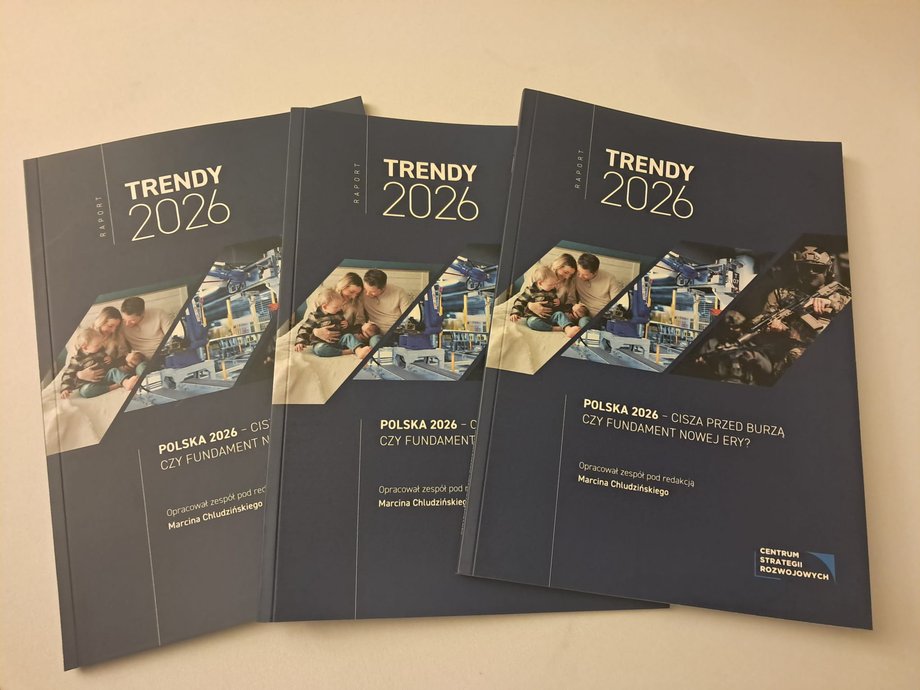
Trends 2026 report published by the Center for Development Strategies
|
Press materials / Center for Development Strategies
In Marcin Izdebski's opinion, as a result of the phenomena described above, this year, a short-term improvement in market conditions will be accompanied by growing structural constraints.
These structural tensions, as Marcin Izdebski points out, “will determine the functioning of the system in the medium and long term.”
— One of the key sources of these tensions is the production structure. The rapidly growing share of uncontrollable sources creates strong incentives for the development of energy storage. However, this does not change the fact that In the coming years, the availability of available capacity in periods of low RES generation will remain a major challenge – assesses.
This gap, he adds, will not be able to be filled by energy storage alone, while aging coal units – burdened with the rising costs of CO2 emissions – will perform increasingly worse in market conditions.
In practice, explains Izdebski, this means the need to create another support mechanism for existing conventional units, which will ensure their profitability until they are fully replaced with new available capacities. – This also applies to new sources, which – due to the expected short operating time in conditions of oversupply of energy from renewable energy sources – will also require support – he adds.
Energy consumers will pay for current investment decisions in the future
The expert reminds that last year the European Commission approved an aid mechanism for nuclear projects with a capacity of 3.8 GW, and the construction of over 5 GW of new gas units was contracted under the capacity market – their total capacity will exceed the potential of the largest coal-fired power plant operating in Europe in Bełchatów.
– Additionally, another 3.4 GW of offshore capacity has been contracted, in addition to the 5.9 GW already implemented – he enumerates.
As he emphasizes, each of these decisions means not only the modernization and expansion of production capacity, but also launching multi-billion support mechanisms, financed through additional fees transferred to the accounts of energy consumers.
He emphasizes: – The scale of the undertaken commitments permanently limits the future flexibility of energy policy – both due to long-term contracts concluded with producers and long amortization periods for new sources, reaching several years in the case of gas and offshore and several dozen years in the nuclear energy sector.
According to Marcin Izdebski, the increasing costs of aid mechanisms, combined with the increasing costs of expanding and maintaining the network infrastructure necessary to integrate uncontrollable RES sources, will have a key impact on the level of energy bills in the coming years, regardless of current energy prices on the wholesale market.
Read also: Reducing energy prices divides experts. “A bull's-eye” or “pious wishes” [ANALIZA]
Resistance to the EU's climate policy will grow
In Marcin Izdebski's opinion, one of the key energy trends this year will be the growing resistance to the EU's climate policy.
This year, as he points out, there will be a transition from declarations to regulations – the Fit 90 package adopted by the EU in December 2025, which assumes a 90% reduction in greenhouse gas emissions. by 2040 it enters the operationalization phase.
— The year 2026 will be dominated by work on detailed regulations and directives that will determine the real pace, costs and scope of not only the energy transformation, but also the economic and, to some extent, social transformation in the Member States – says the expert.
While, as Marcin Izdebski notes, Fit for 55 focused on accelerating transformation, Fit 90 means striving to almost completely eliminate emissions and a fundamental change in the rules of functioning of the European economy.
— In 2026, this package will begin to be translated into specific regulations and directives specifying not only ambitious climate protection goals, but also the pace of their implementation, the scope of exceptions and the method of distributing costs between Member States and individual industries, he points out.
In his opinion, unlike Fit for 55, Fit 90 will be much more legislative and politically complex.
— It covers not only the energy sector, but also industry, transport, construction and agricultureand its implementation will directly affect the competitiveness of national economies – he mentions.
And he predicts: – It is in 2026 that the weight of the debate will shift even more from climate declarations to a tough discussion about costs, security of supplies and the limits of social acceptance of transformation costs.
In Marcin Izdebski's opinion, this will take place under conditions of strong economic pressure from non-European economies not burdened by decarbonization policy.
Read also: What will be the fate of coal-dependent regions such as Bełchatów, Konin and Silesia? The expert presents a plan [WYWIAD]
— As a result, 2026 may turn out to be a turning point: on the one hand, it will provide price relief resulting from current market conditions, and on the other hand, it will reveal the full scale of long-term regulatory and cost obligations that have already been embedded in the functioning of the energy system – he predicts.
What does this mean? In Izdebski's assessment, despite relative price stability, 2026 in the energy sector will be a period of growing political conflict between supporters of an ambitious climate transformation and those who point to the growing costs of this policy and the resulting economic and geopolitical risks.
— The shape of EU regulations implementing the 90% emission reduction target will be of key importance.including the method of dividing the costs of this policy between Member States, industries and individual social groups – concludes the expert.