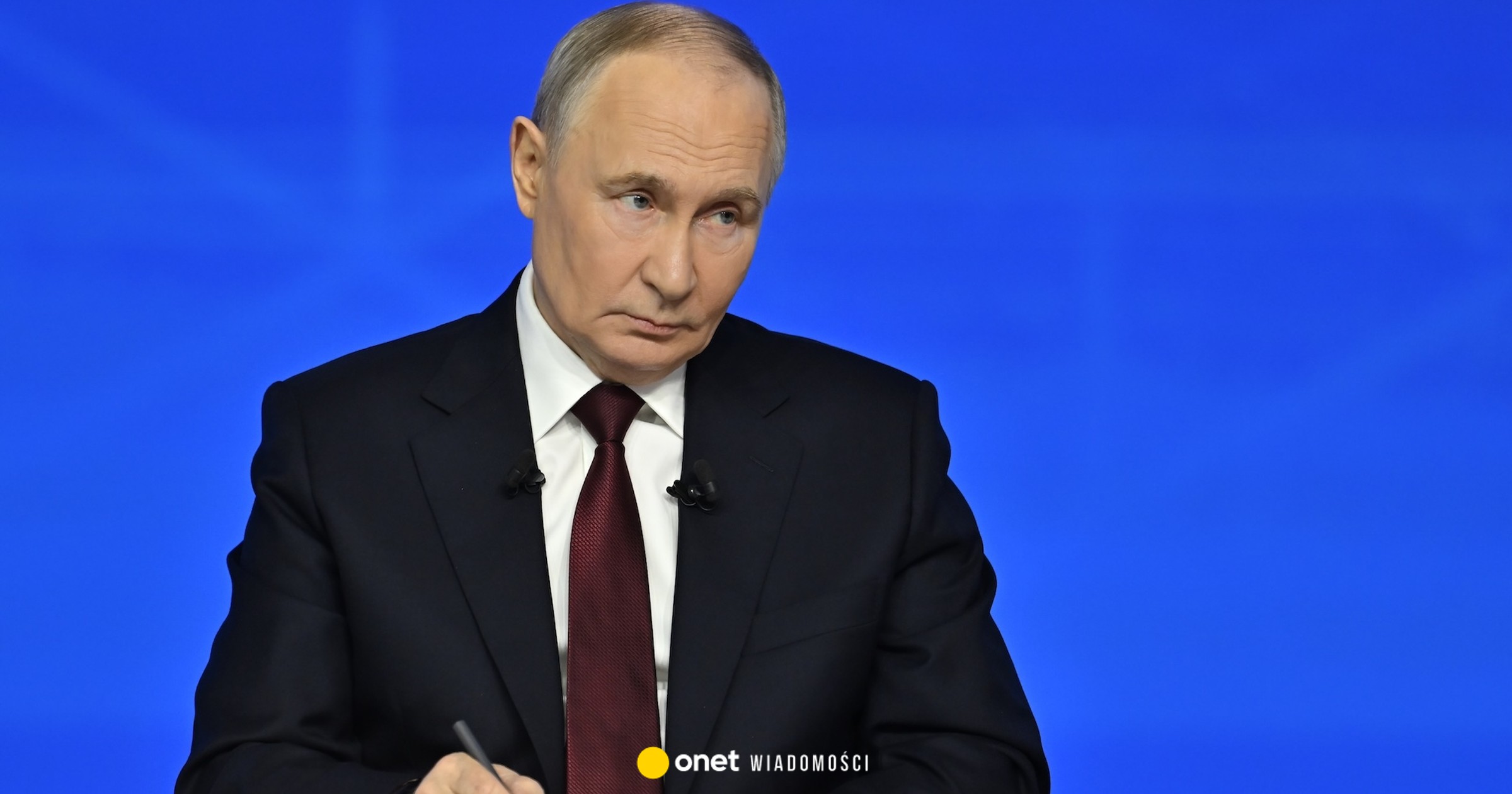
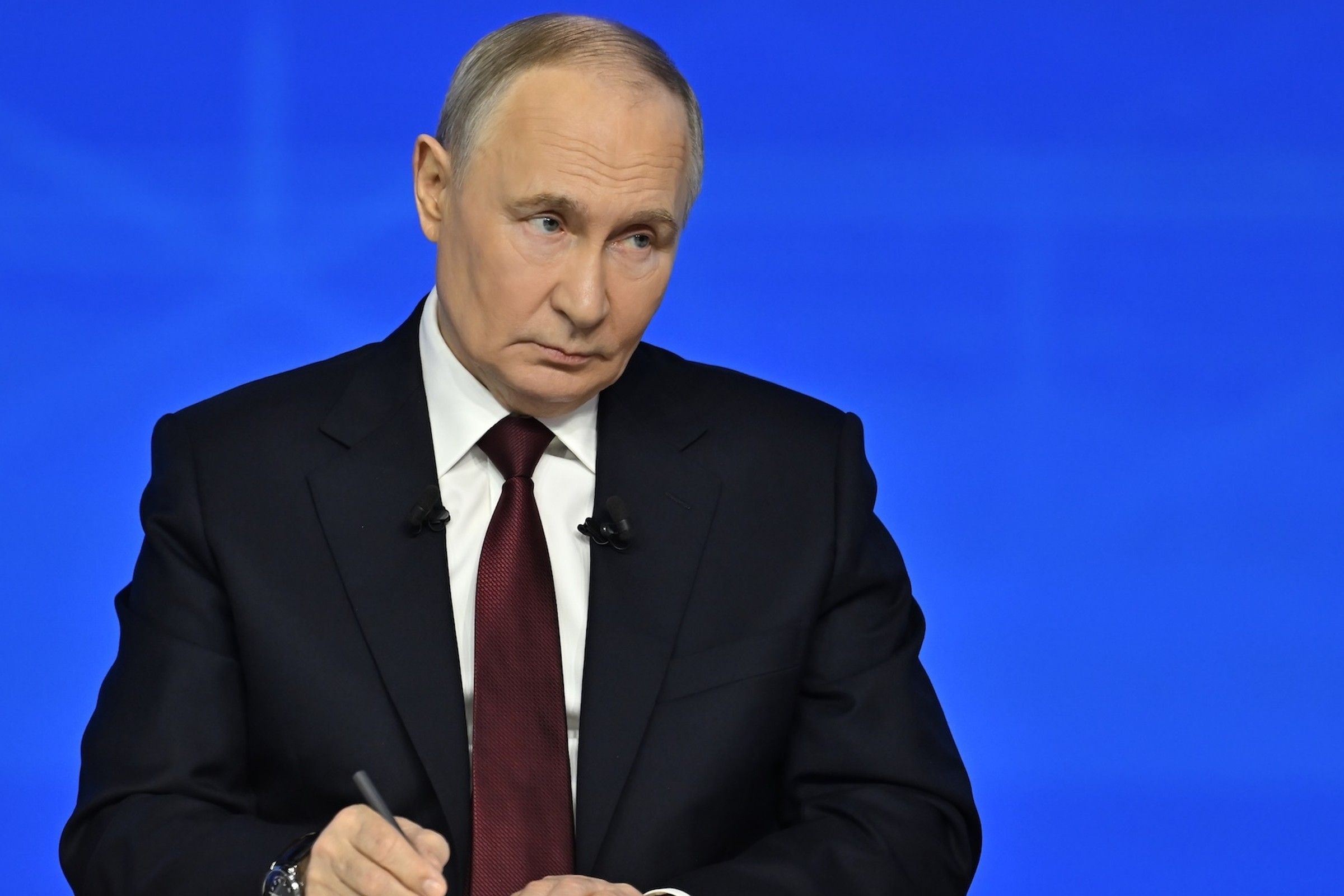
According to the Prime Minister, the government's current task is to create conditions by the end of the year to formulate a clear forecast on how to “stimulate economic growth in the country.”
In response to a question from propagandist Pavel Zarubin about the current situation, Mishustin stated that “everything is quite stable”. — We fulfill all social obligations and we will continue to do so. (…) It is also very important for us that national projects, state programs, and especially national projects regarding technological leadership are implemented, he added.
The Prime Minister explained the economic slowdown with conscious actions to reduce inflation. — However, the consequence of this fight is inflation, which is lower than forecast. It amounted to exactly 5.59%. [w 2025 r.]. But of course the economic growth rate has slowed down, Mishustin said.
After two years of the war boom, when GDP grew by over 4%. annually, the Russian economy was in a deep depression. In 2025, growth slowed to 1%, 20 of 28 civilian industries went into decline, and both small and large businesses had trouble repaying debt. According to the central bank's data, over 10 trillion rubles (PLN 457 billion at the current exchange rate) of loans on bank balance sheets became a problem.
The article continues below the video
Poor prognosis
— In general, our economy is stagnant, even stagnant stagflation – said one of the key pro-Kremlin economists, Dmitry Belousov, deputy director general of the Center for Macroeconomic Analysis and Short-Term Forecasts (CMAKP) and brother of Defense Minister Andrei Belousov.
The Russian economy entered the new year finding its footing trapped on three sides. The war against Ukraine continues to consume financial, material and human resources, high interest rates and the reduction of civilian budget spending put pressure on business and aggregate demand, and restrictions on access to technology and equipment caused by sanctions lead to the aging of production potential, as noted by former Vice-President of the Central Bank, senior researcher at the NEST Center in London Sergei Aleksashenko. — It is difficult to imagine that the economy will be able to develop in such a situation – said the expert.
The government hopes that GDP will grow by 1.3 percent, but few people share its optimism. The International Monetary Fund (IMF) has lowered Russia's GDP growth forecast this year to 0.8 percent, assuming that the Russian economy will grow four times slower than the global economy (3.3 percent).
The money source is drying up
The Russian situation is made worse by the fact that revenues from the Kremlin's most important source – oil and gas – are reaching historically low levels.
Authorities are trying to compensate for the forced withdrawal of oil by increasing other revenues – primarily by increasing taxes and fees for citizens and businesses. Without balancing the budget through such methods, the Kremlin will likely not have enough resources to continue the war in Ukraine. At the same time, he is in no hurry to withdraw his aggression, which does not bode well for the Russian economy in 2026.
The January report of the Russian Ministry of Finance on the implementation of the federal budget for 2025 showed sharp decline in oil and gas revenues — last year, the country earned 23.8% on the sale of raw materials. less than in 2024. The ratio of oil and gas revenues to other (non-oil and gas) revenues at the end of 2025 was 22.7 to 77.3 percent. This has not happened for at least the last 20 years. Previously, the share of income from raw materials fell below 30%. in 2020, when the world experienced coronavirus lockdowns, which led to a collapse in oil demand and prices.
I’m Ashley Davis as an editor, I’m committed to upholding the highest standards of integrity and accuracy in every piece we publish. My work is driven by curiosity, a passion for truth, and a belief that journalism plays a crucial role in shaping public discourse. I strive to tell stories that not only inform but also inspire action and conversation.