Scenarios for the continuation of Russia's war against Ukraine: analysts tested the future through strategic games

The consulting company Advanter Group created, for the Future Founders community, a series of strategic simulations aimed at evaluating the possible developments of the Russian-Ukrainian war. The analysis is based on game theory, behavioral models and system-dynamic modeling. The results were presented by Andrii Dligaci, a professor at Taras Shevchenko National University in Kyiv, in the Zerkalo Nedeli publication.
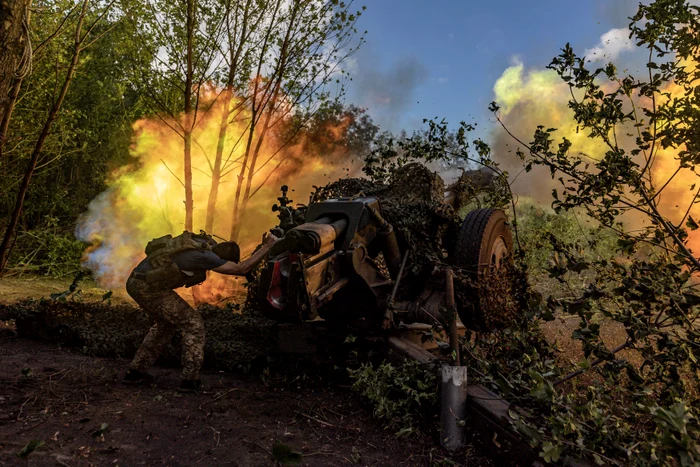
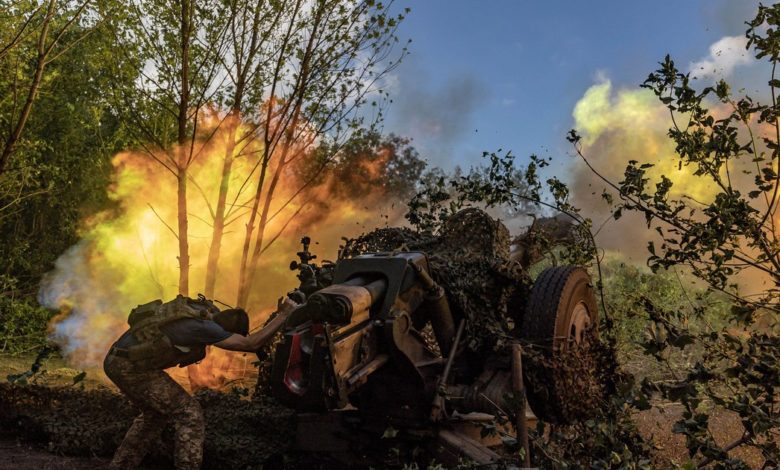
The war in Ukraine enters its fifth year/PHOTO: Profimedia
According to the author, simulations for the year 2026 identified ten basic scenarios that describe the current state of the international system. These are not equivalent: some represent short-lived transitions, while others can become “strategic plateaus” on which the world could remain stuck for years.
Inertial scenarios (S1–S3)
The dominant scenario remains S1 – a protracted positional war. The front stabilizes and the confrontation moves into the area of military technology, long-range strikes and economic exhaustion. There is no quick fix, but a constant exchange of blows that both sides are able to sustain.
Negotiation scenarios (S4–S6)
The most discussed is the S6 scenario – a large-scale agreement between the United States and Russia. It presupposes a deal between Washington and Moscow, over Ukraine, that would enshrine the status quo. For many external actors, the scenario seems like a convenient way out of instability, but the research points to deep internal fragility.
Degradation scenarios (S7–S9)
These include escalations after failed negotiations, cracks in the Western coalition or internal destabilization in either Ukraine or Russia.
Victory Scenario (S10)
It presupposes the emergence of a new security architecture, in which Ukraine becomes a full-fledged actor, receives NATO guarantees and is integrated into the Western defense system.
“For Ukraine, the main conclusion is that mere resistance will not be enough. In 2026, the strategy of survival must give way to a strategy of managing derivation“, emphasizes the author.
Ukraine must change its basic strategy in the war with Russia
Analysts say Ukraine needs to create “useful instability”.
According to Andrii Dligaci, Ukraine must abandon the current survival strategy and adopt one of strategic imbalance management. This is a challenge for both the political leadership and the intellectual elites of the country.
What does this change mean in practice?
1. First, the elimination of opaque negotiations.
Ukraine must transform any bilateral discussions – such as possible Washington-Moscow negotiations – into multilateral formats. Kyiv's presence at the negotiating table is not only a matter of fairness, but the only way to prevent artificial and unsustainable stability.
2. Second, focus on rationality, not emotion.
The main message to partners in 2026 should not be “help us”, but “without us, your security system does not work”. Ukraine is not a problem to be “closed” by an agreement, but a strategic asset that contributes to Europe's security and competitiveness.
3. Third, getting out of the inertia trap.
Ukraine must create advantageous imbalances, proposing asymmetric solutions in the defense industry and in diplomacy, which will force the other actors to reevaluate their positions.
“The world of 2026 is a space of high tension, where stability is a dangerous illusion. The future does not belong to those who seek tranquility, but to those who know how to transform turbulence into a tool for building a new order. Ukraine will either become the architect of this new balance, or remain its main victim,” says the author.
Scenarios where the conflict could stop
Using game theory, the analysts have identified two scenarios in which none of the actors involved can improve their position by unilaterally changing strategy – a condition that could lead to the cessation of conflict. However, only one of these scenarios is considered relatively stable.
The study, conducted by Advanter Group for Future Founders, analyzes the interactions between five, four and three actors, in some cases without treating Ukraine or Russia as independent subjects.
The analysis indicates two major strategic combinations for the year 2026:
Scenario S1 – positional warfare, as “coordination equilibrium”.
All actors accept the impossibility of a quick victory. The West provides enough support for Ukraine not to lose, and Russia exerts enough pressure without triggering direct NATO intervention. It's an exhausting but predictable situation for the global elites.
Scenario S6 – the US-Russia agreement as a “quiet trap”.
The modeling shows a strong tendency of the system towards this scenario, perceived as a fast track to stability. The major risk is that this balance exists only in theory: in reality, it does not resolve fundamental contradictions and sets the stage for even deeper destabilization.
“The problem of 2026 is that the world is looking for a comfortable balance where, by definition, there can be none. When the strategic goals are diametrically opposed – the destruction of Ukraine's sovereignty versus the restoration of international law – any middle solution is not peace, but only the accumulation of energy for a new conflict“, concludes the author.