What strategy did German Chancellor Friedrich Merz resort to in the confrontation with Donald Trump?

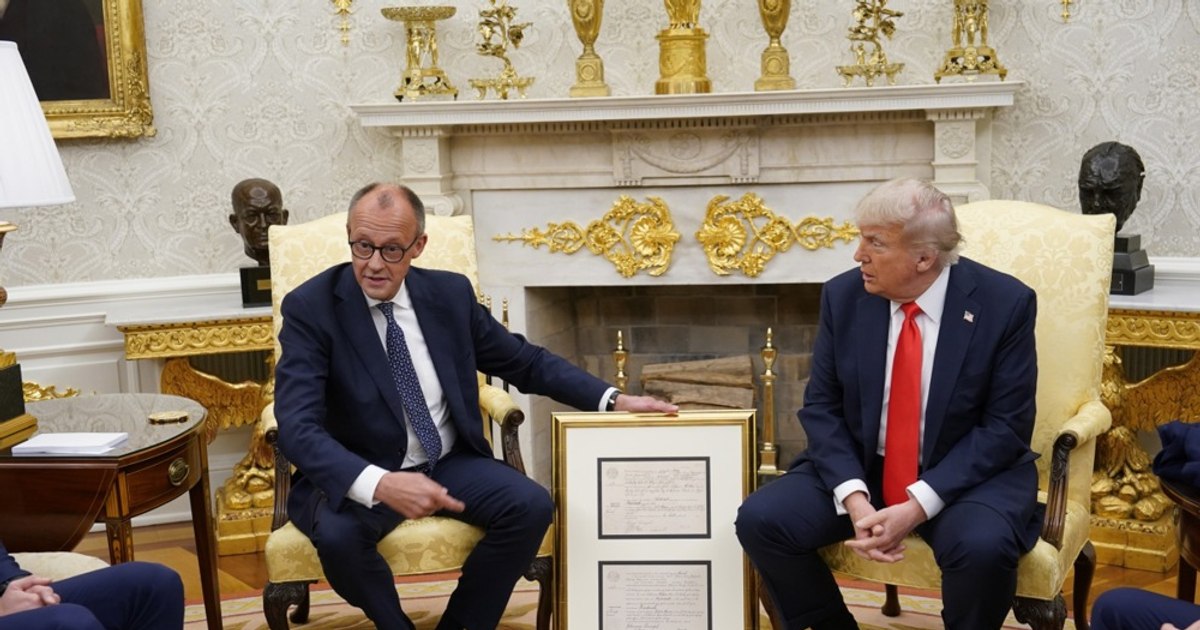
After a period of acute tensions with Washington, the German chancellor is resorting to a familiar method: do as he does and do as you do, in the face of the American president's rhetoric to ease diplomatic relations.
Friedrich Merz and Donald Trump at the White House/PHOTO: AFP
Faced with the prospect of new tariffs imposed by Donald Trump on the German auto industry — on the heels of Washington's threat to withdraw American troops from Germany — Chancellor Friedrich Merz took a surprisingly conciliatory stance. His message is simple: Trump is essentially right, writes politico.eu.
This shift in tone comes after last week Merz was unusually harsh in his criticism of the Trump administration's handling of the Iran conflict. The White House leader's reaction targeted Berlin's weak points: its reliance on US security and its already strained export-based economy.
Diplomacy of “small steps”
Despite the seriousness of the American threats, Merz and his cabinet appear to be downplaying the risks, returning to the strategy of giving Washington the answers it expects, both on trade and the Iranian file.
German government spokesman Stefan Kornelius rejected the idea of an emergency visit by the chancellor to Washington, stating that the next official meeting would only take place at the G7 summit in France in mid-June. Until then, Berlin is counting on “constant communication” to avoid further escalation.
For Chancellor Merz, the tactical logic is inescapable: direct confrontation risks producing adverse effects, as the past few days have demonstrated. The result is a U-turn diplomatic maneuver designed to temper the US president's impulses.
Responsibility passed to Brussels
When Donald Trump threatened 25% tariffs on European cars, accusing the EU of delaying the “Turnberry” trade deal, Friedrich Merz did not defend the EU bloc, but shifted the blame onto it.
“The president is partly disappointed that we in the EU haven't finalized the deal yet — and, to be honest, rightly so,” Merz said in an interview on German public television. “He is losing patience because we reached an agreement last August, but the European side continues to formulate new conditions.”
The same pivot was visible with regard to Iran. After earlier suggesting that Trump had been humiliated by the regime in Tehran, the chancellor hit back in a message on social media, stressing that the United States remains NATO's most important partner and that Berlin shares the common goal of preventing Iran from getting nuclear weapons.
Tensions within the governing coalition
However, Washington's appeasement strategy is not agreed upon by all governing partners. The Social Democrats (SPD) are losing patience and are demanding retaliatory measures through the European Union's “trade arsenal”.
“The German government cannot accept this situation,” said Sebastian Roloff, an SPD lawmaker. “The past has shown us that we don't have to give in to Trump. We need countermeasures that make it clear that the U.S., too, depends on smooth global trade.”
Troop Withdrawal: An Opportunity in Disguise?
Even on the issue of the withdrawal of 5,000 American troops from Germany—a decision that surprised even the Pentagon—Merz's ministers displayed bizarre resignation. Moreover, they presented the situation as a signal for Europe to assume more responsibilities within NATO.
Defense Minister Boris Pistorius and Foreign Minister Johann Wadephul suggested Trump's actions put Europe on the right track to developing its own defense capabilities — exactly what the US president has been asking European allies to do for years.
The long-term stake
Friedrich Merz's bet is that Trump's anger will die down, in part because many Republicans support trade cooperation with Europe. Pressure from German industrial giants, who are demanding a de-escalation of tensions to avoid the enormous costs of tariffs, also weighs heavily in the Chancellor's calculations.
It remains to be seen whether this policy of verbal concessions will be enough to protect Germany's economic interests, or whether Berlin will ultimately be forced to choose between full alignment and open trade war.