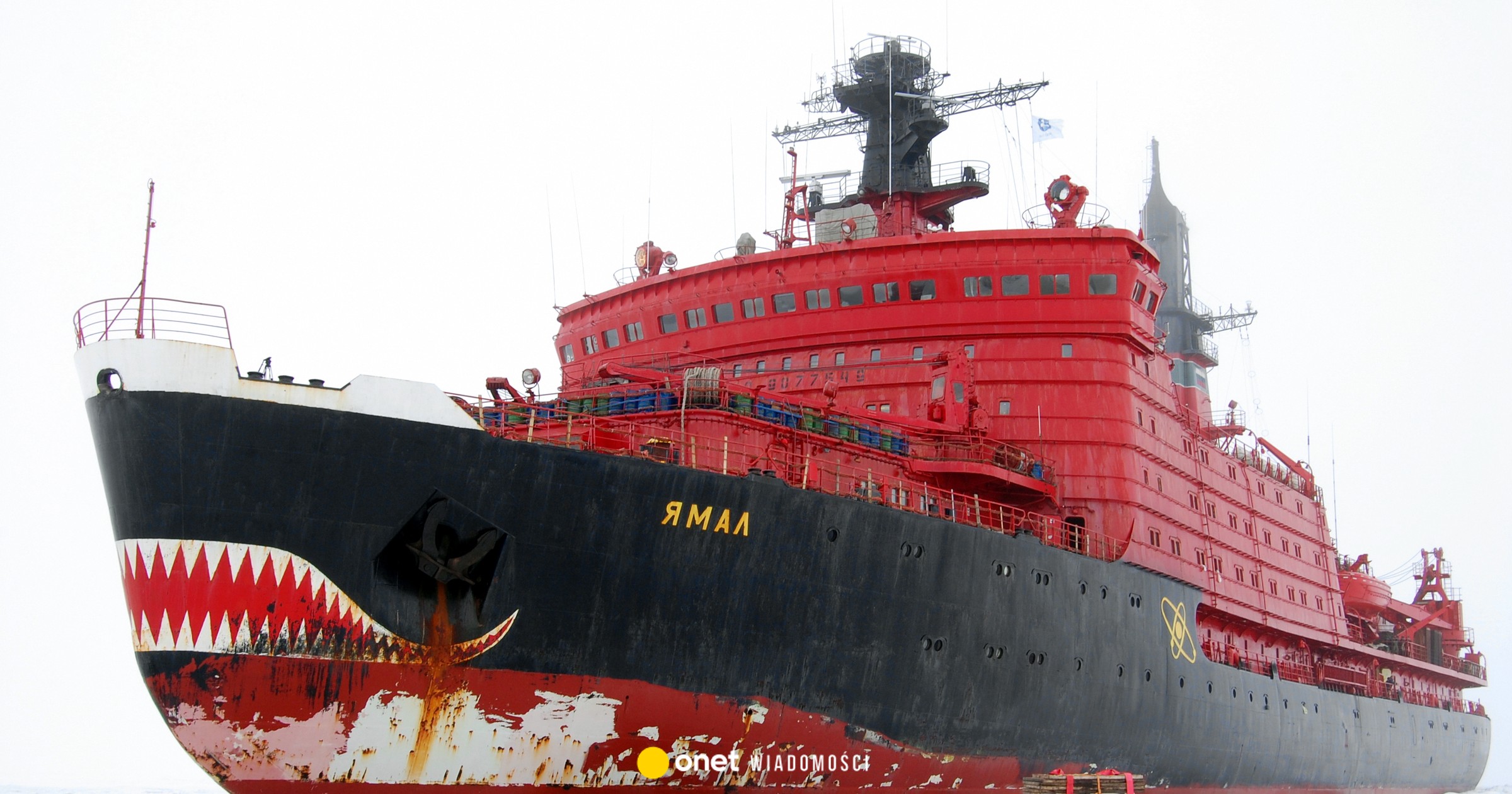
As reported by the Russian news agency TASS, this decade Russia is to receive the largest in history, over 200 meters nuclear-powered icebreaker “Leader”. Its construction is another proof of Russian dominance, if we focus on ships that may prove to be invaluable units in the future in the context of the fight for control over the Arctic.
Russia is also the only country in the world that already has nuclear icebreakers. The Kremlin's fleet is also expanding with combat structures of this type and is years ahead of the Americans in this technological race.
If we are to believe the reports of the TASS agency, quoting Vladimir Putin, the newest and currently the largest Russian nuclear-powered icebreaker is to be completed by 2030. Even if work on it is delayed, it will not change the fact that it will be the most powerful structure of this type in the world.
The ship, powered by two RITM-400 nuclear reactors, will be over 200 m long, 47 m wide and have a displacement of almost 70,000. t. For comparison, the largest and most modern US aircraft carrier has a displacement of approx. 100,000. t. In terms of displacement (i.e. the mass of water displaced by the submerged part of the hull), the Russian design is quite close to the 330-meter-long American ship, which only shows how huge a structure we are dealing with here.
“Leader” will be able to break ice cover over 4 m thick, opening a 50 m wide channel behind it for other Russian ships. For example, for those traveling on the Northern Sea Route, a trade route through the Arctic that is the shortest water route from Europe to Asia. The problem is that on average nine months of the year this trail is covered with ice. However, “Leader” will transform it into a year-round transport route – shipping will no longer depend so much on the weather and the thickness of the ice cover.
The ship will also be a symbol of Russian dominance when it comes to icebreakers. Russia already has several dozen such structures, including eight nuclear-powered ones, and is constantly building more. In the future, ships of this type may be invaluable in the context of extracting natural resources from the Arctic and securing Russian influence in this increasingly important region of the globe.
The changing climate makes increasingly larger areas of the Arctic available for exploration and exploitation. And we are talking about an area worth hundreds of billions of dollars. The Arctic contains deposits of oil and gas amounting to tens of billions of tons, or as much as 40 percent. world resources of nickel and platinum. This region is also of great importance from a military point of view, being a kind of missile highway for intercontinental ballistic missiles of Russia, the United States and China.
Watch the cruise of the Russian Arctic-class nuclear icebreaker:
What's even more surprising is the fact that Americans have been neglecting their icebreaker fleet for years, as if they had completely forgotten about expanding their ability to move freely in the Arctic. Today, the US Navy does not have a single ship of this type, and the only three active icebreakers are operated by the Coast Guard, two of which entered service in the late 1970s.
Only around 2030 will the Americans receive the first new icebreakers, so the Pentagon will be chasing the Russians in this matter for many years, who have been gradually expanding their “ice fleet” for years. It is also worth adding that The design of new American icebreakers assumes equipping them with weapons in the form of 12.7 mm heavy machine guns and, above all, two 30-mm Mk44 Bushmaster II cannons with a range of approximately 5 km.
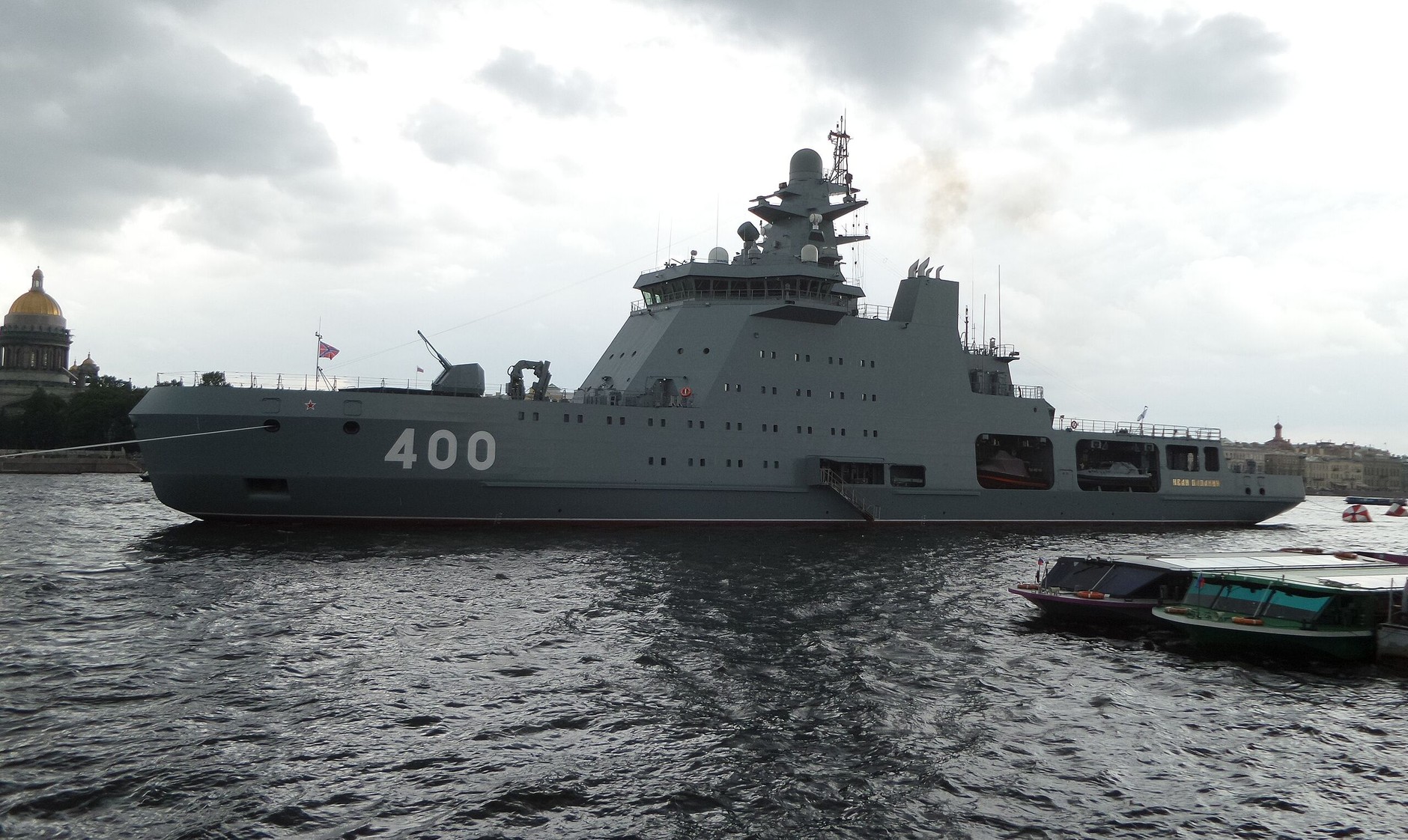
In the photo, Ivan Papanin, a patrol combat icebreaker of RussiaAlekc2m / Creative Commons / Photos
However, even in this matter, the US army must chase the Russians. The Kremlin already has in its arsenal icebreakers with significant combat capabilities, to mention only the Project 23550 patrol icebreakers, the first of which entered service in 2025. These 114-meter ships are armed with a 76 mm naval gun, machine guns, two 30 mm cannons and (optionally) eight cruise missiles. They also have room for a helicopter. It is clearly visible that in terms of combat capabilities, they are significantly ahead of the future US Navy icebreakers.
The Russians also do not hide the fact that they have extensive plans for combat structures of this type. Their armament is to be adapted to the ice cover of the area in which they are to operate (thicker ice equals a smaller arsenal and vice versa). Work on another Project 23550 unit is also underway in Russian shipyards, and two are close to active service.
All this proves how much work the Pentagon has to do in terms of modernization, or rather building, of its “Arctic fleet”. Time will tell whether the Americans will be able to, at least to some extent, catch up with one of their biggest geopolitical rivals in this matter – for now they are in a very difficult position in this race.