What does Tulsi Gabbard's position as director of national intelligence have to do with the US midterm elections?

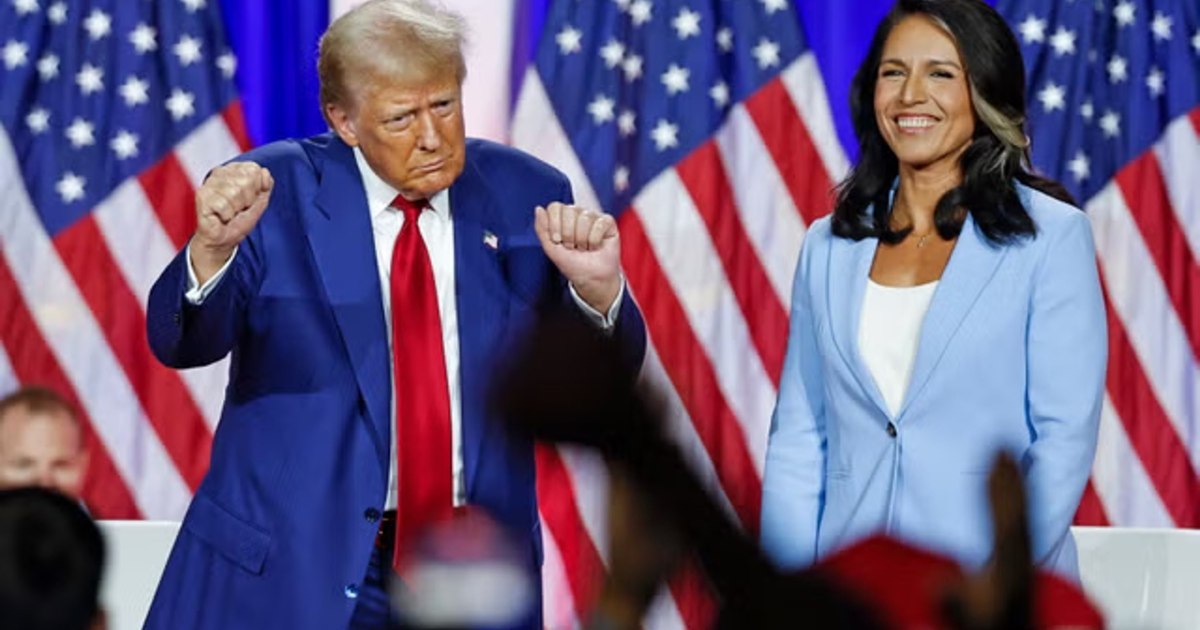
The presence of US National Intelligence Director Tulsi Gabbard at an FBI search of an election office in the state of Georgia has drawn strong criticism from election officials and election security and law experts, CNN reports.
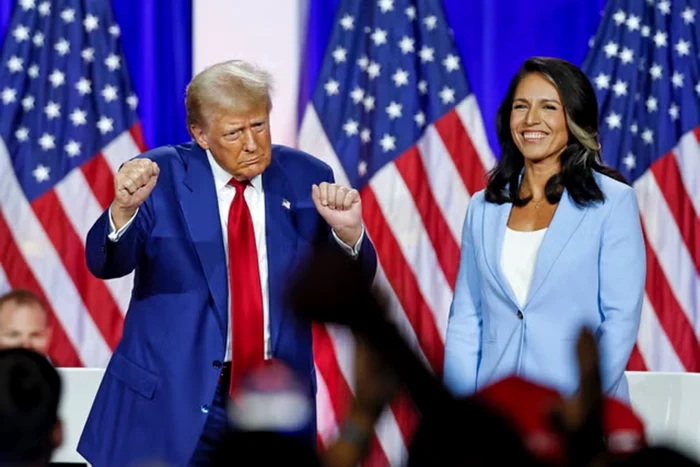
Donald Trump and Tulsi Gabbard/PHOTO:Getty Images
After federal agents seized ballots used in Fulton County's 2020 election last week, Gabbard defended her involvement, citing a range of intelligence laws and policies. In a letter to Democratic lawmakers on Monday, she said her presence was requested by President Donald Trump and was part of her legal duties to coordinate and analyze information related to election security, including counterintelligence, foreign influence and cyber security. The White House confirmed that the president asked him to travel to Atlanta.
But several former senior intelligence community officials and election law specialists said the director of intelligence has no legal authority over such an FBI operation. They warn that his involvement risks blurring the strict separation between foreign and domestic intelligence activities introduced after the Watergate scandal.
A former counter-intelligence official said any perception that the intelligence services are politically involved at home undermines public trust, recalling the 1970s Church Commission investigations that exposed serious abuses by the intelligence agencies and led to major reforms.
The FBI raid took place on January 28 in a key state for Donald Trump, who has repeatedly claimed — without evidence — that the 2020 election was rigged, claims dismissed by courts and official audits.
In addition, Gabbard's office previously had access to voting machines used in Puerto Rico to analyze possible security vulnerabilities, according to a spokesman.
Gabbard oversees 17 agencies in the intelligence community
Critics say that while Gabbard cites external threats, she has not indicated the existence of concrete evidence to justify her involvement in law enforcement action. A former intelligence community lawyer emphasized that the director's duties are limited to coordination and analysis, not direct operations or investigations.
The Director of National Intelligence coordinates 17 agencies in the intelligence community, but has no operational or law enforcement powers. For this reason, his presence during the execution of a court order was considered unusual by many specialists.
Democratic Senator Mark Warner has called for Tulsi Gabbard to testify under oath before the Senate Intelligence Committee. The committee's chairman, Republican Tom Cotton, declined to comment.
The White House defended the decision, saying the president had appointed Gabbard to oversee election security and integrity and that she works directly with the FBI director. Still, former officials stress that protecting elections is the responsibility of state and local governments, not intelligence agencies.
Experts also draw attention to the fact that, in the past, American intelligence agencies avoided getting involved in the evaluation of the internal electoral process, limiting themselves strictly to the analysis of external threats. This separation is considered essential to protect democracy and public trust in state institutions.
The NSA intercepted a call by foreign intelligence services about a person close to Donald Trump
The US National Security Agency (NSA) last year intercepted an unusual phone call between two members of foreign intelligence services that mentioned a person close to President Donald Trump, according to a whistleblower lawyer briefed on the case.
According to him, the highly sensitive information was brought to the attention of the Director of National Intelligence, Tulsi Gabbard. The whistleblower's attorney, Andrew Bakaj, claims that instead of allowing the standard distribution of the report within the intelligence community, Gabbard personally took a hard copy of the document to White House Chief of Staff Susie Wiles.
According to the same source, a day after the meeting with Wiles, Tulsi Gabbard allegedly ordered the NSA not to release the intelligence report and to pass the highly classified details directly to her office.
This information, which has not been previously reported, was provided to The Guardian by the whistleblower's lawyer. The fact that the chief of staff of the White House had received the document had not been made public until now.
A whistleblower contacted the Office of the Inspector General on April 17, alleging that Gabbard blocked the release of classified information through normal channels. A formal complaint was filed on May 21.
The lawyer later clarified that the intercepted call was between two members of foreign intelligence services and that the conversation referred to someone close to the Trump White House. He clarified that the NSA does not monitor individuals without a legal justification. According to sources familiar with the situation, the said person would not be an official of the administration or a special government employee.
The Office of the Director of National Intelligence denied the allegations. In a statement, a spokesperson said that all actions taken by Tulsi Gabbard were “fully within her legal and statutory authority” and that the allegations are politically motivated. The institution also stated that the inspectors general, both from the period of the Biden administration and those appointed by Trump, considered the accusations unfounded.
The intelligence report remained classified for eight months, despite pressure from the whistleblower to be passed on to specialist parliamentary committees. Acting Inspector General Tamara A. Johnson dismissed the complaint after a 14-day preliminary review, saying in a letter that she could not determine whether the allegations were credible.
The document noted that the whistleblower can only notify Congress after receiving guidance from the director of intelligence, given the high level of classification of the information.
Some congressmen have raised questions about the independence of the Office of the Inspector General after Tulsi Gabbard appointed a senior adviser to work within it shortly after the complaint was filed.
The Office of the Director of Intelligence only publicly acknowledged the existence of the complaint on Tuesday in a letter to lawmakers, published a day after the Wall Street Journal reported on the classified document.
A small group of congressional leaders known as the “Gang of Eight” received a heavily redacted version of the report late Tuesday. Panel members have divergent views on both the legality of Tulsi Gabbard's actions and the credibility of the whistleblower's complaint.