Unprecedented crisis in Venice: Invasion of “cannibal” species that destroy the balance of the lagoon

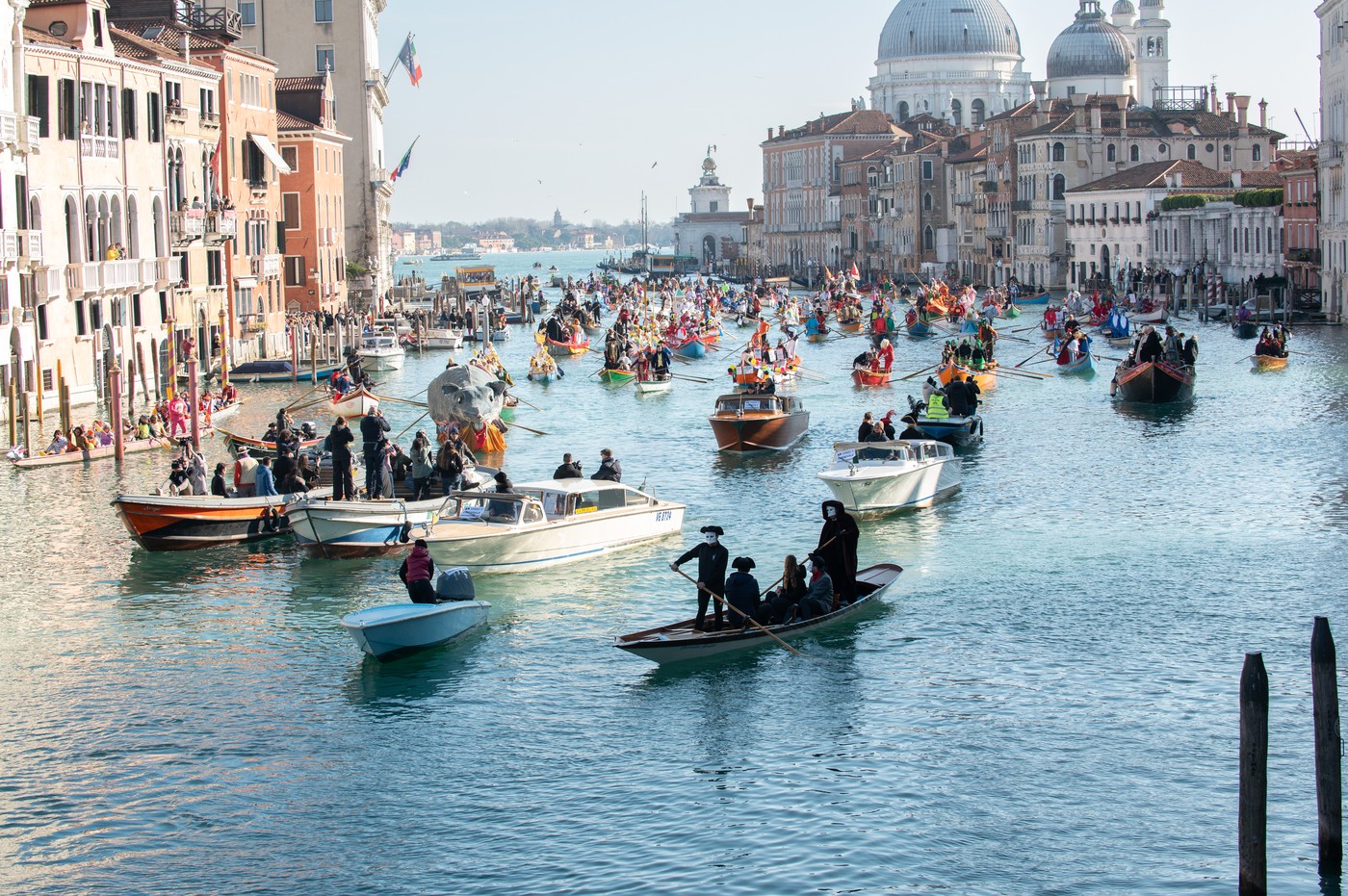
Accelerated warming of the Adriatic has brought feared predators to the Venice Lagoon, endangering an entire ecosystem and local traditions. From the “sea nut” jellyfish to the aggressive blue crab, the new invaders are destroying fishermen's catches and endangering the area's gastronomic heritage, according to EuroNews.com.
Specialists warn that Venice and the surrounding lagoon are irreversibly influenced by climate change. Rising sea levels threaten to submerge the island in the coming decades as the flood dam system that currently keeps high tides at bay will become obsolete.
Venice exists in symbiosis with the surrounding willowy waters, and their health is becoming increasingly fragile as warming seas bring in invasive species. New research has highlighted how these intruders threaten the lagoon's ecosystem and the livelihoods of local fishing communities.
Carnivorous jellyfish invade the Venetian lagoon
The latest intruder in the Venetian lagoon is a cannibal jellyfish, in the top 100 most harmful invasive species in the world. The crested jellyfish is a ctenophore, a gelatinous invertebrate that, in order to survive, ends up consuming its own eggs and larvae. Also called “sea walnut”, it has been present in the Adriatic Sea for almost a decade.
Recently, climate change has created ideal conditions for the reproduction of cannibal jellyfish in the waters of Venice, according to a study by researchers from the University of Padua and the National Institute of Oceanography and Applied Geophysics (OGS).
Researcher Valentina Tirelli warns that the presence of these large aggregates can have serious repercussions on the entire ecosystem of the lagoon. It explains that the phenomenon “could compromise the recruitment and stability of ecologically and economically important species such as fish, clams and mussels”.
The study identifies a seasonal pattern with breeding peaks in late spring and late summer to early fall. These population explosions are influenced by rising temperatures and optimal salinity levels. During the rest of the year, the jellyfish manages to survive in a wide range of environmental conditions.
The abundance of the species shows a high capacity to adapt to temperature variations. However, scientists say extremely high temperatures or low salinity can affect its survival. Even under these conditions, the sheer number of specimens suggests unusual endurance.
Invasive species threaten fishing communities
The crested jellyfish is a major threat to the Venice lagoon ecosystem. To support its high reproductive rate, this species consumes huge amounts of marine microorganisms, which are the essential food of many fish.
“It has been shown that this jellyfish hunts the eggs and larvae of species important for the environment and the economy. This behavior compromises the stability of the entire ecosystem, leaving fish and shellfish with no chance of development,” explains Valentina Tirelli.
The researcher states that the results of the study show a reduction of over 40% in the catches of the main species since the arrival of the invader. “Among the species most affected are the cuttlefish and the lagoon guvid, both of which are essential products for Venice's economy and culture,” she says.
The current situation is reminiscent of a similar ecological disaster in the past, notes The Guardian. In the 1990s, Black Sea fishermen blamed the proliferation of these jellyfish for the collapse of fish stocks and the devastating economic consequences.
Invasion of blue crabs in the Adriatic Sea
In addition to the invasion of jellyfish, fishermen in the northern Adriatic are now fighting another aggressive predator. The giant blue crab population has exploded in recent years, reaching a critical point for the lagoon's balance.
This crustacean is not native to Italian waters, but probably arrived here in the late 1940s. It is assumed that the species was transported from the coasts of America in the ballast water of cargo ships.
Although their presence in the area dates back decades, the population has recently exploded to an alarming level. In Italian waters, the blue crab has no natural predators that can control its rapid reproduction.
The main culprit for this explosion is suspected to be climate change. With the warming of the waters, the crabs have become much more active and voracious than in the past.
“When the water temperature drops, crabs eat and reproduce less, but recently the exact opposite has happened,” a local fisherman explains to Euronews Green. Normally, at temperatures below 10°C, these crabs become inactive.
Marine biologist Enrica Franchi, from the University of Siena, explains that mild winters have radically changed the behavior of the species. “Usually when the water temperature drops below 10°C, this crab does not feel well, but now it finds ideal conditions 12 months out of the year,” the biologist told AP News.
With their powerful pincers that can rip through fishing nets, blue crabs seem unstoppable. They feed on local seafood, endangering populations of clams, mussels and oysters. Also at risk are the famous shellless crabs, known as moeche in Venice. This local delicacy is in danger of disappearing due to the aggressiveness of the new invader.
The fight against the invaders moves to the kitchen
Authorities and fishermen are now looking for ways to remove these crustaceans. One solution is to export to the United States, where blue crab is considered a delicacy.
Coldiretti, the main organization of farmers and agricultural producers in Italy, proposed an unexpected solution: adopting American eating habits. They suggest introducing blue crabs into the menu of Italian restaurants and families.
As a result, blue crabs have already started appearing in fish markets and supermarkets. Their price is around 8-10 euros per kilogram, being promoted as a new culinary resource.
However, turning this predator into a food resource poses major risks. This current strategy could undermine both the fishing and culinary traditions of the Adriatic Sea.
The traditional farming and fishing techniques of local species are at risk of disappearing. Along with them, the old recipes that define the area's identity could be lost. Thus, the gastronomic heritage of Venice could be replaced by a temporary solution, imposed by an unprecedented ecological crisis.