The innovative Biomass radar has started operation. It will help you understand the carbon cycle

2026-02-07 18:00
publication
2026-02-07 18:00
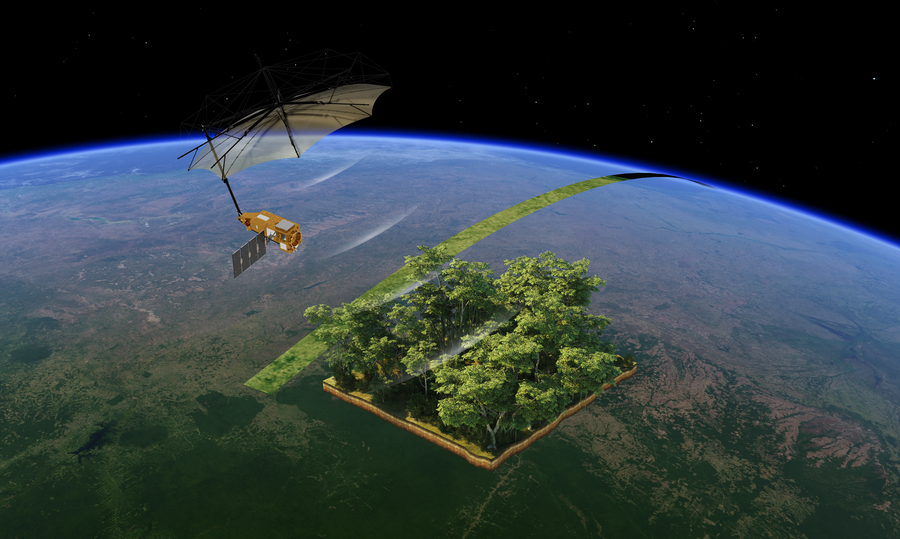
According to ESA, the new Biomass satellite has been fully launched. Thanks to the radar penetrating through the treetops, it will help, among others: better understand the carbon cycle on Earth.
In April 2025, the European Space Agency ESA launched the Biomass satellite. Currently reports that the device has just become fully functional.
The agency says the satellite will change our understanding of what's happening in forests and their role in it regulating the global carbon cycle.
This is the first orbital instrument on which it operates innovative radar (with a synthetic aperture operating in the P band). It can penetrate the curtain of tree crowns and, for example, measure the amount of biomass, including that accumulated in tree trunks and branches.
Since the satellite's launch, mission specialists have spent months meticulously calibrating and fine-tuning it as it orbits. The works used, among others: the plane, also equipped with a synthetic aperture radar system, which acquired detailed images of the tropical forest. The timing of several flights was carefully planned to closely coincide with the passes of the Biomass satellite, allowing for the collection of nearly simultaneous radar observations.
The scientific data already provided by the instrument is publicly available, emphasizes ESA.
“With the completion of the satellite's commissioning phase and its transfer to scientific operations, the Biomass mission is moving from the phase of promises to the phase of implementation. It began with a single phase of global tomographic coverage, aimed at revealing the structure of forests, which will take approximately 18 months. Then, over the remaining period of the mission, multiple, nine-month interferometric global coverage will be carried out, helping to understand how forests change over time,” – the intricacies of the program are explained by mission manager Klaus Scipal.
“Although the full potential of the Biomass mission has not yet been fully exploited, the initial results are very promising, and the upcoming tomographic and interferometric data modalities promise even deeper insight. These products will help scientists better understand climate change processes and support more effective forest management and monitoring, especially in the Global South,” says Maciej Soja, a scientist involved in the mission.
Marek Matacz
mate/ zan/