The strangest and scary events in history. Are as real as possible, they shocked the contemporaries


History has recorded numerous extremely mysterious events. As real as possible, but without any scientific explanation. Three of these are related to the scientific-fantastic field, and not even modern science could discern.
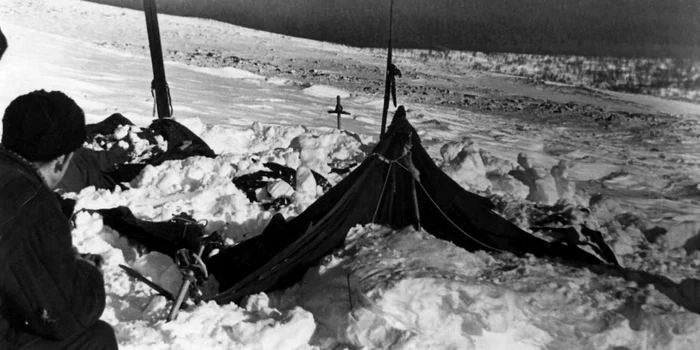
Incident from Dyatlev Passage PHOTO Wikipedia
The scientific world believes that any phenomenon or incident that takes place on the face of the earth has a rational explanation. With the help of scientific evidence, mathematical experiences or demonstrations, numerous events, phenomena, reactions, attributed, in the past, divine, magic. Even in these conditions, there are some events throughout history that have a scientific explanation until today. At most, working assumptions were issued, but it was not a unanimous conclusion. Three of these are entitled to the scientific-fantastic field and true unresolved puzzles of history have remained.
Thousands of people who danced to death
One of the most mysterious phenomena encountered in the history of mankind has spread over several centuries and no unequivocal explanation was found. It is about the so-called “dance disease” or “dance plague”, which appeared, at certain intervals, without any rational reason from the 7th century to the sixteenth. Itself, the “dance plague” as the name says was characterized by a dance epidemic. Thousands of people began to dance from the blue, until they are exhausted. They danced day and night until they died. In most cases people were beginning to dance without music, meaning they were not inspired by certain rhythms or notes.
They simply danced frantically, day and night, without stopping. One of the oldest cases was recorded in 1020 in France. In a village on the western coast of France, the villagers gathered at the service of Crăciuni's eve have begun to jump, to sing and to dance crazy for no reason. Stopped suddenly after almost 48 hours. A similar case took place two centuries later in the German city of Erfurt. A group of locals danced and jumped, traveling several kilometers. In that state of unjustified frenzy they reached the neighboring city of Arstadt. In the year 1374, the “dancing plague” haunted from Aachen to Luxembourg. He remained known in history as the “dance of Saint John”, and people believed it was a curse thrown on them.
“They were formed by Hore, holding hands, and seemed to have lost control and senses.wrote Justus Friedrich Karl Hecker, a well-known nineteenth-century doctor, in his work “The Black Death and the Dancing Mania”.
The most well-known and documented case of “dance plague” took place in 1518 in the city of Strasbourg (at that time on the territory of the Holy Roman-German Empire). In July of that year, a 30 -year -old woman, the wife of a Târgoveț, went out to the center of Strasbourg and began to dance frantically, for no reason. No one could stop it. Not even the priest with prayers or sanctified water. The woman danced until she fell out of exhaustion. After resting, he took it from the end. Gradually, more and more people were joined as crazy. After a week, over 400 locals danced as you grabbed the straps in the middle of the city. They fell down from exhaustion and after resting the dance continued, days in a row. The whole madness included three quarters of the city and lasted about a month. Half of the unusual dancers died because of fatigue.
The rest lay in bed for weeks. No one knows what happened and why. The doctors of the time were coming on the “hot blood”, a kind of feverish state that would have affected the judgment. Others said it was about curses or the atonement of sins. Not even modern scientists have found a clear and definitive explanation for this tangled story. Instead, the assumptions appeared. Steve Gilbert wrote in “Toxipedia” that people would have poisoned with “Claviceps purpurea”, a fungus that grows on the rye and produces strong toxins. John Waller, on the other hand, believes that “Dance disease is a mass psychosis, an effect of post-traumatic stress caused by wars, plague and hunger”. An unanimous explanation has not been found so far.
An unsolved collective disappearance even after four centuries
Another mystery and deeper than the “dance plague” is related to the fate of the first British colony on the coasts of North America. These are the colonists on the island of Roanoke, disappeared without trace. Mysteriously, nothing was robbed inside the fort in which the settlement was arranged. Everything was in his place as if someone had just gone to bring a bucket of water. Only the colonists were missing. No trace of the 117 men, women and children who had arrived from England to settle in the New World. There were not even traces of violence, and the native tribes in the area denied any attack, although for the hostile natives it would have been a reason for pride. The story actually begins with the effort of the state man, British, Sir Walter Raleigh, who with the blessing of Queen Elizabeth had left to establish on the coasts of America the first colonies.
The first trip took place in 1584, when the English mapped the area and opened the first collaborative relationships with the native tribes of Algonquini. On the second trip, the soldiers and craftsmen sent to set up a fort. However, they broke the relationships with the natives, killing the tribe chief. The third trip was the most important. In 1587, over 117 men, women and children leave England and reach the shores of America. They settled on the island of Roanoke, in the fort built on the second trip. But they arrived on the American shores when it could not be worse. Arriving too late in the growth season, the colonists could not produce enough harvests to feed.
They were also afraid of reprisals from the American natives whose boss had been killed by previous explorers. The leader of the group, the scientist and the ethnographer John White, still mobilizes people to repair the fort and gather food through hunting and exchange with the natives. In that period, the granddaughter of John White, the first European child born in the American land, was born. After a period, grinding hunger, the colonists ask to go back to England. John White convinces them to stay and organize a supply expedition to England. To bring supplies to resist the first winter.
Then it would have been easy to grow. White arrived in England, but because of the war with France and Spain, he could return to Roanoke Island only after three years. When he arrived, he found the completely empty fort. Things were in their places, there were no traces of violence or destruction. The fort was well maintained, a sign that he had been inhabited until his arrival. The only indication of the place where the group of colonists were were the “Croatoan” letters carved on a pillar and a tree. There was a Croatoan island, now called the Hatteras Island, but the colonists were not found there. No one knows where they are gone. The searches took more than three decades. Not even the 20th century research was able to shed light in this mysterious story. “It is a mystery that may never be resolved ”explained the Lauren Spier Park Guide for the National Parks Conservation Association.
Diatlov's tragedy
One of the latest mysterious phenomena was recorded in 1959 on one of the slopes of the Kholat Saykhl massif, or the “dead mountain” as it translates into the language of indigenous tribes, from the Ural region, Russia. A group of students died in absolutely mysterious conditions, with indications that encouraged science-fiction enthusiasts to automatically think of paranormal phenomena or aliens. The story sounds about the next way.
At the end of January 1959, a group of nine students, seven boys and two girls, from the Ural Polytechnic Institute in the city of Yekaterinburg went on an expedition to Mount Kholat Saykhi. They were also accompanied by a ski instructor, a veteran of World War II. The group was led by Igor Diatlov, a 23 -year -old engineer student. They were all well equipped and trained for winter expeditions in the wild. They had already made many trips of this kind. On February 1, 1959, they made the camp. They placed their tent on one of the slopes of the mountain, in a worse area, near the Diatlov passers-by. From that moment no one has ever spoken with the students who left on the “dead mountain”.
After two weeks they were declared missing and several rescue teams left after them. Rescuers found nightmare scenes. The bodies of the nine hikers were scattered in the area. Some had the crushed skulls and the basket of the broken chest. Others were left without eyes, tongue or other parts of the body. Some had vomited blood, others had three -degree burns. At the autopsy it was found that the bodies were not disfigured as a result of human aggression, but neither of a wild beast. The students were partially dressed and the tent was torn from the inside to the outside. I mean, something attacked him from the tent and they tried to run from there. Despair made him go unbiph. Eventually they were mutilated and killed. Soviet reports indicate that they were killed by “an unknown natural force”.
They did not delay the assumptions to appear. The best known is that of Alexander Puzrin, a geotechnical engineer in Switzerland. He published a study claiming that the students were killed by a short -term advance, caused by an earthquake with delayed effect. The simulations show that the avalanche was small, more precisely, a huge block of ice, would have detached and swept everything in the way. That is why the students were actually mutilated. Some were actually killed by the piece of ice, the others tried to help them but ended because of hypothermia. There is also the variant of a hurricane caused by kataby, frozen and capable of training large pieces of ice. According to this scenario, the young people were surprised by the hurricane, left the tent trying to run to the trees, where they had protection. However, it is difficult to explain how most victims looked, but also how they actually “escaped” from their own tent, cutting it in despair.