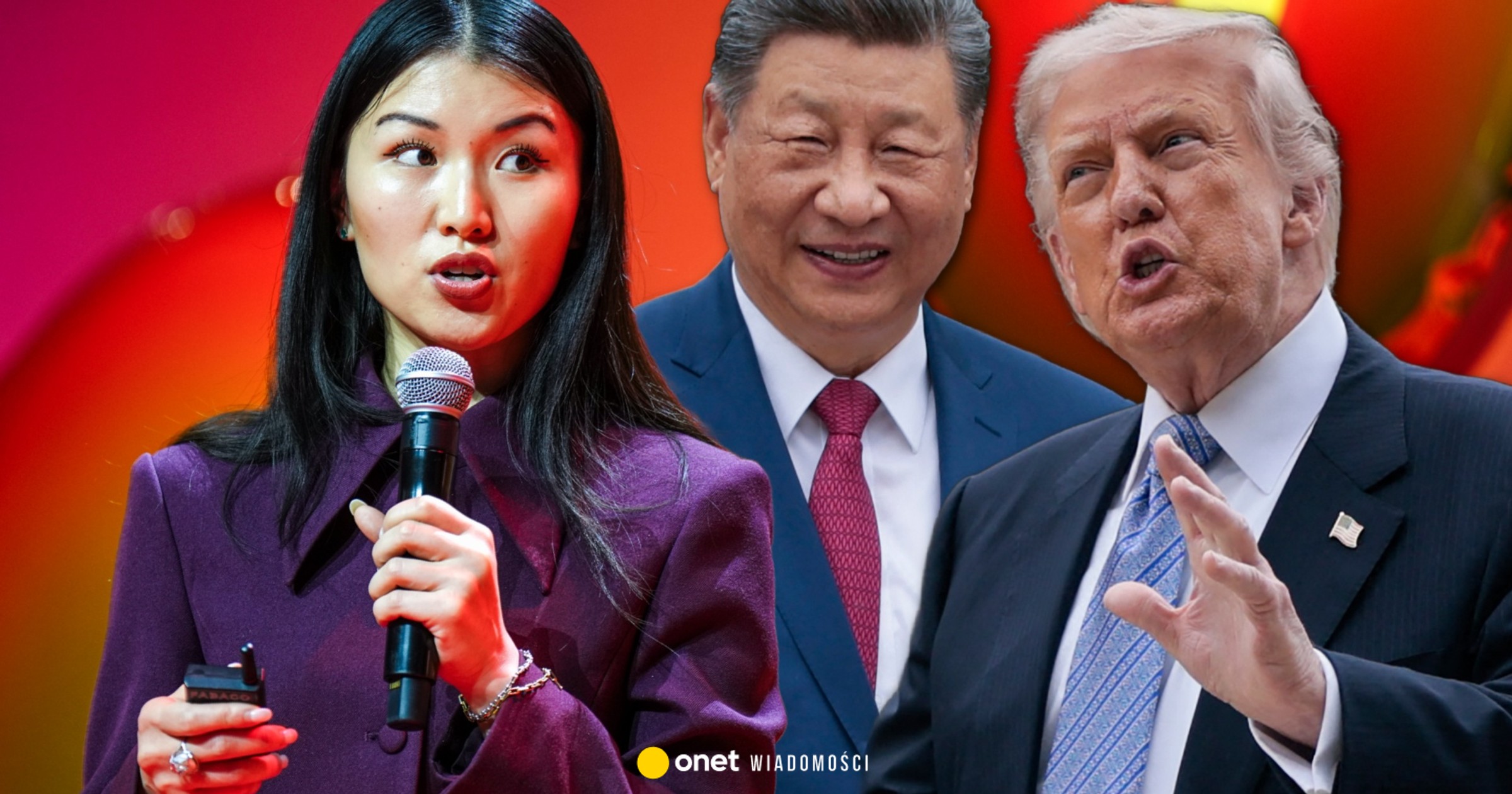
The latest wave of purges at the top of China's political leadership is unprecedented in Xi Jinping's presidency, and the motivation behind the decision seems incomprehensible, US officials and analysts say.

The announcement of the arrest of some of Xi's loyalists and close associates, especially Zhang Youxia, the highest-ranking general in the Chinese political system and also the “number two” in the army's chain of command, on serious charges surprised officials and analysts in Washington, making them wonder about the real reason behind this radical decision. General Zhang is a revered war veteran whose loyalty to Chinese leader Xi seemed unquestionable.
Officials say it is critical for the US government to understand Xi's state of mind, as his policies, like those of President Trump, affect everything from the global economy to the operations of one of the world's most powerful militaries.
Several explanations are possible, but none seem to carry more weight than the others.
The Chinese leader could be acting out of paranoia, trying to protect himself from a real political challenge, or just as well, he would be justified in cracking down on high-level corruption in the People's Liberation Army, they say.
U.S. intelligence analysts have concluded in assessments in recent years that Xi has an extremely high level of paranoia, officials say.
Since beginning his first term in 2012, Xi, 72, has consolidated his authority through purges and the launch of so-called anti-corruption campaigns, becoming the most powerful Chinese leader in decades.
But now, of the six generals he appointed to the Central Military Commission in 2022, only one remains, leaving a leadership vacuum at the head of the world's largest armed force.
Furthermore, of the 30 generals and admirals leading theaters or specialized operations in early 2023, almost all have been expelled or disappeared.
The main threat comes from within
Experts explain that these decisions are typical of autocratic leaders.
For these leaders, the main threat to their power comes from within – from inside circles, rather than from potential protesters or dissidents.
“As an autocrat, you have to be paranoid. You're constantly in danger. Everyone around you is lying all the time. You never know who's really loyal and who's lying to you”he explained.
Purges of military commanders are common in such centralized systems. “Being a general in an autocracy is a thankless job. If you're perceived as efficient and your subordinates like you, you develop an alternative power center, and the autocrat feels threatened by you. But if you underperform, the autocrat doesn't like you.”
General Zhang was in such a position: a veteran of the 1979 China-Vietnam War, he was known for his loyalty to Xi, but he also enjoyed great respect from the officers and troops under his command.
US assessments of Xi's paranoia raise questions about the rationality of his decisions.
“Paranoia is a feature of his leadership rather than a flaw,” said John Culver, a former CIA China analyst who retired in 2020, before the latest assessments. “He wouldn't have lasted as long or as strong, given the seasoned political influencers and institutions he politically gutted.”
The CIA compiles profiles of foreign leaders, including psychological portraits. Analysts have tried for many years to understand Xi, seen by the party since 2007 as a possible leader of China.
Beyond corruption
But the latest wave of purges raises questions about motivations beyond the corruption that has so far underpinned these decisions.
This time, the accusations are much more serious: according to Chinese military officers cited by the WSJ, General Zhang was suspected of being a spy for the US government and of passing on nuclear secrets.
Or such an act would be tantamount to treason – the most serious crime a Chinese official can be guilty of.
Former and current US officials say they have no knowledge of General Zhang tipping off US intelligence or passing any nuclear information to the US.
They also said they did not detect an internal campaign in Beijing to spread the word among officials that General Zhang was a spy for the United States.
In recent years, Xi and China's main intelligence agency, the Ministry of State Security, have waged a campaign to warn the public about threats to national security from spies of foreign powers. At the same time, the CIA is making efforts to recruit agents and informants in China, and says the effort is showing signs of success.
On Saturday, the Liberation Army Daily, the army's official newspaper, hailed the punishment of General Zhang and a deputy as a “major achievement” in the fight against corruption and said all officers and soldiers must support the decision of the party's Central Committee.
Liu Pengyu, a spokesman for the Chinese embassy in Washington, said in a statement that the Central Committee had opened investigations into the two generals “on suspicion of serious violations of law and discipline,” which reflected a “zero-tolerance approach to fighting corruption.”
The attack on high-ranking military commanders has drawn attention in recent years and raised questions about the true extent of corruption. The purges have also sparked debate among analysts about emerging differences of opinion between Xi and his top generals over their approaches to the democratic island of Taiwan, which the Chinese leader has said must come under Chinese rule, by force if necessary.
Xi would prepare the ground for a new mandate
In any case, the expulsions could have a profound impact on military planning.
“Mistrust between the party and the military is likely to lead to reluctance to any significant operations, at least in the short term”said Rush Doshi, a research fellow at Georgetown University and the Council on Foreign Relations.
Because General Zhang was considered by far Xi's most trusted commander, his purge has been compared by some Chinese scholars to Mao's 1971 split with Lin Biao, a senior commander and vice chairman of the party. Lin died in a mysterious plane crash in Mongolia that year while fleeing to the Soviet Union.
Yun Sun, a China analyst at the Stimson Center in Washington, said Xi's decision could mean he is trying to prevent any potential challenge to his power before the next party congress in 2027.
At the last party congress in 2022, Xi took the remarkable step of securing a third five-year term. This move fueled anxiety among Chinese citizens, including some party officials, who feared he might become a Mao-like tyrant.
Sun speculated that Xi may have made the decision to secure a fourth term instead of naming a successor at next year's congress, and the removal of General Zhang could be an attempt to block a potentially influential critic.
If the general did not share Xi's opinion “in this all-important political matter”she said, “this makes Zhang an extremely dangerous person.”