I was in Transnistria. This is where Russian flags hang on the buildings


It's easiest to start your trip to Tiraspol in the capital of Moldova, Chisinau. A small and cramped bus departs from the bus station every half an hour, with 16 seats in it. There is a wild atmosphere at the station itself. There are no numbered stands, drivers stand at one point, talk loudly in Russian, and a cloud of cigarette smoke spreads around them.
There is also a local market near the bus stop, where locals sell whatever they can. Items are placed in boxes, on blankets or directly on the pavement. Listen to loud persuasions to buy fake Adidas jackets, sandals, fruit, fish or watches.
The 70-kilometer route to the capital of Transnistria takes approximately 1.5 hours, during which the driver also stops at intersections to catch travelers on the so-called foot. This is how, on the outskirts of Chisinau, three elderly Russian women with shopping bags full of shopping got into the bus I was traveling in. They got off near a roundabout in the town of Bendery, already under the control of the separatist Transnistrian Moldavian Republic.
One of them was talking using an online translator to a young boy who spoke Hungarian. At the end of the trip, he took out his wallet and gave the senior woman a few banknotes as a gift, which brought her to tears.

The middle of the bus at the station in ChisinauBartosz Treder / Onet
I have to cross the border between Moldova and Transnistria on foot. The border guard scans your passport in the window and then asks in Russian about the length and purpose of your stay. On this basis, a “visa” is issued. Due to the fact that the country is not recognized, it cannot put stamps in the passport. I only received a piece of paper with my details and the date and time until which I can stay on their premises. The document is also checked upon departure, so I have to keep an eye on it to ensure that I return without any major problems.
On the Transnistrian side, the landscape changes dramatically. All advertisements are in Russian, there is a hammer and sickle placed on a green flower square. The same as on the coat of arms and flag of the self-proclaimed Transnistrian Moldavian Republic. On the way, I pass supermarkets and gas stations of the famous Sheriff company, whose owner controls the market of the entire “state”. It has its own television channels, mobile network, football club, advertising agencies and alcohol production factories. His sphere of influence in Transnistria is endless.
Transnistrian rubles. A currency that you can only buy in a non-recognized country
The bus station in Tiraspol is located at ul. Lenin. In the area there are only dilapidated blocks of flats, sidewalks with holes, and a small cafe, which from the outside resembles a Ruch kiosk from the times of the Polish People's Republic. There is also a currency exchange office where you can exchange euros, Polish zlotys, Moldovan lei and dollars for Transnistrian rubles. The local currency can only be purchased in Transnistria. It is not possible to pay by card there, and all the terminals located in the premises are fake. They are not connected to the cash register, and there is no system configured that would allow remote payment.

Lenin Street in TiraspolBartosz Treder / Onet
I head towards the city center, on the way I pass Pokrovsky Park, which looks more like a neglected square with uncut grass. In the center stands the church of the Russian Orthodox Church. This is the only place where I see young soldiers marching during my stay. Each of them holds a gun and has Russian and Transnistrian flag patches on their uniforms.
The most touristic place in Tiraspol is ul. October 25, but even in the so-called It's empty during peak hours. While walking, I pass maybe 10 people. The main street is lined with hotels, service points, banks and cafes with Wi-Fi access. The cost of coffee or tea “in the city” is no more than PLN 5, which allows me to save a bit. It's cheaper than in the center of the capital of Moldova, which is considered the poorest country in Europe.

Flags of Transnistria and RussiaBartosz Treder / Onet
In the city center, almost every building has two flags – Transnistrian and Russian. Some drivers attach them proudly to their cars, as a decorative element on the mirror or trunk.
Cleanliness and peace. Everyday life in the capital of Transnistria
Advertisements that separate the road from the sidewalk on the green belt are primarily Soviet in content. They are full of images of Vladimir Lenin, Joseph Stalin and Russian symbols. On the street On October 25, there are also local government buildings, built in the style of Soviet architecture. In front of the city hall there is a monument with a bust of Lenin, commemorating his rule in the USSR (in the main photo).

Advertisements in TransnistriaBartosz Treder / Onet
There is relative peace and order in the city. People are extremely polite. When I ask for directions, I get a quick answer, some even change the route to help find a specific place. One of the locals advised me not to miss a visit to the Soviet canteen, which is located near the main street.

Entrance to a local canteen with an image of LeninBartosz Treder / Onet
A canteen straight from the USSR. Lenin and Stalin on the walls
– What can I get you? — I hear a question in Russian at the entrance from the cook, who is about 30 years old. She wears a checkered apron and a net in her hair.
You can choose from dumplings, cutlet, salad and three types of soup. The cost of each of these dishes does not exceed PLN 10. I choose borscht, which tastes more like red water with vegetables and a spoonful of cream.

Soviet canteenBartosz Treder / Onet
The canteen, like other places in Tiraspol, is empty. You can sit in two rooms – in one of them there is Russian music playing, and in the other there is a TV with Russian series on. The tables are covered with checkered tablecloths and meals are served on red trays. The walls are full of paintings of Joseph Stalin and Vladimir Lenin.

Paintings in a canteen in TiraspolBartosz Treder / Onet
There are numerous eastern accents in the corridors. Among them, among others: soldiers' hats, a microwave, jugs, mugs, an old TV, postcards with a view of the Kremlin, as well as posters of Alexander Lukashenko and Leonid Brezhnev, general secretary of the Central Committee of the Communist Party of the Soviet Union in 1964–1982.
Near the canteen there are dingy blocks of flats with damaged balconies. The children's slides and swings look like they haven't been used for years. Places outside the main street sometimes look abandoned. Only parked cars reveal that someone lives here.
The only souvenirs you can buy in local shops are magnets and postcards with Vladimir Putin, the flag of Russia or Transnistria and a geographical map of the country running along the right bank of the Dniester.

Blocks of flats in TiraspolBartosz Treder / Onet
The topic of war is forbidden. Residents are afraid of escalation
Hardly anyone in Transnistria speaks English. The dominant language is Russian, alternating with Moldovan. Before leaving, friends from Chisinau pointed out that Tiraspol is famous for its openness, but you have to adapt to the local culture. The most important thing is not to talk directly about Vladimir Putin and the war. Residents avoid these topics like the plague! This can cause trouble due to the potential interest of the authorities. In Tiraspol, everything spreads by word of mouth at a terrifying rate.

Street signs in TirapsolBartosz Treder / Onet
Residents are afraid of the escalation of the conflict because they are only 130 km away from Odessa. They support Vladimir Putin's regime, but the authorities of unrecognized Transnistria also maintain business with the government in Chisinau, thus maintaining their declared restraint towards the war in Ukraine. President Vadim Krasnosielski declared after the outbreak of the war that Transnistria was a peaceful state that had never had any plans to attack its neighbors. Nevertheless, there are rumors in the public space about a possible attack from Transnistria due to the Russian army stationed there.
The authorities of the unrecognized republic have repeatedly asked Moscow for annexation. Russia's interference can be seen here at every step. They receive, among others: de facto free gas from Gazprom based on a contract signed by Moldova. They also have free access to the European Union, because in addition to the Transnistrian passport, most residents also have citizenship of other countries, e.g. Romania, which is an EU member, but also Moldova and Russia.
In early 2024, the authorities also asked for Russia's “protection”, pointing to “economic pressure” from Chisinau. In their statement, MPs said that Moldova had unleashed an “economic war” against Transnistria, accusing President Maia Sandu's party of “deliberately blocking further talks.”
A country that doesn't exist. The Ministry of Foreign Affairs advises against travel
Transnistria announced its separation from Moldova on September 2, 1990, declaring its desire to remain part of the Soviet Union, while Moldova left it on June 23 of the same year. Geographically, it is located on the right side of the Dniester River, approximately 200 km long and 12 to 15 km wide. It is not recognized by any country except Abkhazia and South Ossetia, which are also unrecognized. These are also the only “countries” that have embassies in their territories.
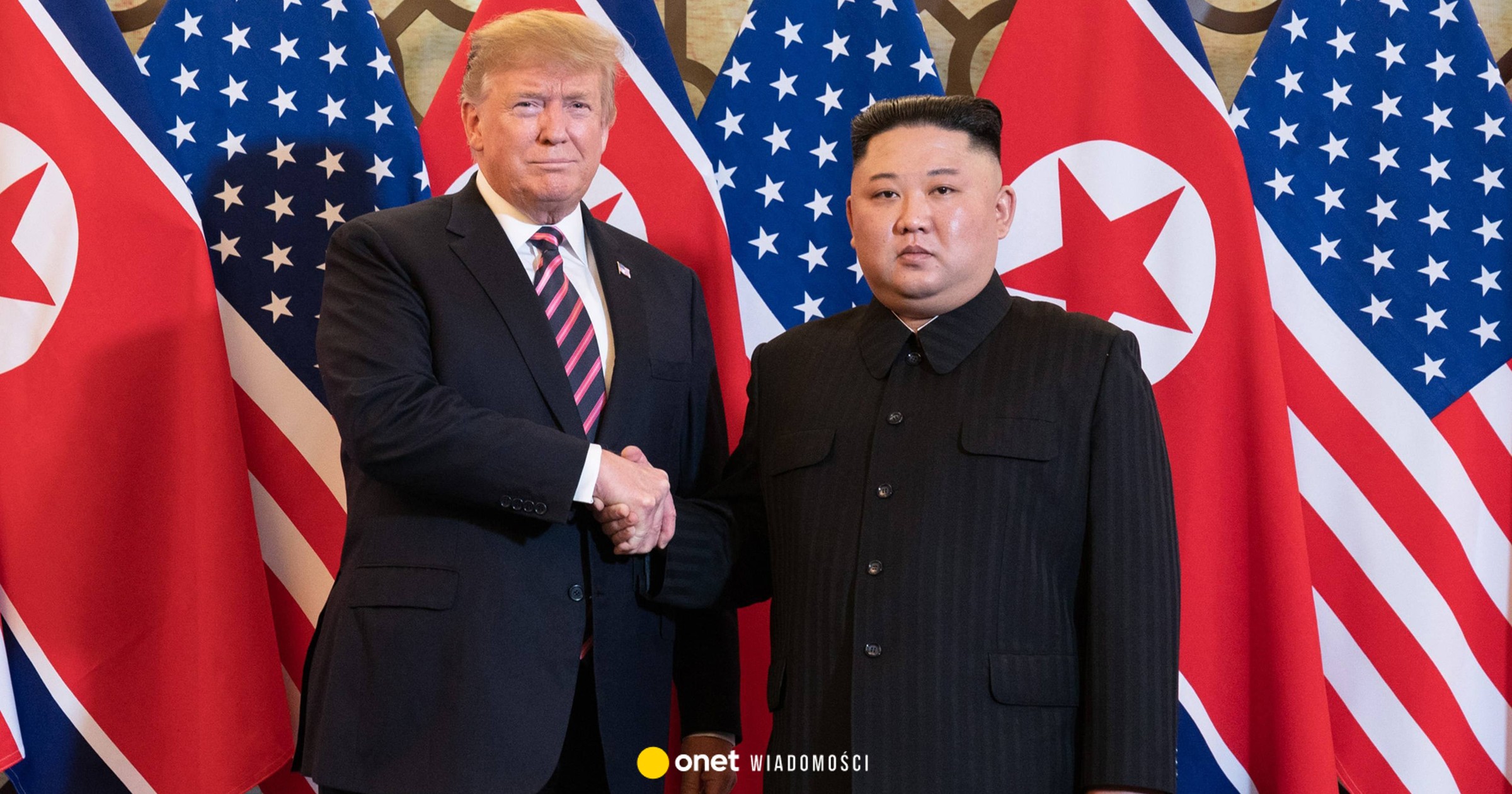
This country can be called the less fierce North Korea of Europe, but with access to the Internet and the possibility of leaving freely. The Polish authorities do not maintain any diplomatic relations with Transnistria and strongly advise against traveling in this direction, pointing to the lack of control by the allied Republic of Moldova.
“The Ministry of Foreign Affairs advises against unnecessary travel to the Transnistrian region of the Republic of Moldova (the so-called Transnistrian Republic), which is not controlled by the government in Chisinau. In practice, it is not possible to provide consular assistance to Polish citizens staying there,” reads the exact statement from the Ministry of Foreign Affairs.
Contact the author: [email protected]