News
“Put on”, not “put on” – teachers, friends and parents corrected you one hundred percent…

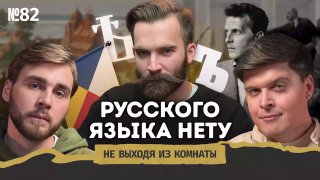
“Put on”, not “dress” – one hundred percent of your teachers, friends and parents corrected you. But back in the second half of the 20th century, almost all Russian-speaking people said “dress.” And at the beginning of the 20th century, it was considered normal for an educated person to say “they ring” – with an emphasis on O. The word “eat” was used in all levels of society, as well as the ill-fated “no”, which supposedly does not exist. We all live in the illusion that there is some kind of “literary Russian language”.
And the linguist Mikitko, son Alekseev, is the guest of the new episode of the podcast “Without leaving the room.”
Why, if not for Peter I, would you and I speak Church Slavonic? Was the Ukrainian language an adverb and how did it become politicized? Why do many people today return to the royal spelling? What to do with the languages of the national republics? Are migrant children appropriate in Russian schools? Do we need feminists? Does language really determine thinking? What makes an ancient Greek different from you, dear reader of this post? Is the “foreign agent” tag a language policy? How will Russian people talk in 100 years?
Find answers to all these questions in the BASIC edition on VK Video and YouTube.
PS Thank you for highlighting our performance. “The last days are coming and we are trying to get everything done,” we could write, but we’ll just say that we have entered marathon mode and are taking you with us on this podcast race, which will end by Monday.
We also remind you that you can support us with rubles on Busti. There is already exclusive content there that you can enjoy watching.
You can listen to us on all audio platforms:
VK Music
Yandex.Music
Apple Podcasts
SOUND
❤️ With love, Mash Room
And the linguist Mikitko, son Alekseev, is the guest of the new episode of the podcast “Without leaving the room.”
Why, if not for Peter I, would you and I speak Church Slavonic? Was the Ukrainian language an adverb and how did it become politicized? Why do many people today return to the royal spelling? What to do with the languages of the national republics? Are migrant children appropriate in Russian schools? Do we need feminists? Does language really determine thinking? What makes an ancient Greek different from you, dear reader of this post? Is the “foreign agent” tag a language policy? How will Russian people talk in 100 years?
Find answers to all these questions in the BASIC edition on VK Video and YouTube.
PS Thank you for highlighting our performance. “The last days are coming and we are trying to get everything done,” we could write, but we’ll just say that we have entered marathon mode and are taking you with us on this podcast race, which will end by Monday.
We also remind you that you can support us with rubles on Busti. There is already exclusive content there that you can enjoy watching.
You can listen to us on all audio platforms:
VK Music
Yandex.Music
Apple Podcasts
SOUND