
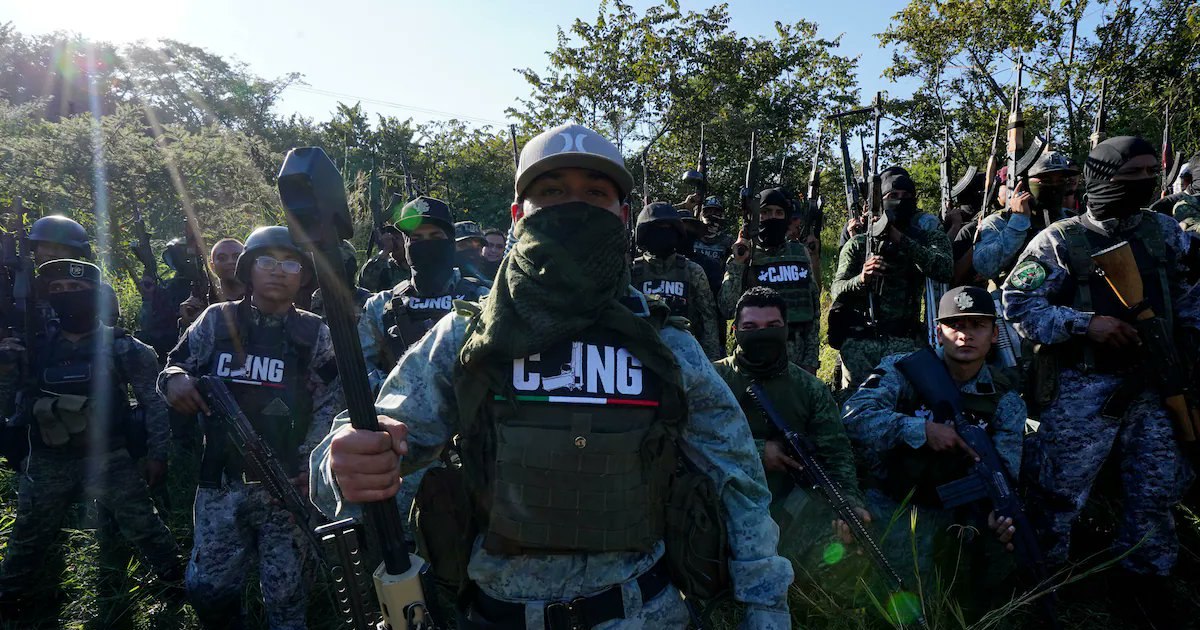
The death of one of Mexico's most wanted drug traffickers risks reopening a bloody chapter in the clashes between the cartels.
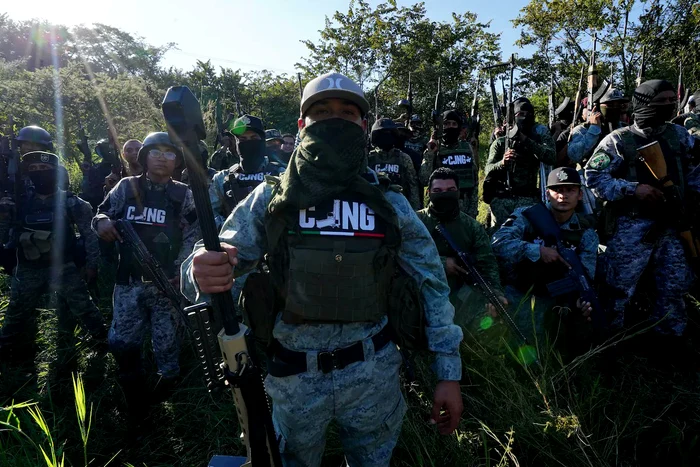
Members of the Jalisco New Generation Cartel/PHOTO:X
On Sunday, the leader of the Jalisco New Generation Cartel (CJNG), Nemesio Oseguera Cervantes, 59, was killed in Tapalpa in a joint operation by the Mexican military, supported by the United States. Oseguera, known as “El Mencho”, ran one of the most powerful and violent cartels in the country.
Mexican authorities said at least 20 states were affected by the violence in the hours and days ahead, as security forces were mobilized to prevent reprisals and turf battles. It is the worst blow to organized crime since the recapture of former Sinaloa Cartel leader Joaquín “El Chapo” Guzmán a decade ago.
CJNG: the rise of an extremely violent cartel
The CJNG is considered one of the most influential Mexican cartels, playing a key role in the trafficking of methamphetamine and fentanyl to the United States. Under El Mencho's leadership, the organization quickly expanded its control, including through “franchise” agreements with local gangs.
According to the Drug Enforcement Administration (DEA), the cartel has a presence in at least 21 of the 32 Mexican states and operates in almost every US state.
The CJNG's reputation was strengthened through acts of extreme violence. Over the past decade, the group has been associated with massacres, public executions and acts of torture filmed and shared on social media to intimidate rivals. Mexican investigators discovered last year, in a rural area of the state of Jalisco, a clandestine complex where illegal crematoriums allegedly operated, with human remains and personal belongings belonging to the victims.
In addition to drug trafficking, CJNG is involved in fuel theft, human trafficking and extortion.
El Mencho's death leaves a power vacuum. US authorities have previously suggested that his son-in-law, Julio Alberto Castillo Rodríguez, may try to take over, but the scale of Sunday's operation makes the current state of the internal hierarchy uncertain.
Rivalry with Sinaloa
The CJNG's main rival remains the Sinaloa Cartel, a historic Mexican organized crime organization known for its global drug-trafficking network.
After the arrest of Ismael Zambada García, known as “El Mayo”, in 2024, the cartel fragmented into rival factions. El Chapo's sons – Joaquín Guzmán López, Ovidio Guzmán López, Iván Archivaldo and Jesús Alfredo – control part of the structure, while other groups loyal to El Mayo are in a violent internal conflict.
In recent years, the state of Sinaloa has seen a dramatic increase in homicides, and mutilated bodies have been discovered on bridges or near major roads — bloody messages meant to send warnings to rivals.
Analysts warn that El Mencho's death could trigger a new round of clashes between the CJNG and Sinaloa over control of trafficking routes.
Other active groups
The Cartel del Noreste, successor to the dreaded group Los Zetas, operates in the northeast of Mexico. The organization is involved in drug trafficking, kidnapping and extortion. Its former leader, Miguel Ángel Treviño Morales, arrested in 2013, was known for extremely brutal methods applied to rivals.
In Baja California, the so-called Tijuana Nueva Generación Cartel – the result of an alliance between local groups and the CJNG – faces both Sinaloa and its former Jalisco ally for control of the city of Tijuana.
In the states of Michoacán and Guerrero operates La Nueva Familia Michoacána, a cartel that combines drug trafficking with a pseudo-religious rhetoric and that, at its height, had international connections for the distribution of methamphetamine.
Another historical actor is the Cartel de Golfo, considered the oldest cartel in Mexico. Weakened by internal strife, the group remains active in the northeast, where factions such as Grupo Sombra continue to be involved in public executions and territorial battles.
A moment of crossroads
El Mencho's death represents a crucial moment for Mexico's security. In the past, the removal of cartel leaders has often led to fragmentation and escalating violence as lieutenants and rivals seek to seize control.
For the authorities, the immediate challenge is to prevent a new wave of armed confrontations that could turn entire cities into war zones. For the civilian population, the fear is that, beyond the name change at the top, the brutal logic of the cartels will remain the same.


