How to find out if you have radon in your home. Map of sensitive areas and radioactive gas risks

Radon is a naturally occurring, invisible and odorless radioactive gas that can enter homes undetected. In certain areas of Romania, the geological conditions can favor its accumulation in higher concentrations. There are safe methods of remedying the risks associated with this gas.
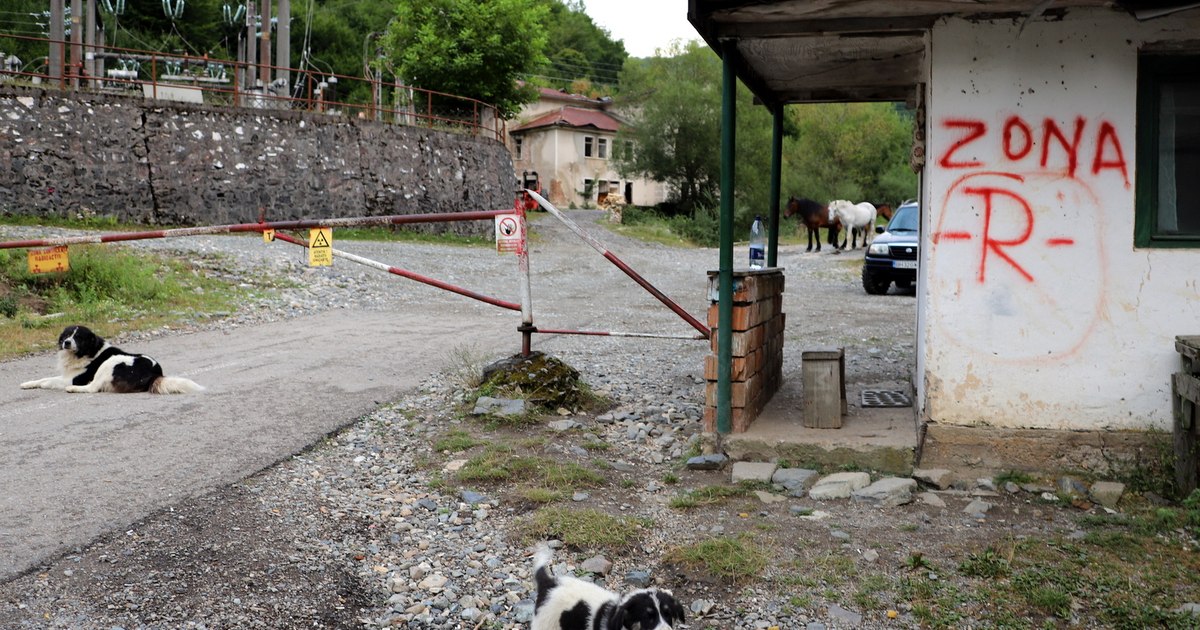
Areas like Baița Plai (Bihorului) are known for radioactivity. Photo: Daniel Guță. TRUTH
Radon, an invisible, odorless and tasteless radioactive gas, is considered by scientists to be a leading risk factor for lung cancer in non-smokers and the second leading cause of lung cancer in smokers.
In Europe there are many areas with a high potential for exposure to radon, and in recent decades the problems caused by this gas have become increasingly intensively researched.
Several places in Romania, especially in the area of Transylvania, Banat and Bucovina, with uranium reserves and geothermal waters, have also been indicated over time for the risk of higher radon concentrations.
Radon, a risk factor for lung diseases
Scientists show that the main risk factor for developing lung cancer is smoking, responsible for approximately 80–90 percent of cases and most deaths associated with this disease.
“Among nonsmokers, lung cancer accounts for approximately 15–25 percent of all cases, and its epidemiology is currently less well characterized. The International Agency for Research on Cancer (IARC) lists several environmental carcinogens implicated in lung cancer, including indoor radon, air pollution, arsenic, chromium, asbestos, nickel, cadmium, beryllium, silicon and diesel emissions”, show scientists in a research published by the University of Barcelona, entitled “Radon and lung cancer. Current trends and perspectives for the future” (2022).
The hypothesis that radon and its decay products were responsible for the increased incidence of lung cancer was formulated as early as 1913, based on observations of workers in silver and uranium mines in Germany.
The link between radon and lung cancer was later confirmed by other studies of underground mining populations, including among non-smoking miners. Based on this evidence, in 1987, indoor radon was classified as a human carcinogen.
The association between radon exposure and lung cancer has been widely documented, and the combined effect of radon and smoking is considered synergistic.
“Risk of lung cancer death may increase 20-25 times in smokers exposed to radon concentrations exceeding 200 Bq/m³”the scientists also show.
Soil and groundwater, the main “hosts” of radon
Radon-222 (²²²Rn) is a radioactive gas that occurs naturally as a decay product of uranium-238. According to scientists, its concentration inside homes is closely related to the uranium content of the rocks in the Earth's crust beneath the buildings. The main source of radon in the air is the soil, where concentrations can be very high, especially in areas with uranium ores, phosphate rocks and metamorphic rocks such as granite, gneiss and shale.
Radon has also been identified in surface waters, where concentrations are generally below 4,000 Bq/m³. In contrast, groundwater can contain much higher levels of dissolved radon, with concentrations of up to 10,000,000 Bq/m³ reported in some public water supply systems, according to research published by the University of Barcelona.
In outdoor air, radon concentrations are relatively low and can vary daily, even in the same area, but indoors they can accumulate. The highest levels of occupational exposure occur in the underground environment, particularly in uranium mines.
Radon inside buildings is the most important source of natural radiation for the population, being responsible for about 50 percent of the total radiation dose to which people are exposed.
“Radon enters buildings through cracks, crevices, and areas of poor jointing in foundations and building materials. Typically, the pressure inside buildings is lower than that in the soil, which favors the suction of radon from the basement to living spaces“, the research shows.
Areas sensitive to radon in Romania
In 2006, the Joint Research Center of the European Commission launched a project dedicated to mapping radon at the European level, as part of the future European Atlas of Natural Radiation. The map currently includes data from 29 countries, covering a large part of Europe. The data shows that more than 30 percent of the area of the countries participating in the European Indoor Radon Map has a median radon concentration higher than 100 Bq/m³, and 4.2% of the area exceeds 300 Bq/m³.
The World Health Organization (WHO) recommends keeping indoor radon concentrations below 100 Bq/m³. In Germany, the recommended reference level is 250 Bq/m³, while Switzerland and Sweden have set thresholds of 400 Bq/m³, and in Romania and Spain, 300 Bq/m³.
In Romania, several researches carried out in the last decades have focused on the presence of radon in certain areas and the risks for the population. Some of these have focused on former uranium mining centers but also on areas with slightly radioactive geothermal waters.
The former Băița–Ștei mining center (Bihor county) contained the largest uranium reserve in Romania, estimated at 450,000 tons of ore with a high uranium content.
“Preliminary indoor radon measurements (spot samples – grab samples), made in the villages located on the ore transport route (Băița Plai – Ștei), indicated high radon concentrations, up to 5,000 Bq/m³. The new result obtained in this study, in the spring season, of 252 Bq/m³, is comparable to the annual averages of 241 Bq/m³ and 229 Bq/m³, obtained previously, but it is more than twice higher than the average value of 126 Bq/m³, calculated for Romania”, showed a study published by Babeș-Bolyai University.
Map of risk areas in Romania
Based on geological data and national studies, several areas in Romania with high potential for exposure to radon have been identified, according to the radon.ro platform.
In the Apuseni Mountains, the Abrud–Zlatna–Roșia Montană, Câmpeni and Băița areas are indicated, characterized by granite massifs, volcanic rocks and metalliferous veins with radioactive minerals. In the Banat Mountains, the Oravița-Anina and Moldova Nouă areas are mentioned, where the geological structure is dominated by crystalline rocks, such as granite and gneiss, crossed by old hydrothermal veins.
In the Eastern Carpathians, the Gheorgheni-Grințieş, Borsec and Toplița areas are indicated, where the crystalline strips in the Bistriţa basin and the volcanic rocks favor the occurrence of radon. In Northern Dobrogea, the Tulcea–Măcin–Nalbant and Jurilovca areas are indicated, associated with an old granitic massif, with increased radiological potential. In the Poiana Ruscă Mountains, the Rusca Montană–Hălmagiu and Sebeș areas are mentioned, where the presence of crystalline and metamorphic rocks with a high uranium content explains the higher radon values reported locally.
Areas with medium to high potential are considered the Făgăraș and Parâng Mountains, especially the areas with granitic rocks; The Someșan Plateau and some areas in Transylvania, where there are depressions with heavy soils and variable permeability that can “hold” radon; areas in the Subcarpathians of Vrancea and Buzău, with soils made of rocks with variable content.
“The map gives a general orientation. Even in a low-risk area, a private house with a cracked and poorly ventilated foundation can record alarming values. Conversely, in a high-risk area, a modern, sealed and well-ventilated construction can maintain low levels,” shows the radon.ro platform.
How can we find out if we have radon in the house?
Scientists show that there is great variability in radon concentrations even within the same geographic area. Indoor radon levels also depend on construction type, ventilation habits, seasonal variations and daily weather conditions.
According to experts, because radon is about nine times denser than air, it tends to accumulate in the lower areas of buildings, such as basements and first floors.
Estimating the annual mean value of indoor radon requires long-term measurements. The surest way to identify radon in homes is to use instruments to detect its concentration.
“There are several methods of measurement, but the World Health Organization recommends the use of track-etched alpha detectors for a period of at least three months. Addressing the radon problem is important both in new buildings, through preventive measures, and in existing buildings, through reduction or remedial measures. In the case of the latter, radon concentrations can usually be reduced at moderate cost by solutions such as underfloor ventilation, radon wells or soil pressurization systems”, shows research published by the University of Barcelona.
Specialists recommend that testing be done with passive detectors over a long period (3-12 months), in the room where most time is spent (usually the bedroom or living room).
If the radon concentration level exceeds 300 Bq/m³, measures must be taken. These can be simple, like forced ventilation of the basement) or more complex, like creating a depressurization system under the concrete slab. Radiation detectors (Radon) can be found commercially and cost between 110 lei and up to 2,000 lei.