Cohen focuses on four giants of politics: the US president during the Civil War Abraham LincolnPrime Minister of France during World War I Georges ClemenceauPrime Minister of Great Britain during World War II Winston Churchill and the first Prime Minister of Israel David Ben Gurion. Each of them engaged in what the author calls “unequal dialogue.” It was not tyranny, but a deep, intellectual involvement in the art of war.
What are the main theses of Eliot Cohen's book?
Who is mentioned as an example of an influential leader during war?
Why is Cohen's book considered important today?
What specific conflicts does Cohen mention in the context of contemporary military challenges?
I knew that Churchill bombarded his generals with questions and ideas. But Cohen dispelled my myth that Lincoln left the running of the war to the soldiers. The historian shows how Lincoln not only went into the details of war plans, but without blinking he fired generals who did not achieve large enough successes in a short enough time.
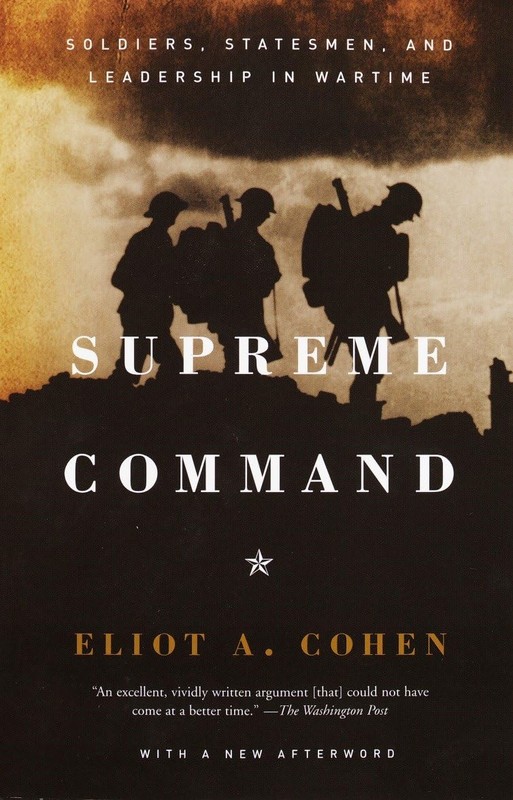
“Supreme Command”Internet/Google
Why is Cohen's Prince important today?
Cohen's book is not just a history lesson; it is a warning against unchecked technocratism. The author believes that war today is too complicated and too saturated with politics to be entrusted solely to the military. True leadership requires civilian courage to “intervene,” Cohen argues, not to disturb generals but to ensure that the way the war is waged is consistent with the raison d'être.
In the era of hybrid and asymmetric conflicts, in the era of the war in Ukraine, the war in the Gaza Strip and threats of war over Greenland, Cohen's lesson is very relevant: great statesmen do not wait for reports, they co-create them, not being seduced by the myth of military infallibility.