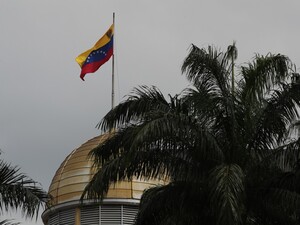
“The Bolivarian Republic of Venezuela rejects the decree issued by the Government of the United States of America, which imposes penalties on countries that choose to maintain legitimate trade relations with the Republic of Cuba,” the statement said.
It notes that free trade is a fundamental principle of international economic relations between sovereign states and “cannot be subject to any coercion that prevents the exchange of goods and services.”
As indicated in Caracas, Venezuela stands in solidarity with the people of Cuba and calls on the world community to take collective action to overcome the humanitarian consequences of “aggression of this kind.”
“Considering Cuba as a threat to the national security of the United States of America is an absurdity that seriously threatens its existence as a nation,” the Venezuelan government concluded.
#Comunicado 📢 La República Bolivariana de Venezuela rechaza la Orden Ejecutiva emitida por el Gobierno de los Estados Unidos de América mediante la cual se pretende imponer medidas punitivas a los países que decidan mantener relaciones comerciales con la República de… pic.twitter.com/AnEqVtEh7e
— Yvan Gil (@yvangil) January 30, 2026
Context
After the capture of Venezuelan President Nicolas Maduro, Trump wrote that Cuba had lived on “large amounts of oil and money from Venezuela for many years” but that now Venezuela “has the United States.” The head of the White House “strongly recommended” Cuba “to make a deal before it is too late.” In response, Cuban President Miguel Diaz-Canel said that the United States would not dictate to Cuba what it should do.
The media wrote that the United States was seeking to change the communist regime in Cuba by the end of the year. In particular, Washington intends to weaken it by cutting off the supply of oil that provides Cuba with electricity. Economists estimate that Cuba could be left without oil for several weeks, leading to a complete shutdown of the economy.
Cuba declared a state of emergency on January 30 after Trump threatened to isolate the island from oil supplies.
European diplomats have warned that the US pressure campaign against the Cuban government could provoke a humanitarian crisis on the island, where about 10 million people live, leading to mass exodus or even famine, Bloomberg indicated.