Donald Trump is flexing his muscles. The American fleet of aircraft carriers and destroyers is gathering off the coast of Iran. Still the US president emphasizes that he hopes he will not have to use force. — Really big, powerful ships are heading towards Iran right now. And it would be great if we didn't have to use them, Trump said.
At the same time, it gives Tehran a clear ultimatum. To avoid a military attack, Iran must meet two conditionsand: — First, no nuclear weapons. Secondly, he must stop killing protesters, the US president emphasized. Talks have already taken place and more are planned.
One name appears at the center of American considerations: Ali Khamenei. The leader exercises supreme religious and political power in Iran and is a key pillar of the regime. To attack him would be to attack the system itself. However, such a move carries enormous risk.
The article continues below the video
There is an ongoing discussion in Washington about an option that is considered “clean” from a military point of view, but politically is extremely dangerous. It's about the so-called decapitation strikei.e. an attack on the leader of Iran. The premise is simple: no invasion, no war lasting for years. Instead, a precise attack on the leadership to destabilize the system from within.
Trump knows this logic very well. In Venezuela, he exerted intense military pressure for many months to force the regime to reach an agreement. When that didn't work, decided to attack and led to arrest of Nicolas Maduro.
The United States, together with Israel, used a similar strategy towards Iran in June 2025: short, precise strikes against nuclear installations. Trump later announced that Iran's nuclear program was virtually eliminated. However, the regime itself survived. Hitting Khamenei could be the next stage of escalation.
Maximum pressure, unclear intentions, readiness to escalate
Iran is the perfect opponent: Republicans hate the country's authorities. The conflict with Iran is easy to sell to the public, and at the same time, distract attention from internal problems — economic pressure, political scandals or falling support.
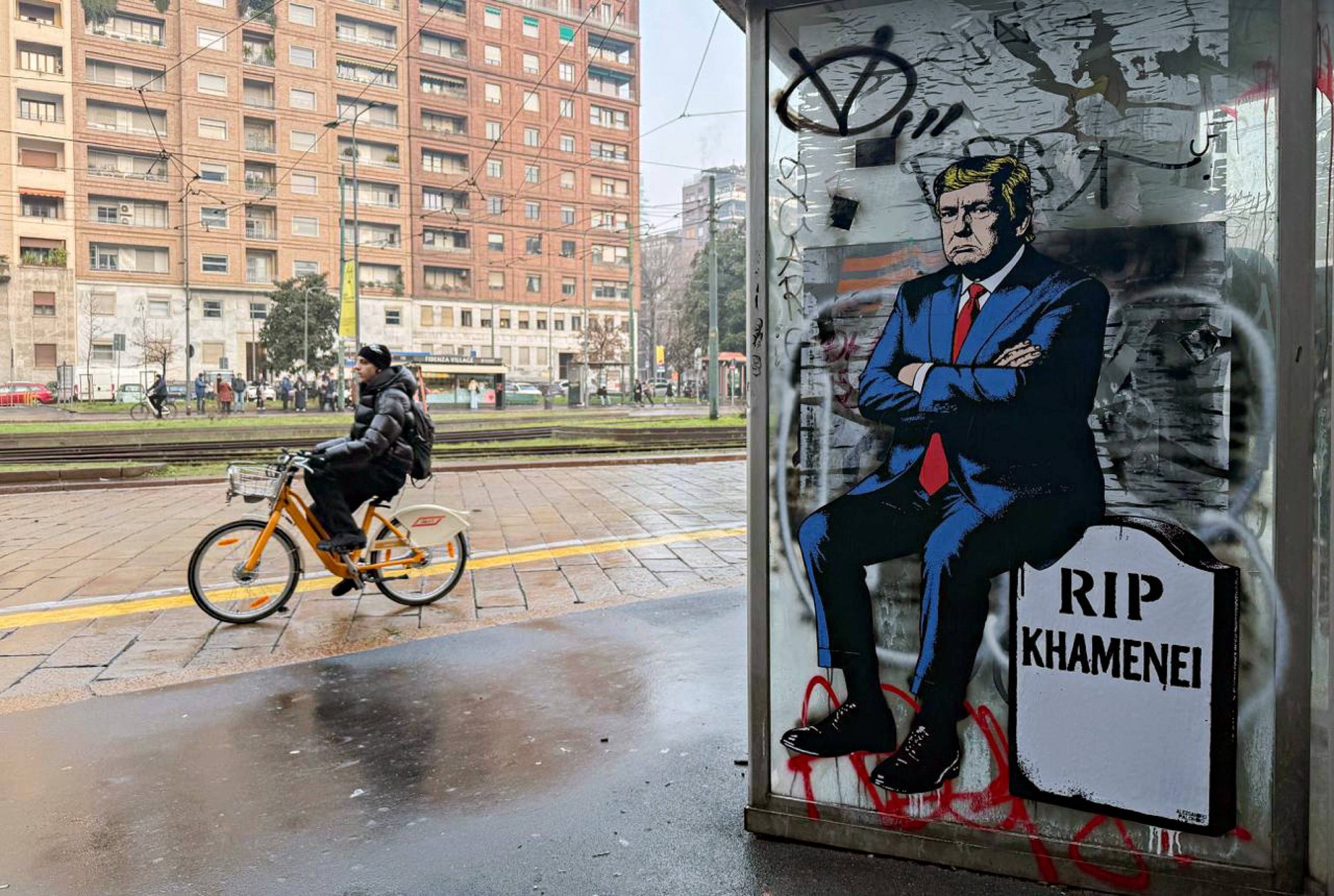
A mural by Italian artist aleXsandro Palombo depicting Donald Trump sitting on a tombstone with the inscription “RIP Khamenei”. Milan, January 16, 2026EPA/Andrea Fasani/PAP
Trump's calculation follows a well-known pattern: maximum pressure, unclear intentions, constant readiness to escalate. Whoever gives in first loses.
But this is where the risk begins. Even within the US administration, there is a belief that no one knows what would happen after the Khamenei era. The Iranian leader is not only the head of state, but also the highest religious authority. His death or overthrow would not create an unmanageable power vacuum, but would trigger a difficult political crisis for which the system is only partially prepared.
The Iranian constitution provides for a succession procedure. The Supreme Leader is elected by the Assembly of Experts, a body of 88 Shiite clerics. However, there is little room for maneuver: de facto only hardliners loyal to the regime are elected. Experts therefore expect rather a weak compromise candidate or even collective leadership than a strong, new personality.
The hope that a successor might be more open to the West or willing to negotiate seems rather wishful thinking. Over the decades, Iran has learned to turn external pressure into internal unity. Hitting the leader can weaken the system. But it can also brutally merge it.
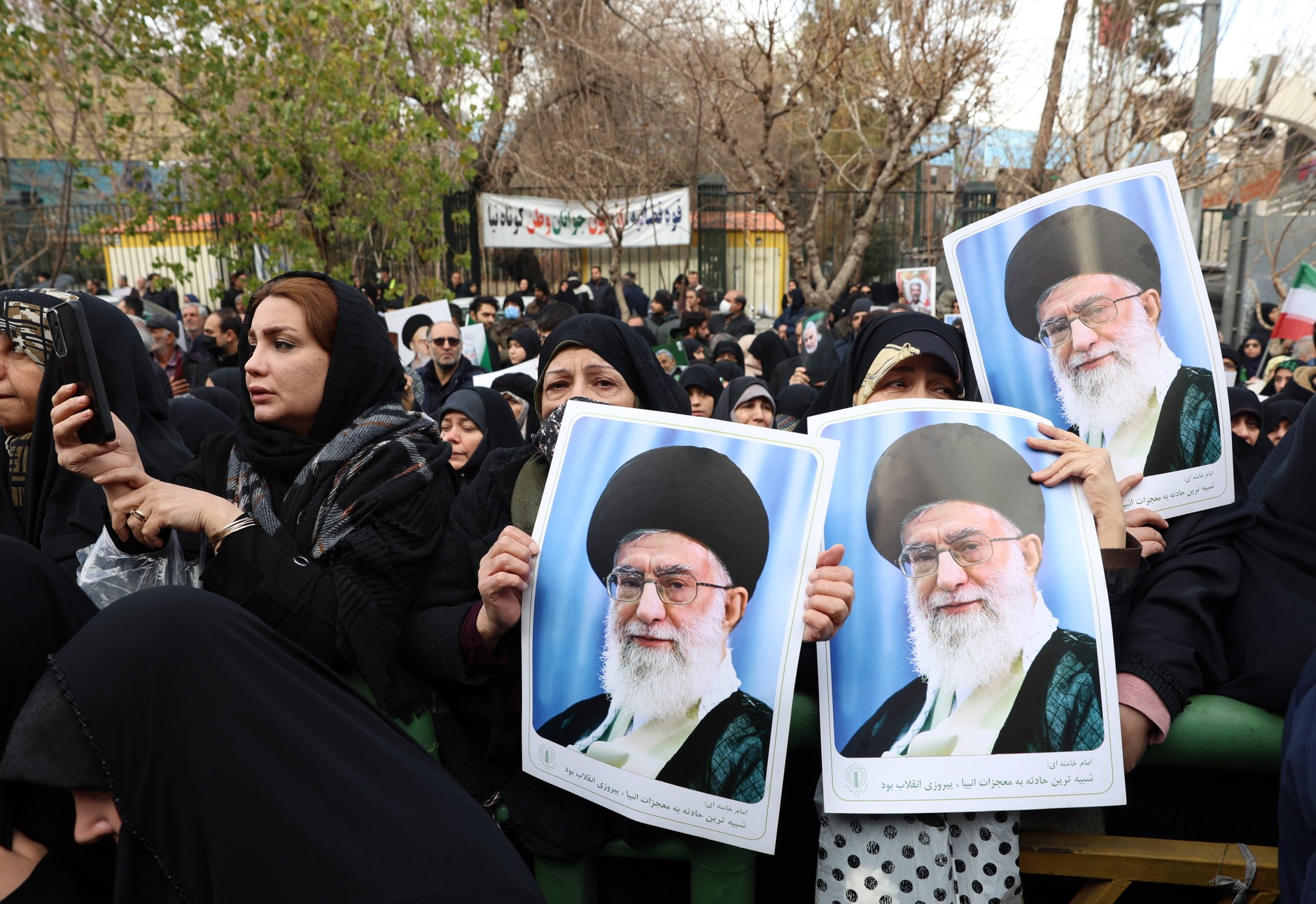
Mourners hold portraits of Ali Khamenei during the funeral ceremony of Iranian security officials. Tehran, January 14, 2026EPA/ABEDIN TAHERKENAREH / PAP
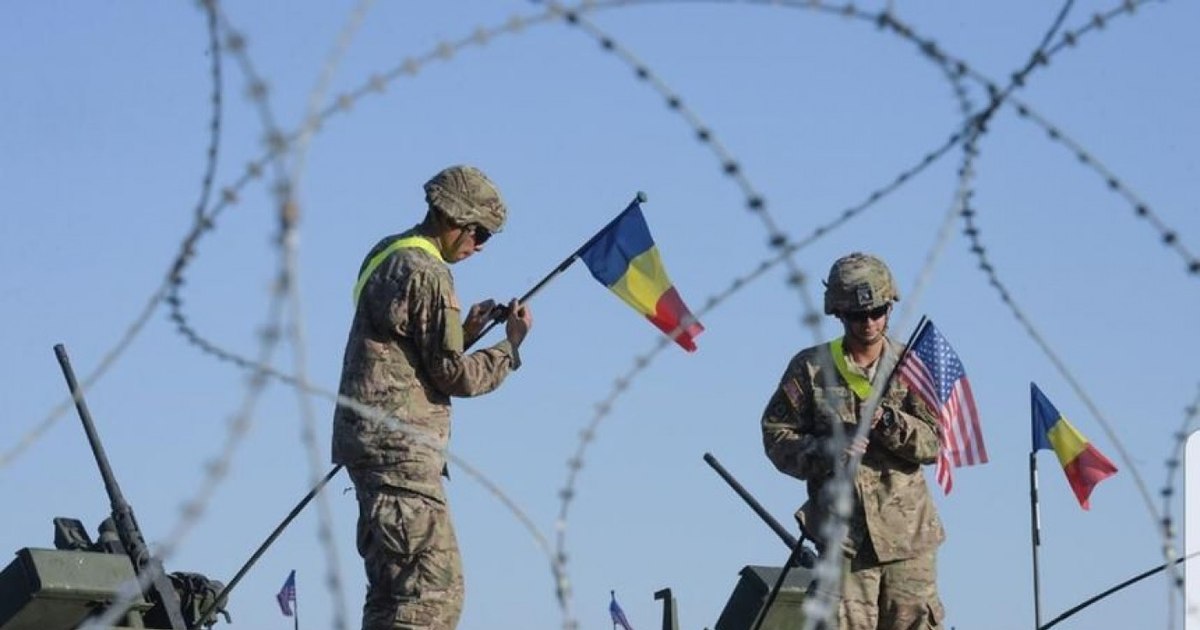
There is also a regional dimension. Iran is not a lone player, but the central point of a network of armed connections. An attack on the leadership would not go unanswered: retaliatory strikes on US bases, attacks on Israel, and destabilization in the Persian Gulf region can be expected.
The situation may get out of control — even to a president who focuses on quick victories.
Trump says he doesn't want war. He declares that he is counting on talks. At the same time, he deploys warships and sets conditions. A hit against Khamenei could shake up the regime. Maybe, though trigger the very thing Trump supposedly wants to prevent: an escalation that no one can control.
I’m Ashley Davis as an editor, I’m committed to upholding the highest standards of integrity and accuracy in every piece we publish. My work is driven by curiosity, a passion for truth, and a belief that journalism plays a crucial role in shaping public discourse. I strive to tell stories that not only inform but also inspire action and conversation.