Two European countries have agreed to purchase GreyShark autonomous underwater drones from the German company Euroatlas, the manufacturer informed Reuters. These unmanned underwater vehicles are designed to detect submarines and target mines.
These are the first contracts of this kind concluded in response to the growing concerns of European countries regarding Russia's activity in the Baltic Sea.
Euroatlas specified that the total value of the contracts exceeds EUR 100 million [ok. 423 mln zł]. The contractors were not disclosed – the company only notes that the countries cooperate closely with each other. The drones are to be used for “special military tasks”, but will not be equipped with weapons.
New control of the depths and growing fears
GreyShark is a mid-range autonomous underwater vehicle designed for long-duration operations and teamwork. In its current version, it can stay underwater for up to 5 days. The company is currently developing a variant to enable this implementation of missions lasting up to 16 weeks.
Many NATO countries are investing heavily in anti-submarine defense – this month the alliance conducted exercises in the Baltic Sea. Two new versions of the drone are being tested in the region: the “Bravo” model, which is shaped like a penguin and has a shorter operating range, and the “Foxtrot” version, powered by hydrogen cells and characterized by greater autonomy.
A military source from Germany confirmed in an interview with “Newsweek” that the German Navy is interested in this unmanned aerial vehicle, describing it as “very useful.”
— We used to have a lot of time, but no money. Now we have money, but less and less time – said the managing director of Euroatlas during the GreyShark presentation on board a ship in the Baltic Sea.
Endurance measured in days and weeks
According to him, the new drone is able to explore up to 4,800 square kilometers of seabed in four months. The six cooperating devices will be familiar with the location of key underwater infrastructure and, if necessary, quickly detect any changes in pipelines or cables.
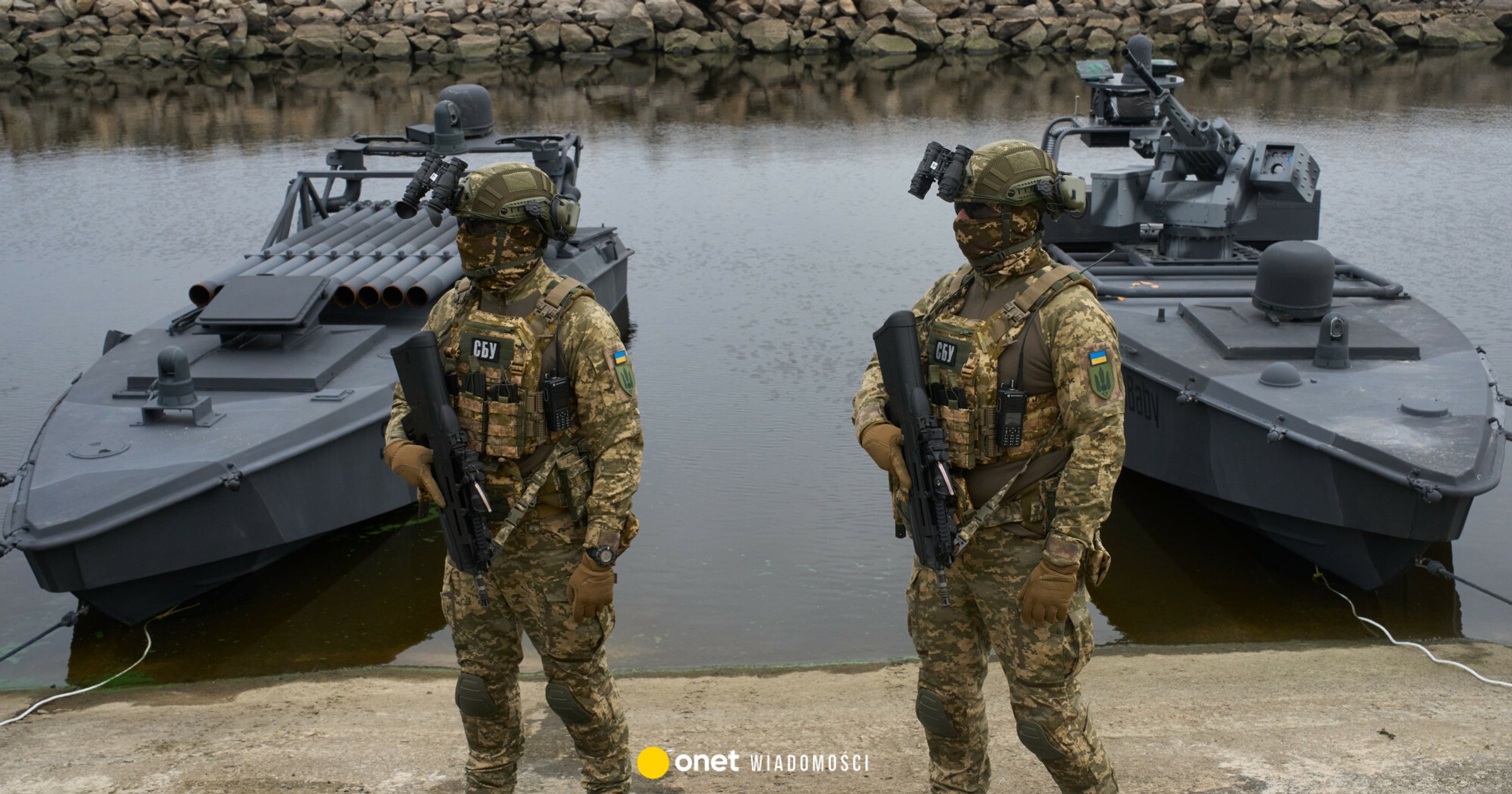
Unmanned naval units are also widely used today in the Russian-Ukrainian war. Kiev recently presented a new version of the Sea Baby water drone, which can operate at a distance exceeding 1,500 km and carry up to 2 tons of combat cargo.
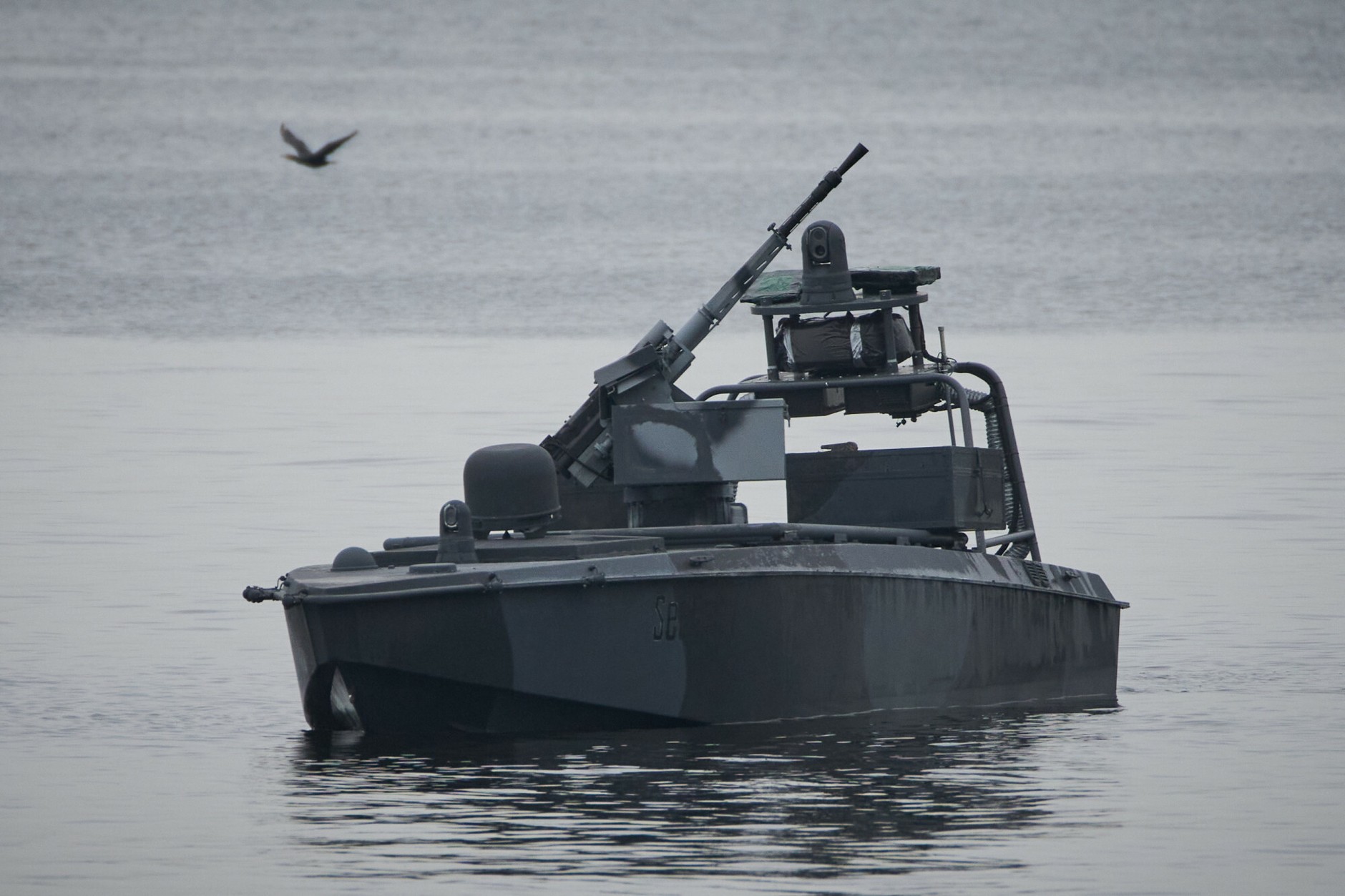
A Sea Baby drone during a demonstration conducted by the Security Service of Ukraine at an undisclosed location in Ukraine, October 17, 2025.Efrem Lukatsky/Associated Press/East News/East News
Factories instead of declarations
At the same time, international drone production is developing dynamically: Ukraine and Great Britain have signed a license agreement for the production of anti-aircraft interceptors at British plants. According to Defense Minister Denys Shmyhal, it is planned to launch production of several thousand drones per month.
In September, the Ukrainian company producing unmanned combat aerial vehicles, Ukrspecsystems, announced an investment of 200 million pounds (approx. PLN 965 million) for the construction of a factory in Great Britain.
Moscow maintains that arms supplies to Ukraine make it difficult to achieve a peaceful solution and turn NATO countries into actual participants in the conflict.