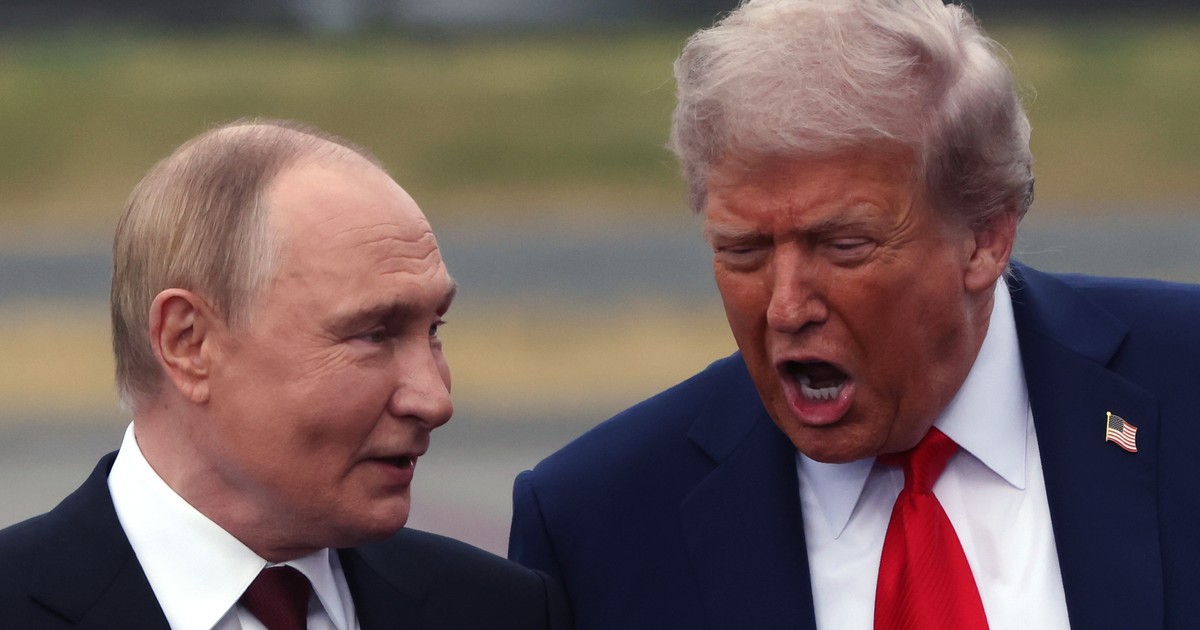
In fact, there is not a day that goes by without some new sensational video or photo being shared by hundreds of thousands or even millions of people, generated by AI. Fake media imitating a real event is gaining popularity with particular easesuch as numerous “recordings” from Kamchatka covered with record amounts of snow, or viral “photos” of a girl with a dog from the times of the American floods of 2024 caused by Hurricane Helene. This is understandable: when we know that a certain situation is real, and the picture or video arouses emotions, while skillfully balancing on the thin line between something completely improbable and something that could have happened anyway, distinguishing truth from falsehood becomes extremely difficult. AND as the quality of content generated increases, it will only become more difficult.
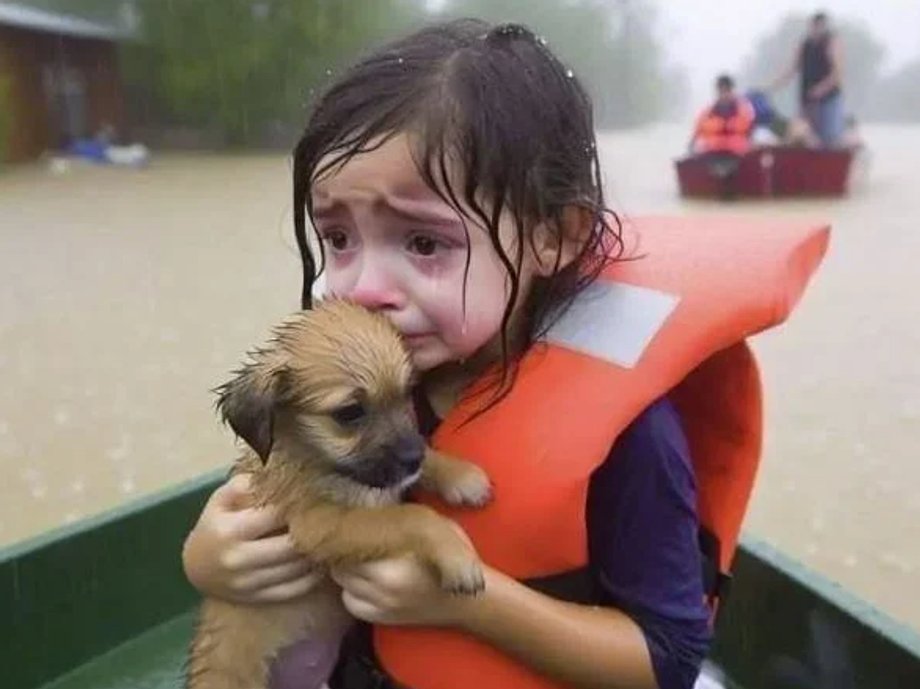
This and similar AI-generated images were shared very often in 2024 during the American floods, and many people thought they were photos.
|
AI / Onet
However, I don't just want to lament the death of the presumption of truthfulness of multimedia published online. Rather, I wanted to draw attention to the solutionwhich can help, at least in certain key situations, distinguish an authentic photo or video from something generated. It's called C2PA. It is relatively simple in concept, but for it to fully work, it is necessary to abandon the naive expectation that people will politely label their “fakes”. Instead, you have to start tagging real photos and videosjust as the mint marks and secures the banknotes it prints – and all content that does not have such markings should be treated as counterfeits.
C2PA: A way to make authentic media meaningful
C2PA, or Coalition for Content Provenance and Authenticity, is a cryptographic solution that allows when creating an image, “pin” special metadata to it containing information about how it was created. Importantly, because the original metadata is signed with a digital certificate, it cannot be changed, and only additional items can be added to it – for example, that the photo has only been denoised and sharpened, or that something has been changed using artificial intelligence. In practice, this metadata can be used in two ways: either in a, let's call it, “naive” way, to tag and detect content created or modified by AI, or to create a multimedia mint, thanks to which we can confirm that what we see was recorded in a traditional way.

The small “cr” logo in the corner of the photo, which can be found on LinkedIn, for example, is a button that expands a menu with information about the origin of a given image.
|
Onet
Unfortunately, so far C2PA is mainly used for the first naive purpose. For example, many new smartphones do this, including the popular Samsung Galaxy S, so that when they use one of the AI image processing tools, a watermark appears on the photo and metadata is added to it, which is later read by selected applications and social media platforms for marking content using generative artificial intelligence. However, the problem with this solution is very easy to see – such metadata can be easily removed. Apart from some more sophisticated software solutions, all you need to do is take a screenshot of the photo, then crop it slightly, and no trace of the metadata or watermark remains. Therefore, the second mentioned application is much more important, i.e using digital signatures to confirm that a photo is taken not left created or modified by AI.
Unfortunately, introducing a “multimedia mint” on a large scale would require a huge amount of work
Unfortunately, this is one of the “easier said than done” solutions. For this to work from the technical side, it is necessary to implement appropriate mechanisms at several levels: at the hardware level, software level and then at the level of content sharing platforms. In other words, What is needed is the cooperation of independent entities that are willing to sacrifice resources in the name of a higher goal.
At the hardware level, C2PA is gaining popularity among camera manufacturers, with the ability to digitally sign photos appearing in new equipment from Sony, Nikon, Canon, Fujifilm and Leica. This is understandable, because the mechanism certifying the authenticity of photos is an ideal tool for press agencies collecting materials from photojournalists, which is why, for example, the Associated Press strongly supports and promotes the development of this standard.
Unfortunately, it is much worse in the case of smartphones, which is especially problematic in the context of the fact that fake materials often look as if they were created using the phone's camera to add realism to them. In practice, there is only one line of smartphones that generates the necessary certificate of authenticity when taking a photo: Google Pixel 10 smartphones. Other manufacturers limit themselves to a “naive” solution of adding metadata after using AI to process photos. Apple is a particularly big absentee here. The latest versions of iOS support reading metadata, but still the latest iPhones do not add them to the photos and videos they take. Personally, I really hope that the next generation of this brand's phones will have full C2PA implementation, because we know well that when Apple does something, everyone will soon copy it. In this case, I wouldn't mind.
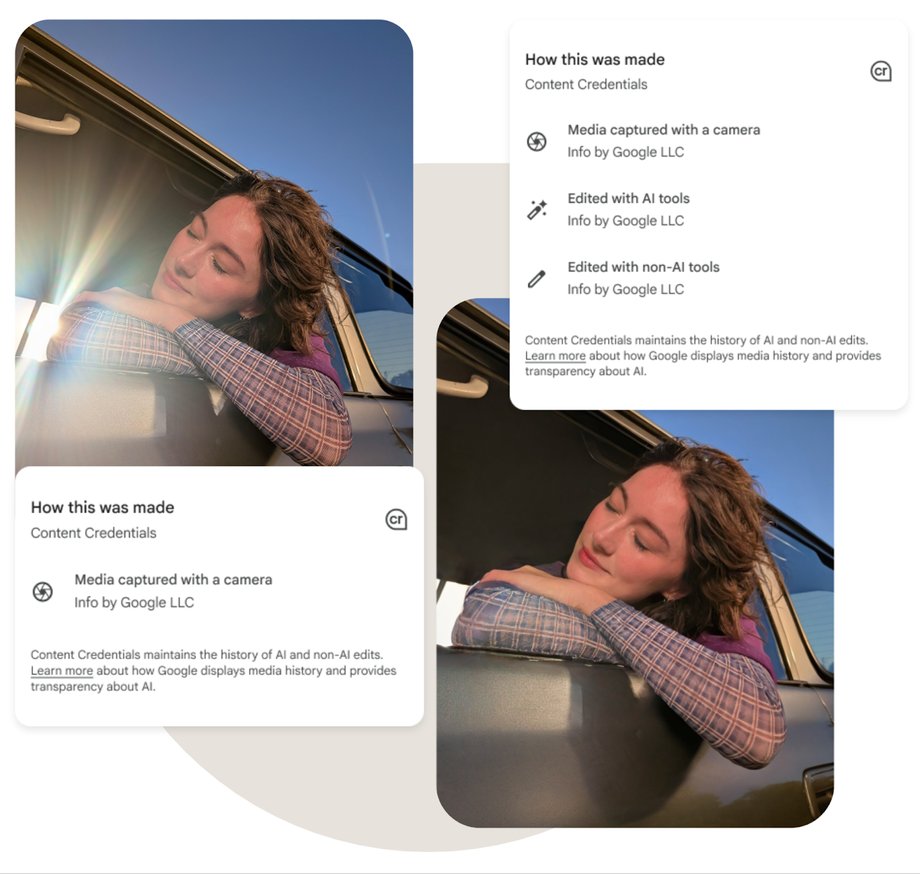
Android and the Google Photos app fully support reading C2PA metadata, so you can see how a photo was created (in this case using a Google phone) and what was done with it.
|
Onet
On the software side, the advantage is that Photoshop and the Google Photos application are fully compatible with C2PA, and therefore the entire Android system (unless the equipment manufacturer modifies it in an undesirable way). For this A huge problem is that various types of services on the Internet massively cut out all metadata from transmitted multimediathus breaking the chain of credentials that C2PA requires. Sending someone a photo via WhatsApp? Are you uploading to your website? It will probably arrive compressed, processed and without metadata.
The most important missing element: full support from social media and publishing platforms
This ties in seamlessly with the topic of content sharing platforms. To make it all work, What is needed is the will, especially of social media platforms, but also of information portals (yes, I'm calling myself to the whiteboard a bit) to implement media transfer so that it doesn't lose C2PA metadata, and then present the information extracted from it to the world. In practice today the only social media platform that has paid more attention to this is LinkedIn. TikTok and Meta also apparently have a substitute for C2PA support on their websites, but it is implemented in a much less useful way. Fortunately, in the case of Meta, there is a slight chance that this will change. At the turn of the year, Adam Mosseri, head of Instagram, commented on this in a long post on the Threads platform:
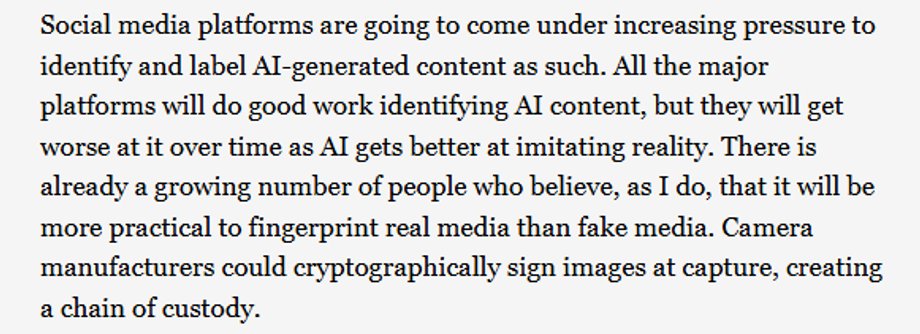
Instagram CEO Adam Mosseri on the need to tag “real” media.
|
Onet
There is no declaration that we will see comprehensive C2PA support on Instagram (for now, Instagram has hidden information about the use of AI in the drop-down menu…), but at least we know that the management of this website is aware of the problem and the existence of a solution. Now the question is probably whether the tables will show that implementing it is worth it.

C2PA logo. It is worth remembering them and knowing what they mean.
This profitability is strongly related to one more factor, which in practice may decide about “to be or not to be” C2PA: users' awareness related to the change in approach to what we trust and what we do not, mentioned in the introduction. There is a beginning of it, because in social media – especially among young people – the popularity of “raw”, natural content is growing, resulting from the longing for authenticity, which is slowly being killed by the “slopification” of the Internet. However, how many of the people reading this text have previously seen a speech bubble with the letters “cr” in or around a photo, knew what it means and thought they wanted to see it in every photo and video? I hope that after reading this text, there will be at least a few more such people, thanks to which more pressure will be put on the creators of hardware, software and platform owners, which will somehow force them to take the matter seriously. Because encouraging “forgers” to mark their works and try to detect them are only poor half-measures that have no chance of working.