Viktor Orbán plays last card: Ukraine and fear of war at center of campaign as Hungary's economy creaks


As Hungary's parliamentary elections approach, Prime Minister Viktor Orbán has made Ukraine a centerpiece of his election campaign, presenting the vote as a fundamental choice between “war and peace”.
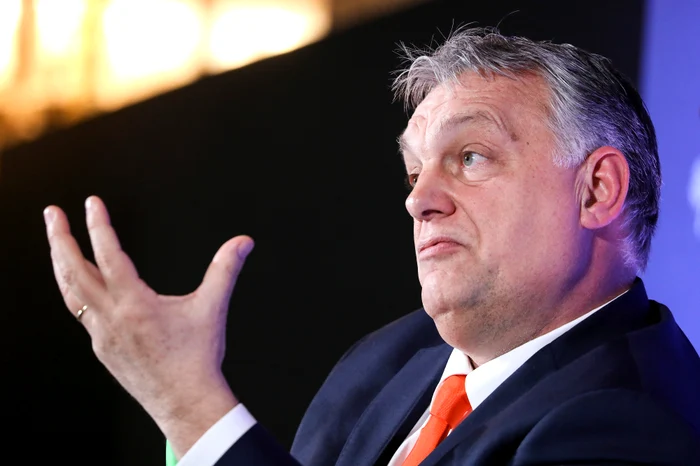
Hungarian Prime Minister Vikotor Orban/PHOTO: Archive
With less than three months to go before the April 12 vote, the ruling Fidesz party is trailing its main rival, the centrist Tisza, led by Péter Magyar. In this context, Orbán seems to have abandoned traditional economic messages and adopted a strategy focused on mobilization through security and foreign policy issues, writes kyivpost.com.
On January 26, 2026, the Hungarian prime minister summoned the Ukrainian ambassador to Budapest, accusing Kiev of meddling in the Hungarian elections.
“Our national security services have assessed this latest Ukrainian attack and determined that it is part of a coordinated series of measures aimed at influencing the Hungarian elections,” Orbán said. However, he has not presented public evidence to support these claims.
The central message of his campaign is that Hungarian voters would have a choice between peace and war. Orbán has repeatedly warned that an opposition victory would lead to Hungary's involvement in the conflict in Ukraine, claiming that “Hungarian children could be sent to fight in the Donbas” — a claim rejected by the opposition.
An increasingly fragile internal context
For the first time since 2010, Fidesz is second in the polls. According to a recent study by the Median Institute, the Tisza party would get 51% of the vote, compared to 39% for Fidesz — a result that would end Orbán's constitutional majority and possibly 16 years of uninterrupted rule.
The prime minister's problems are not limited to political competition, however. Eurostat data from 2024–2025 shows that Hungary has the lowest standard of living in the European Union, with real individual consumption of only 72% of the EU average. The economy stagnated in 2025, with GDP growth of around 0.5%.
In parallel, the government's image was damaged by a child abuse scandal linked to a correctional institution in Budapest. The case drew attention after it was learned that then-president Katalin Novák, close to Fidesz, pardoned a person convicted of covering up abuses. The scandal has seriously undermined the government's “family values” message.
In this context, the topic of Ukraine has become a central element of the political discourse.
From European vetoes to electoral issues
Viktor Orbán's strained relationship with Ukraine is not new. At the European level, the Hungarian prime minister has repeatedly used the right of veto to influence EU decisions related to support for Kiev.
In December 2022, Hungary temporarily blocked an 18 billion euro loan package for Ukraine. A year later, Orbán allowed Ukraine's EU accession negotiations to open, leaving the room at the time of the vote, but separately blocked a €50 billion bailout.
This strategy — the threat of a veto, followed by technical compromises — was originally part of the negotiations in Brussels. With the rise of Péter Magyar, however, Ukraine has become a permanent domestic campaign issue.
The government has resumed and intensified so-called “national consultations,” questionnaires sent to the population that describe Ukraine as a security and economic risk. The latest such move is urging voters to oppose continued European funding of Kiev.
The opposition, presented as an “external intermediary”
In his speech, Orbán describes Péter Magyar not only as a political opponent, but as a representative of foreign interests. In public appearances and in the press close to the government, the Tisza leader is presented as “the candidate of Brussels and Kiev”.
Magyar rejected these accusations, stating that he supports peace and opposes any form of military conscription. However, the media dominance of the government, especially through the conglomerate KESMA, means that the Prime Minister's messages reach mainly the countryside and small towns.
The narrative of a nation under siege
The speech falls within Orbán's older ideological line, which portrays Hungary as a state under siege, forced to resist external pressure. He often compares the influence of the European Union to Soviet domination, recently stating: “In 1956 they came with tanks. Today they come with financial sanctions.”
In this framework, Ukraine is presented as a tool of the West. In January 2026, Orbán declared that Ukraine “is no longer a sovereign state” and exists only because of Western support — claims rejected by Kiev and European partners.
A campaign of polarization
The prime minister's strategy does not seem to aim at winning the electorate of the center, but at consolidating his traditional base. The campaign is particularly concentrated in rural areas, where media control is stronger and the “war or peace” message is constantly repeated.
Analysts say that the issue of Ukraine is not necessarily a personal obsession of Viktor Orbán, but one of the few tools left to mobilize the electorate in the conditions of an unfavorable economic and social context.
If he wins the April election, this strategy will be validated as a model of political survival. If he loses, accusations of foreign interference — from Ukraine or Brussels — are likely to be used to question the legitimacy of the result.