One of Europe's richest countries wants to increase VAT for ten years to finance its armaments

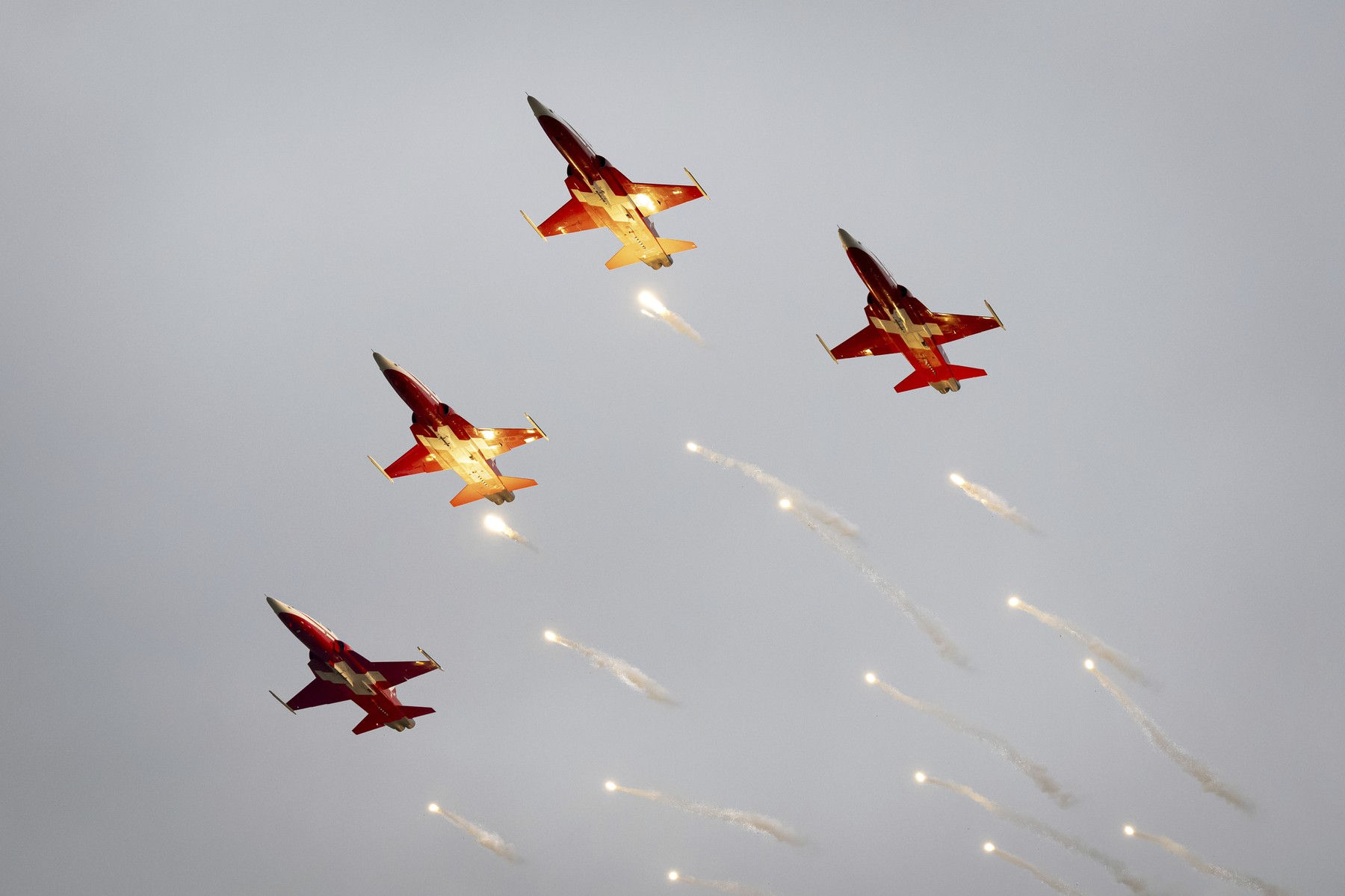
The rearmament process began in Switzerland after Russia began a large-scale invasion of Ukraine, Bloomberg and the Swiss website Swissinfo write.
Switzerland wants to raise the value-added tax rate for a period of ten years to boost defense spending, the Swiss government announced on Wednesday.
“In view of the deteriorating geopolitical situation, the Federal Council wishes to substantially strengthen Switzerland's security and defense capabilities,” the statement quoted by Politico said.
“For this purpose, additional resources worth 31 billion Swiss francs (33 billion euros) are needed,” according to the statement.
The council plans to temporarily increase VAT by 0.8% from the current level of 8.1% for a period of 10 years starting in 2028. The additional revenue will be allocated to an armaments fund which will also have borrowing capacity.
Vote in parliament and then referendum
The government has said it plans to introduce a bill on this by the end of March, and the issue will be sent to parliament in the autumn.
The calendar then calls for a referendum in the summer of 2027 to allow the tax increase to take effect starting January 1, 2028.
It's unclear whether the measure will win popular support in a referendum, writes Bloomberg, which notes that a separate proposal to raise the VAT to 8.8 percent — to fund a voter-backed pension hike in 2024 — is also being debated.
Protracted debates in parliament have already derailed the government's timetable, which had originally planned for the increase to take effect this month.
The issue will also have to be resolved in parliament, and according to Swissinfo, things are complicated here as well.
The Social Democratic Party has announced it will not support a special defense budget that includes the controversial US F-35 fighter jet as a major budget item.
On the other hand, the powerful right-wing Swiss People's Party will not be willing to raise taxes. Instead, he sees opportunities for savings in the areas of asylum, bureaucracy and development aid, writes Swissinfo.
What VAT rates apply in Switzerland?
Switzerland's Value Added Tax is one of the lowest in Europe.
The standard rate is 8.1% and applies to consumer goods. A special rate of 3.8% applies to the hotel industry.
A reduced rate of 2.6% applies to many everyday goods, including food and medicine. Health, education and culture services are completely exempt from VAT.
EU member states have significantly higher VAT rates. One of the reasons is that the EU provides for a minimum tax rate of 15%.
The average rate for EU countries is around 22%. Luxembourg has the lowest rate in the EU (16%), followed by Malta (18%), Cyprus and Germany (19%).
The standard rate of VAT in Romania increased in August 2025 from 19% to 21%.
Croatia and the Scandinavian countries apply the highest rates in Europe at 25%. Hungary is in first place, with a VAT of 27%.
Weapons program
Switzerland has rethought its defense stance since Russia's attack on Ukraine nearly four years ago. It is seeking to increase military cooperation with European countries and accelerate its rearmament, although it has no intention of joining NATO yet.
Switzerland spends about 0.7% of GDP on defense, one of the lowest rates in Europe. The current target of raising this rate to 1% by 2032 is now being exceeded, the Federal Council said.
“Due to the austerity achieved in recent decades, the armed forces are also insufficiently equipped, especially to effectively repel the most likely threats, namely long-range attacks and hybrid conflicts,” the statement added.
Priorities for the country's arms program include short- and medium-range air defense systems, cyber security and electromagnetic capabilities.