Article by Luminița Paul – Published on Thursday, 29 January 2026, 15:13 / Updated on Thursday, 29 January 2026 15:17
The WTA leader, Aryna Sabalenka (27 years old) was sanctioned with “hindrance” – interference – in the first set of the semifinal against Elina Svitolina, won 6-2, 6-3, a decision that surprised her and which she contested. But without success.
Aryna Sabalenka qualified for her fourth consecutive Australian Open final, a feat that had not happened since Martina Hingis in the mid-1990s. She prevailed in straight sets, 6-2, 6-3, over Elina Svitolina (31 years old, 12th place in the world), in the semi-finals in Melbourne for the first time.
The match also had an unusual and tense moment in the first set, when the chair referee, the Swede Louise Azemar Engzellpenalized her with “hindrance” – interference – for calling out twice when the ball had not yet touched the opponent's court.
The Ukrainian was at work, and that first point of the game returned to her. Confused, then irritated, Aryna demanded an explanation from the official in the seat, but did not accept what she said and asked for a video review. With headphones on, Engzell listened again and kept the decision. “Yelling ah-ya is interference to me too. It's not a normal sound“, she then said.
Sabalenka folded and resumed the match, but on the next occasion she asked the referee if a continuous buzzer was allowed and received the confirmation.
“This is a strong call by the umpire!” 😳
Aryna Sabalenka is called for a hindrance by the umpire for a 'different style of grunt' 🔊 pic.twitter.com/26qBmgp130
— TNT Sports (@tntsports) January 29, 2026
Aryna Sabalenka: “I was like, 'What? What's wrong with you?'”
Later, in the press conference, he developed the subject. “Oh, that's something that's never happened to me before. I mean, it's never occurred to me, especially with my moaning, that it's like… I don't know. It's, like, it's so inappropriate, I think, and the way that, I don't know… I don't know. I don't know how to explain”, she began.
“It was like the ball was deep. It was like the bounce was wrong, and it was like the timing was wrong. It just happened naturally. Then she announced the decision, and I was like, 'What? What's wrong with you?'” Aryna continued.
I think it was the wrong decision, but it doesn't matter. She really… how do I say it in a nice way? It really pissed me off, but it actually helped me and was good for my game. I was more aggressive. I wasn't happy with the decision, but it helped me win the match – Aryna Sabalenka
“So if he wants to do it again, I want to make sure he's not afraid. Let it go, make the decision. He will help me“, he assured with a laugh.
Asked if she starts playing better when she experiences an injustice during a match, Sabalenka initially hesitated. “I don't know. I think today she helped me in particular. I played better because I was more aggressive, but in general, if it's not under my control, and it wasn't under my control, I asked for the video review. She made the same decision,” said the WTA leader.
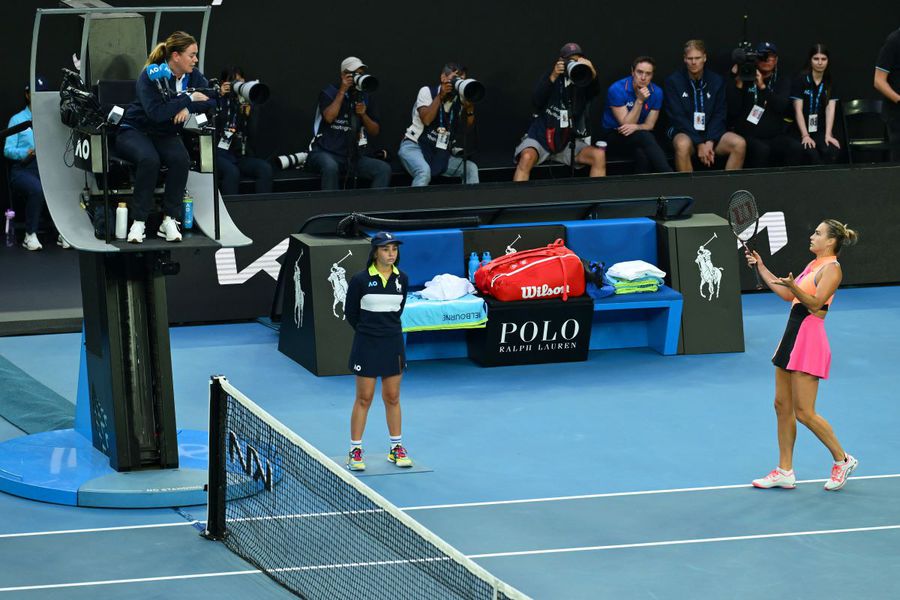
Aryna Sabalenka chatting with umpire Louise Azemar Engzell at the Australian Open Photo: Guliver/GettyImages
“I thought it would be someone else who would make the decision, but it was her, so I knew she wasn't going to change her decision. If it's something I can't control, I don't care. I think that's the right approach in situations like this,” concluded the two-time champion from Melbourne.
Previous Serena Williams from the 2011 US Open
Another famous case of hindrance, perhaps the first, occurred in the women's final at the 2011 US Open. Samantha Stosur and facing a break ball, Serena Williams hit a forehand and shouted “Come on!” while the opponent was trying to reach the ball.
The chair umpire Eva Asderaki ruled that Williams prevented Stosur from completing the point and awarded to the latter. Williams appealed the decision, then continued to argue with the umpire on the next exchange of pitches. She also lost that final to the Australian, 2-6, 3-6.