US oil capital buzzes with excitement: A new 'black gold' El Dorado has opened, and names like Halliburton want in on the action


In a bar in downtown Houston, Matthew Goitia, an executive at Pelorus Terminals, lays out his initial idea to refurbish and build marine terminals that can blend and export crude oil and ship chemicals to Venezuela, Reuters reports in an extensive report.
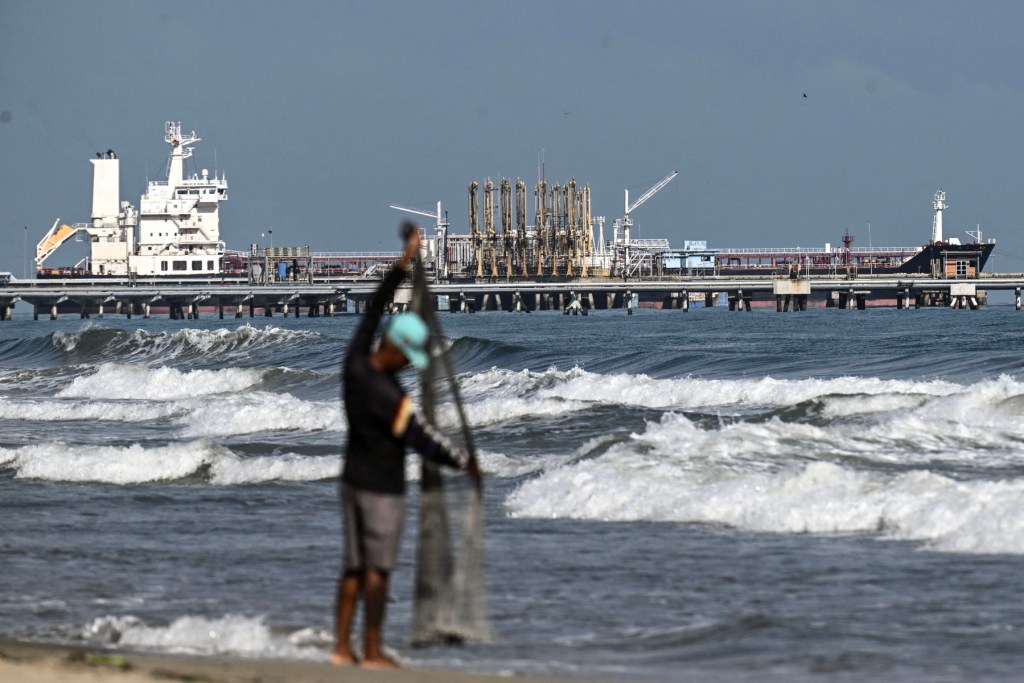
The ambitious plan, estimated to cost between $250 million and $1 billion, involves refurbishing an existing marine terminal for crude oil in Venezuela, building a new one for oil and then converting the older facility to carry chemicals and other products. He is also considering adding storage tanks, upgrading the docks and will need to provide electricity, all of which could take between three and ten years.
There's a lot to clear up, and it's not yet clear how he could get permission from the US government to do any of this. Any entry into the South American country will also likely require a lot of support from local officials and state oil company PDVSA, but that doesn't stop ideas from emerging.
In offices across the city at the heart of the US oil industry, executives, entrepreneurs and adventurers are looking for a way to get some of the work needed to tap Venezuela's vast crude oil reserves, estimated to be the largest in the world.
“The little ones are willing to take the risk, Venezuela is the lost world,” says Matthew Goitia, director of Pelorus Terminals, referring to the mythical city of El Dorado. Goitia says he has already held talks with two venture capital investors and is arranging meetings with “wildcaters” — smaller, independent oil operators who risk their own capital to drill wells in unconfirmed fields — with similar visions of entering the Venezuelan market.
Trump has asked American companies to invest heavily in Venezuela's energy infrastructure
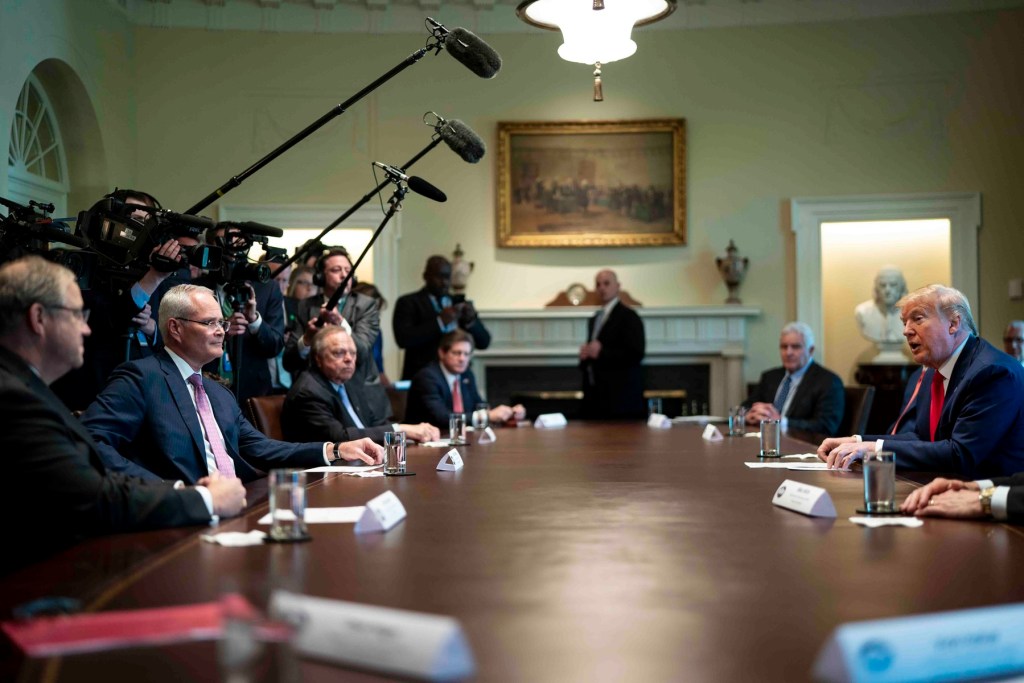
Less than a month after the U.S. military raided Caracas to capture Venezuelan President Nicolas Maduro, the prospect of a new oil rush is galvanizing the Houston industry as U.S. President Donald Trump seeks $100 billion in investment to rebuild the South American country's battered oil industry.
This enthusiasm is also found in much larger companies. Jeff Miller, CEO of Houston-based oil services giant Halliburton, told analysts on an earnings call last Wednesday that his phone was “ringing off the hook” with inquiries about Venezuela.
Halliburton pulled out of Venezuela in 2020 following US sanctions, but is now working on obtaining the licenses that would allow it to return. Miller attended a meeting in January at the White House and told Trump that Halliburton was “very interested” in returning, and that he personally lived in Venezuela for four years and partly raised his children there.
He told investors last week that “there are opportunities for us sooner rather than later.”
“There's a lot of excitement initially — everyone wants to hit the road,” Francisco Monaldi, director of the Latin American energy program at Rice University's Baker Institute in Houston, told Reuters.
Monaldi states that the Energy Department in Washington has held meetings including with “wildcatters” and recalls that the billionaire oil magnates, in turn, participated in the round table on Venezuela organized by the White House on January 9.
US oil companies fall into two categories regarding the exploitation of Venezuelan oil
Ali Moshiri, Chevron's former head of Africa and Latin America, told Reuters he had recently held meetings with potential investors in Houston and New York.
Enthusiasm for quick entry has been tempered by the fact that no one knows the rules for investing and operating in Venezuela under US supervision. Some companies want to see firmer plans from the United States for an eventual democratic transition in Venezuela, which would provide a more stable political environment for their long-term investments.
“There are two groups of companies. Some are cautious and are waiting for reforms, and even a risk-free scenario to go there, and others are acting as if this is a new 'gold rush,'” explains Moshiri, who is now CEO of Houston-based Amos Global Energy. He claims he has been preparing for years to enter Venezuela through his company and has had early-stage talks to raise up to $2 billion. “Those who have been involved in Venezuela for a long time are trying to find a middle ground,” he added.
JP Hanson, global head of the oil and gas group at investment bank Houlihan Lokey, says there is a lot of talk about Venezuela, but public and private investors still face a significant degree of uncertainty.
“They're going to need a clear opportunity to own assets, know what they're investing in and know they can protect their assets,” he said at an oil industry event held last Thursday in Houston.
The National Assembly, Venezuela's unicameral parliament, began debating a sweeping reform of the hydrocarbons law last week that would allow foreign and local companies to operate oil fields on their own through a new contractual model.
The changes, which have not yet been approved, could be a first step towards allowing independent oil operators to enter the country with updated contracts that offer more flexibility than the current “joint venture” model.
The Denver Connection in the Chase for Venezuelan Oil
Meanwhile, Colorado's capital Denver is also emerging as a hub of Venezuela-related activity after several companies based in the city attended Trump's Jan. 9 roundtable. These included Raisa Energy, which acquires non-operating stakes in energy assets and has a Venezuelan CEO; Tallgrass Energy, a pipeline and terminal asset company, and Aspect Holdings.
US oil companies could help restore Venezuela's production and prosperity and are ready to start “the real work, fast”, Alex Cranberg, the president of Aspect, told Reuters.
“The stakes are enormous, but it requires durable contracts and long-term trust-building,” he said in an emailed response to questions from Reuters, referring to the development potential in the South American country's prolific Orinoco heavy crude oil basin.
He also said there is potential for onshore and offshore exploration, even by independent operators, as modern technology could unlock oil and gas resources not reflected in current reserve estimates.
“We need contractual and security arrangements that are realistic and reliable. We need technical data and lots of it,” Cranberg continued.
Trump told company executives they would “deal directly with us” (not with his cabinet), and not with Venezuela, but it's unclear which US agencies would do what, who would manage the licenses and approve the deals, or when US sanctions barring the facilitation of trade in Venezuelan oil might be lifted.
Any US company that wants to work in Venezuela's oil sector currently needs a license or a sanctions waiver from the Treasury Department in Washington, and international banks cannot work in the South American country either under current sanctions.
Lawyers say many Venezuelan laws would need to be changed before companies can invest.
Pressure from the Trump administration to get things moving
Trump and his energy secretary, Chris Wright, meanwhile, want the industry to get moving. “They're rushing, because the president told Wright to hurry, and Wright, of course, is trying to deliver,” Monaldi asserts.
Realistically, however, most of the rapid gains in Venezuela's oil production would likely come from operations led by US oil giant Chevron – the only US energy producer licensed to operate there.
Sources at PDVSA, Venezuela's state oil company, told Reuters on condition of anonymity that there was a similar frenzy in the offices in Caracas and at mining sites across the country. The atmosphere has changed rapidly since the company said it was making progress in negotiations with the US.
Some PDVSA executives are rushing to arrange meetings with foreign oil industry executives on production, exports, energy supply and business opportunities, the sources said.
Emil Calles Lossada, CEO of Caracas-based Venergy Global, told Reuters there was a surge of interest from companies studying potential opportunities in Venezuela. His company collects business intelligence for companies looking to invest. He emphasizes, however, that the current sanctions keep most foreign investors in place, so it is necessary to relax the restrictions and carry out legal reforms in the South American country.
Back in Houston, Goitia estimates yields of at least 20 percent when the two systems are fully operational. He anticipates significant potential for higher returns if a larger company is interested in acquiring them after a few years.
In a nearby office, an aspiring energy developer looking for investors presented a different offer: $70 million a year to revive abandoned oil wells in eastern Venezuela.
He estimated that he could turn this into an $800 million profit. He is trying to raise money from wildcatters in Texas and wants to restore existing wells that need an overhaul. The infrastructure, even if dilapidated, should be good enough, and he says the amounts are just right. All it needs is to reach 50,000 barrels per day, which could take about seven months.
“Texas dreams are big, and Venezuela is as hot as the mythical El Dorado again,” concludes Reuters report.