The ultimate lever for Kyiv. Behind the scenes of the discreet campaign to arm Ukraine with Tomahawk missiles


As Russian missiles continue to rain down on Ukrainian cities and the Kremlin shows no appetite for concessions, a small but increasingly vocal group of Ukraine supporters in Washington argues that the only way to force Vladimir Putin to negotiate is to dramatically strengthen Kiev's negotiating leverage, the Kyiv Post reports.
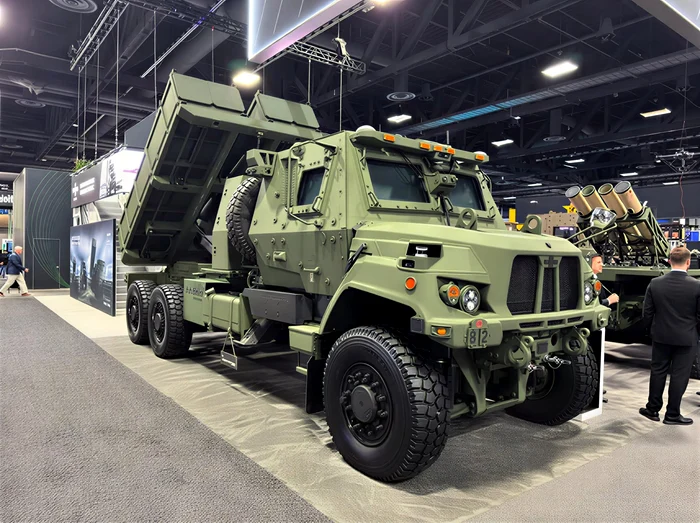
Tomahawk missile launcher ARCHIVE PHOTO
Their latest, long-debated proposal is this: the US should supply Ukraine with Tomahawk missiles.
At the center of this campaign is Dan Rice, president of the American University in Kyiv and former special adviser to the Supreme Commander of the Armed Forces of Ukraine (AFU), who met with Defense Secretary Pete Hegseth the other day.
“The Secretary of War is very intellectually curious about all aspects of the war,” Rice said, noting that they discussed the war at length.
Rice, a behind-the-scenes architect of Kiev's earlier efforts to win US approval for cluster munitions and ATACMS missiles, believes the time has come for a radical step — a small, undisclosed number of land-launched Tomahawk cruise missiles capable of striking deep inside Russia.
There are already land-based launch systems capable of carrying Tomahawk missiles, namely “Typhoon”, he recalled.
“Putin only responds to force,” Rice told the Kyiv Post. “If he doesn't agree to peace, there is a high probability that President Trump will approve Tomahawk, in my view.”
Meeting with the US Secretary of Defense at the Pentagon
Rice declined to elaborate on Hegseth's answers, saying it was a confidential conversation, but revealed that he advocated for Ukraine to receive even “a small, undisclosed number” of Tomahawk missiles
Even a small number, when successfully fired deep into Russia, will put enormous pressure on Putin,” Rice pointed out.
He recalled previous US decisions that had a major impact on Russia. When Ukraine first launched ATACMS missiles in November 2023 and destroyed two dozen Russian Ka-52 attack helicopters, Moscow abruptly withdrew its helicopter fleet from Crimea and rewrote its battle plans.
“A few Tomahawk missiles would have the same effect,” Rice said. “The range is so great that Russia simply cannot defend all of its critical sites.”
According to the Ukrainian lobbyist, the task of convincing the US is not insurmountable.
“The first individual weapon of any new weapon system is always the most politically difficult. But once you cross the threshold—break the seal—the debate ends there. And then it's no longer a debate. We've seen it with every weapon system: HIMARS, cluster munitions, Abrams tanks, Leopard tanks, 120mm depleted uranium tank rounds, 165km ATACMS, 300 km, F-16 and now Tomahawk. The Russians shout about the «red lines»… we send the first units to Ukraine… and then the debate ends,” he said.
Marketing campaign
In 2022, after being named an adviser to then-Ukrainian commander Valeri Zalujnyi, he launched what he calls an “Integrated Marketing Campaign” designed to “influence the influencers” — Pentagon officials, defense executives, key lawmakers, White House staff and the press.
He wrote editorials, appeared on the news, sent e-mails to hundreds of officials and took their temperature the way a political consultant watches undecided voters.
And the results were not long in coming: first the Turkish-supplied cluster munitions arrived at Bahmut. Then US cluster munitions in July 2023. Then ATACMS in October.
“Every time, the drive was obvious,” Rice said. “I still feel it now with Tomahawk.”
He also has arguments.
Russia, he notes, has launched some 145,000 Iranian-made Shahed drones and more than 13,000 cruise and ballistic missiles at Ukraine. In this context, supplying 100 or 200 Tomahawk missiles to Kiev, he argues, would not be an escalation – it would be a mirror response.
“It's proportional,” Rice said. “In terms of weapon types, not scale.”
He dismisses Russian warnings about nuclear-capable missiles as a cynical form of panic-mongering.
“So are Iskander missiles, and Russia is already launching them at civilian cities, including a children's hospital in Kiev.”
The real power of Tomahawk missiles, Rice argues, is not the damage they cause, but the uncertainty they create.
“ATACMS forced Russia to move its bases, command centers and warehouses more than 300 kilometers away,” he said. “That's the tactical aspect. The Tomahawk is strategic. Four thousand kilometers. You can send it from Kiev to Moscow.”
His proposition is simple: Send an undisclosed number. Launch one raid per day on your most valuable targets. Pick up the pace if Putin refuses a truce.
The atmosphere in the Trump administration
The question of whether President Donald Trump would approve such a step is open — and deeply contested — within his own administration.
Some officials say the president's instinct to avoid engagement and escalation is still prevalent.
A senior Trump administration official, who spoke on condition of anonymity to discuss domestic deliberations, warned that “long-range attacks on Russia risk blowing up any diplomatic avenues before they even get off the ground.”
“President Trump wants leverage, not a spiral,” the official told the Kyiv Post.
Others close to the national security team see things differently.
A senior Senate defense aide has said privately that Rice's proposal is attracting quiet attention precisely because it fits Trump's negotiating style.
“The president believes in shock and pressure,” the aide told the Kyiv Post. “This is leverage. Real leverage.”
Rice himself is forthright about what he sees as past mistakes.
He accuses former Biden administration national security adviser Jake Sullivan of setting a damaging precedent by pushing back whenever Moscow denounced escalation.
“Lavrov played it on his fingers, Rice said. “Every time the Russians protested, we pulled out — and when we finally sent the guns, Putin said it didn't matter in the war.”
He added: “President Trump himself has said that Putin is deceiving him, and this will likely backfire on Putin, just as it backfired on Maduro and the Ayatollah. And I think that will trigger a decision on the Tomahawk.”
Capitol Hill intervenes
On Capitol Hill, the idea is no longer confined to think tanks and advocacy circles.
A senior Republican Senate aide told the Kyiv Post that the Tomahawk debate reflects growing frustration at the impasse in negotiations.
“If the goal is to force Putin to choose between escalation and negotiation, that's exactly what that would achieve,” the aide said. “It tells Moscow that the sanctuary is gone.”
A senior Democratic aide shared that sentiment, while acknowledging the political risks.
“There is a real concern about the expansion of the war,” the aide said. “But there's also a recognition that what we're doing now doesn't change Putin's calculations. The question is whether we're serious about helping Ukraine win — or just helping it survive.”
Support for tougher measures is also growing among lawmakers who supported previous arms transfers.
“The same arguments have been made against HIMARS, against ATACMS, against cluster munitions,” said a House aide. “The sky didn't fall.”
“Europeans should ask them”
“The vast majority of European partners strongly support a Ukrainian victory and generously fund Ukraine's budget. But they do not advocate for or fund Tomahawks. This is a strategic disconnect from their stated goal of a Ukrainian victory. Ukraine cannot win defensively alone,” Rice said.
He added: “The Senate should ask for them. The press should ask for them.”
In particular, Rice insists that President Volodymyr Zelensky should not be the one making the request. “He already asked,” Rice said. “It has to come from us.”
If the missiles are supplied by European partners, he said, the review process would reduce the risk of Moscow staging or exploiting a false flag incident – such as the July 29, 2022 explosion at the Donetsk prison that killed 60 Ukrainian soldiers and wounded 130 and was falsely attributed to a HIMARS attack, as well as the January 1, 2026 fake drone strike on Putin's residence, which the Kremlin claimed Ukraine carried out during the ceasefire talks.
Stake
For now, the Pentagon remains silent and the White House is evasive. No policy change has been announced.
But Rice's argument that peace will only come when Moscow fears what's coming — is gaining ground at a time when diplomacy appears to be going nowhere.
“Uncertainty is the weapon,” he said. “And Putin understands only one language.