He said that a strategy was being developed on what should be done in the event of Russian aggression.
According to the worst-case scenario cited by Funke, the Russian Federation will start a full-scale war against NATO, and “from the very first hours” the German armed forces will be at the center of it.
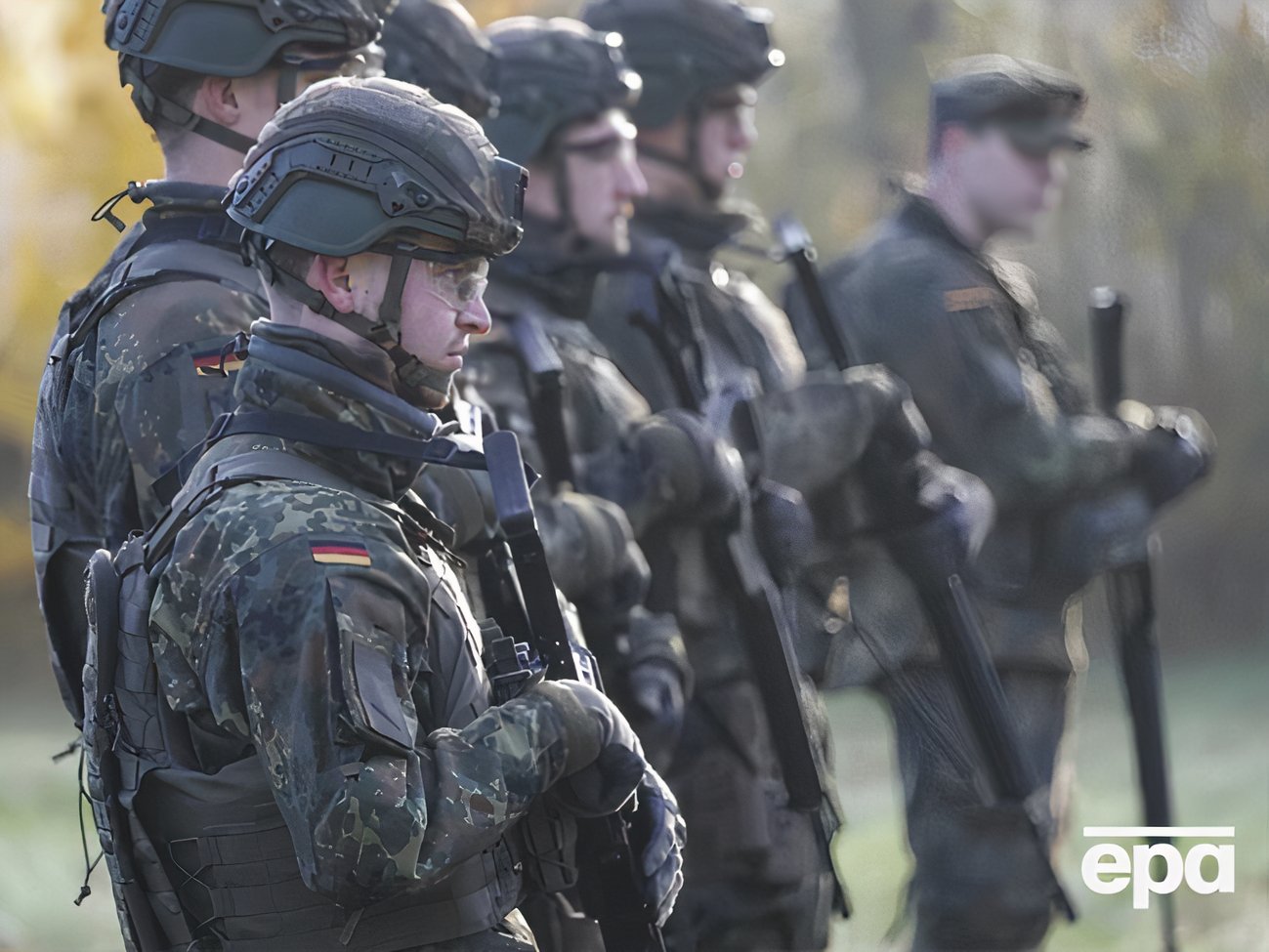
Thus, a mechanized infantry brigade of 4.8 thousand German soldiers will strike from its base in Lithuania, and a few days later another 15 thousand military personnel of the rapid reaction forces will be transferred to the front.
It is expected that “tens of thousands” of Allied military forces will arrive at German ports in the North Sea “in the coming weeks”, they will be transferred to the east by highways and railways, which may come under attack from saboteurs, long-range missiles and suffer from cyber attacks.
“Hundreds of wounded people” can arrive back from the east every day, overwhelming Germany’s hospitals on a scale that can be compared to the times of the coronavirus pandemic.
Funke explained that compared to Afghanistan, where he had a “large but manageable number of wounded,” in the event of a war in Europe, he had to plan for 1,000 wounded a day.
The German general has 55,000 troops at his disposal, larger than most European national armies, and Funke's tasks range from evacuating and treating the wounded to delivering supplies and reinforcements to the battlefield, The Times writes. The general's division was created in 2025.
According to Funke, he is now concerned about the “hybrid side” of possible aggression, as well as the importance of maintaining logistics capabilities even if the main route “fails.”
Funke's division is now developing a modern version of the Cold War-era system for requisitioning trucks, wagons, food and personnel “on a colossal scale.” According to the general, the system should function with the support of civil associations and businesses, and work on contracts is already underway, he emphasized.
Among the difficulties in preparing German society for a possible invasion, Funke cited an insufficient number of hospital beds (the current 1,800 could be “quickly overcrowded,” and there may not be enough staff capable of dealing with gunshot and blast injuries) and legal procedures requiring a vote by deputies.
The Times writes that analysts doubt that the country will quickly transition from peacetime to war if necessary. On this occasion, Funke called the rigid division between peace and war “an anachronistic legacy of the 20th century,” because now there is a factor of hybrid war.
Funke explained that German society is already preparing for the threat of war, but some incidents – for example, the wounding by police of a military man who was participating in an exercise and fired blank cartridges – demonstrate that “communication channels are not yet fully adequate.”