Why good vision does not mean healthy eyes. “If you know your risk, you can delay diseases that lead to blindness”

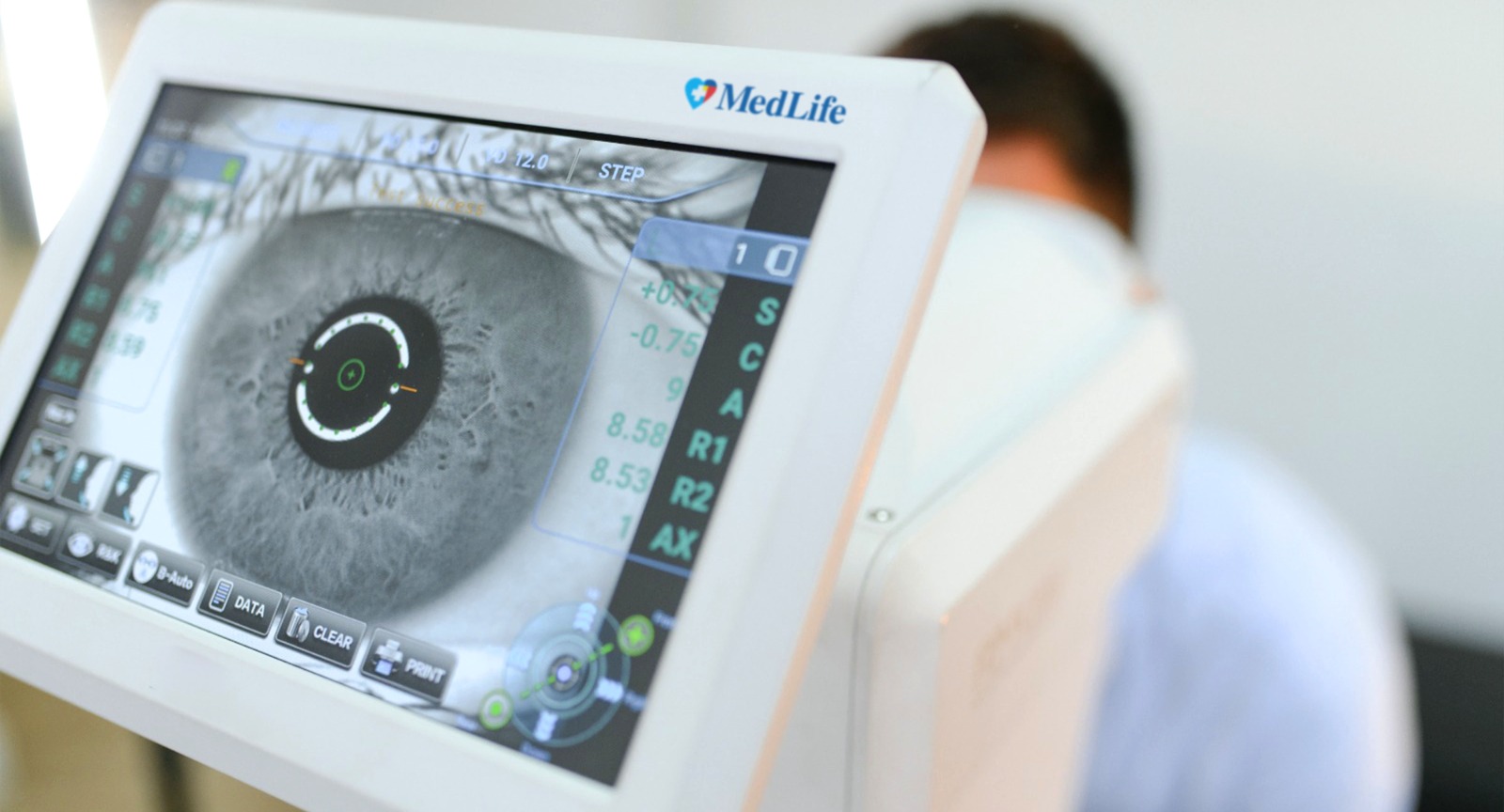
In general, people only go to get their vision checked when they either can't see clearly at a distance, or their eyes are getting tired on the computer, or they need new glasses. Many do not even go to the ophthalmologist, but only measure their dioptres in medical optical centers, which, however, cannot fully evaluate the health of the eyes. The problem is that some of the most serious eye diseases, which can lead to blindness, develop for years without any obvious symptoms. “In the early stages of some serious diseases, the vision is good. It is only in the advanced stages that the symptoms start to be felt,” he explains Dr. Elena Avramprimary ophthalmologist specializing in ophthalmogenetics, from Hyperclinic MedLife Titan. However, the earlier a person knows their risk for certain degenerative eye diseases, and also through regular eye examinations, the sooner preventive measures can be taken and vision loss can be avoided.
Glaucoma and age-related macular degeneration (AMD) can set in without us realizing it, and by the time vision begins to decline significantly, some of what has been lost is irreversible. “The biggest problem is that patients come when they have already lost their sight. The ideal is to detect these diseases before the onset or in very early stages”, explains ophthalmologist Elena Avram.
In 2021, 12,000 Romanians were diagnosed with glaucoma, one of the most common causes of vision loss, according to data from the National Institute of Public Health. In addition, 3,750 new cases of blindness and low vision were registered in the same year. Although there are no precise statistics on age-related macular degeneration (AMD), doctors estimate that the total number of people suffering from AMD is around 500,000.
Once diagnosed, these conditions benefit from treatment, but results are limited when significant eye changes have already occurred. That's why, in recent years, medicine is starting to focus especially on prevention, including through genetic testing.
“It is important to know in advance your risk of developing diseases that can lead to blindness, because in this way you can quickly take measures that delay or even prevent serious vision problems”, emphasizes the doctor.
We cannot change the result of a genetic test, but we can reduce the overall risk of disease
Modern genetic tests, such as those included in MedLife's Longevity 100+ program, analyze hundreds of small variations in DNA that, when put together, outline the predisposition to certain diseases. In ophthalmology, two of the conditions monitored are glaucoma and age-related macular degeneration. The result of such a test is not a diagnosis, but a risk assessment. In other words, it shows how prone an organism is to developing a particular disease during its lifetime.
“We can never change the result of a genetic test, because DNA is stable, it does not change. But what we can do is correct the risk factors. If you greatly reduce the harmful factors and enhance the protective ones, you have every chance of not developing the disease”, says doctor Elena Avram.
To make this mechanism easier to understand, Dr. Avram compares genetic predisposition to the risk of liver cirrhosis: two people can consume the same amount of alcohol, but the one with genetic predisposition will develop the disease faster. Conversely, if he completely avoids the risk factors (chronic alcohol consumption, hepatitis infections, hepatotoxic substances) he may never develop the condition.
Earlier onset of macular degeneration
Age-related macular degeneration affects the macula – the central area of the retina responsible for fine vision. It is the disease that causes, gradually, the details of the image to be erased: faces, letters, objects in the center of the visual field. “It is a condition that affects the center of the retina, the macula, which degrades over time,” explains the doctor.
There is a dry, more common form, in which deposits called drusen appear, and a wet, more aggressive form, in which abnormal blood vessels appear that can bleed. “First the dry form appears and then it can turn into the wet form, where vision loss is much faster,” says Dr. Avram.
Although it is classically associated with the age of over 60, doctors note that the onset appears earlier and earlier. “In the specialized literature we talk about 60 years, plus or minus 5 years. But in practice we see cases in younger patients, even from 50 years old, against the background of lifestyle: processed food, smoking, long exposure to screens and unprotected exposure to the sun”, explains the doctor.
Risk factors that matter more than we think
For people with a genetic predisposition, lifestyle can have a major impact. “Smoking increases the risk of age-related macular degeneration by approximately 20 times,” points out Dr. Avram. Equally important are sun exposure without protection and diet. “Processed food – sausages, pâtés, industrial sweets – is harmful to the eyes. The ideal is to have a simple diet, namely food with only one ingredient: fruits, vegetables, meat cooked at home, eggs, unprocessed dairy products”, recommends the doctor.
In families where there are already cases of the disease, prevention starts early and may include taking supplements. “It is recommended to supplement with lutein from a young age. We do not wait for the disease to appear in patients with a high genetic risk,” says the doctor.
Treatment does not restore lost vision
In the dry form, treatment is mainly supplements and lifestyle changes. In the wet form, things get more complicated. “Intraocular injections are made with anti-VEGF substances, which reduce the abnormal vessels. The disease can be kept under control, but often patients become chronic and need repeated injections,” explains Dr. Avram. Even under these conditions, the goal is limited and aimed at slowing the progression of the disease. “We cannot restore what has been destroyed. The damaged retina remains damaged”, emphasizes the doctor.
In glaucoma, vision is lost without us realizing it
If macular degeneration affects central vision, glaucoma acts differently: it progressively destroys the optic nerve, especially by increasing eye pressure. “In glaucoma, peripheral vision is destroyed, and central vision remains good for a long time. The patient does not realize that he no longer sees laterally,” explains Dr. Avram. That is why the disease is often discovered late. “If you come when the central vision is also affected, the prognosis is very reserved”, says the doctor.
Glaucoma most commonly occurs after age 60, but changes can begin earlier, especially in people with a genetic risk. There are several types of glaucoma and all ages can be affected. In these cases, eye imaging investigations can identify signs before symptoms appear, and eye pressure monitoring is mandatory.
Don't refuse the drop test!
One of the most important signals drawn by the ophthalmologist is related to the frequent habit, that when our vision is disturbed, we only go to medical optics. “It is wrong. The optician only looks at the diopters. Refractometry represents only 10% of the ophthalmological consultation”, says Dr. Avram. Especially after 40 years, when serious vision problems can begin, we should go to an ophthalmologist's office for an annual consultation.
A complete consultation includes much more: measurement of vision, refraction and eye pressure, examination of the iris, lens and retina and, crucially, pupil dilation to see all eye structures in detail. “Without the drop test we only see a small part of the eye, about 30%. To see the deep structures we have to dilate the pupil. That's why I recommend patients not to refuse the drop test”, explains the doctor. Although many patients avoid this procedure because it causes temporary blurred vision, it is crucial for detecting diseases.
Glaucoma and macular degeneration do not hurt, do not warn, and do not stop progressing on their own. Instead, they can be significantly slowed down if discovered in time. “It is one thing to start the treatment when the sight is still good and to keep it, and another is to arrive when the structures are already destroyed. The optic nerve and the retina are extremely fragile structures and if they are affected by aggressive diseases they cannot be restored,” concludes the doctor.
Article sponsored by MedLife