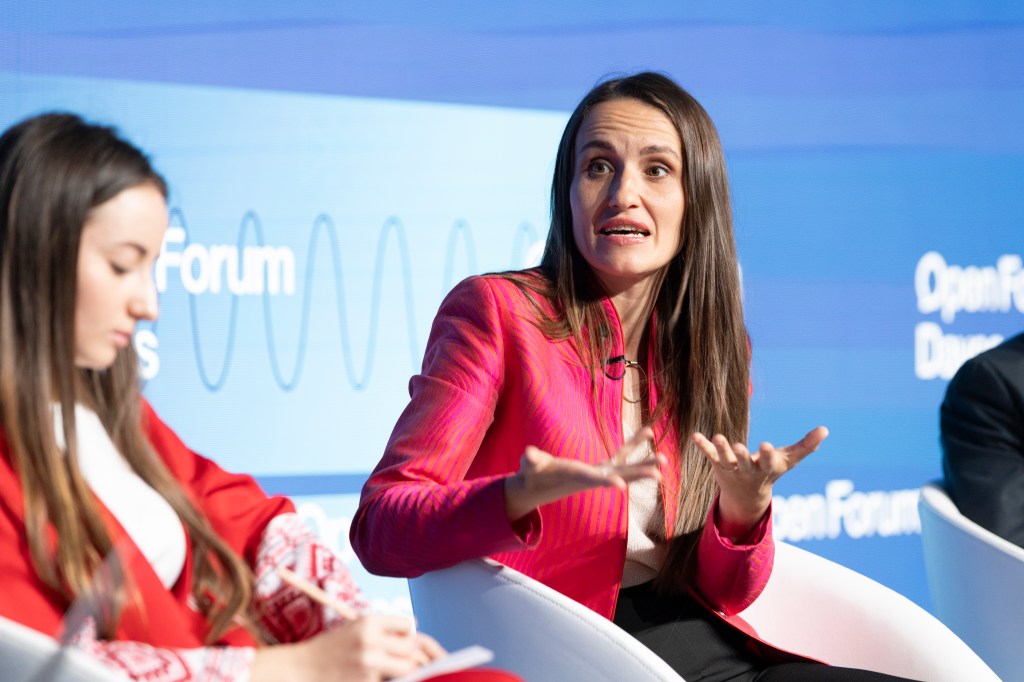
Foreign Minister Oana Țoiu: “We are perhaps in the most complicated moment in the last decades of the transatlantic partnership”

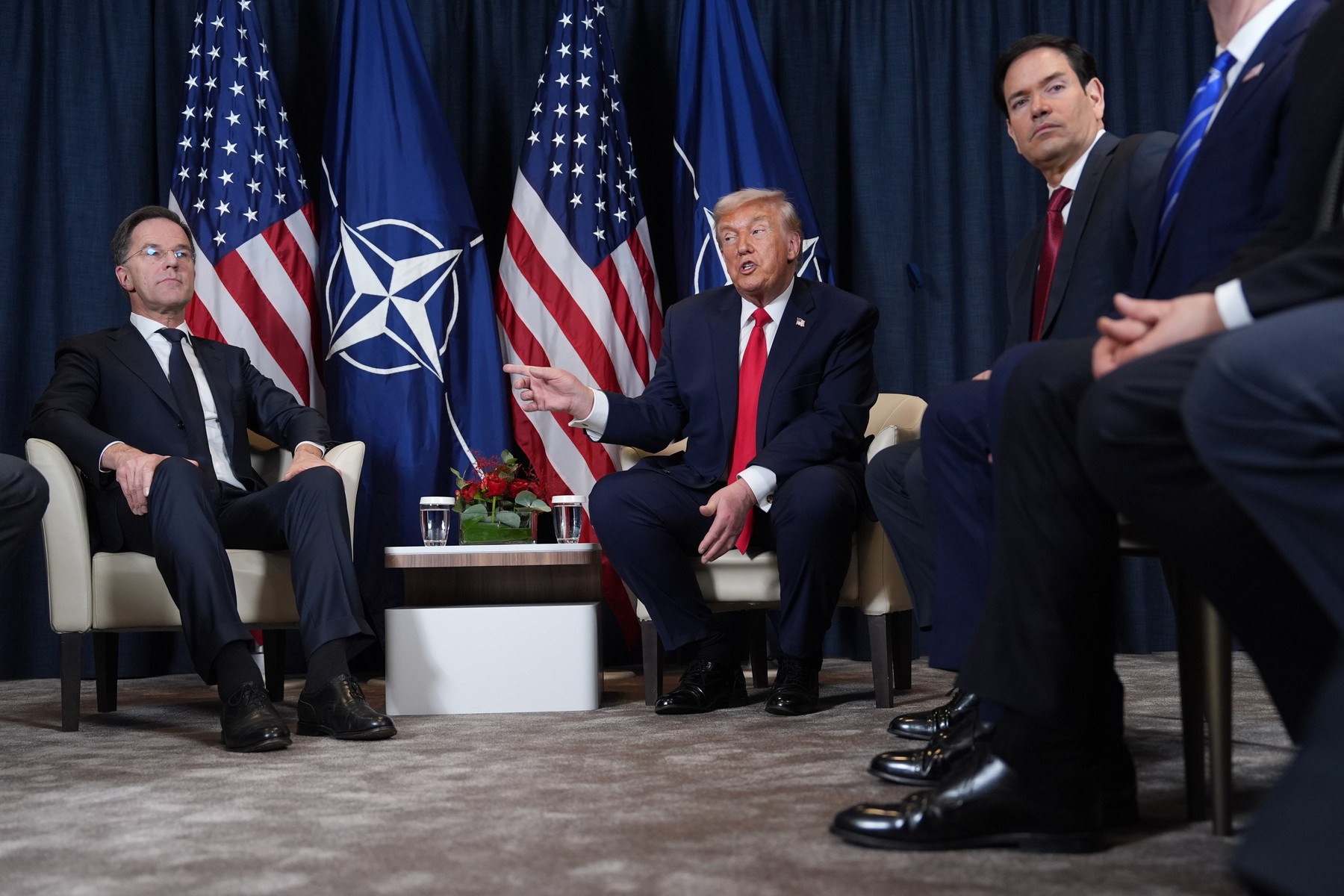
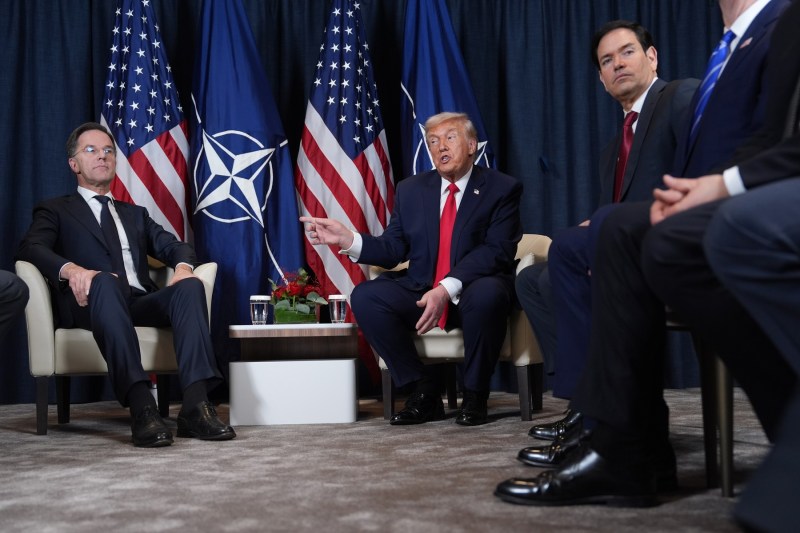
President Donald Trump, center, meets with NATO Secretary General Mark Rutte, left, during a meeting on the sidelines of the World Economic Forum's annual meeting in Davos, Switzerland, on January 21, 2026. PHOTO: Evan Vucci/AP/Profimedia
The foreign minister acknowledged on Tuesday the difficulty in EU-US relations, but noted that at the moment, “we are in a much better place than we were a week ago”.
“It is clear that the last few days have shown that, compared to the history we have in this transatlantic partnership, we are in a moment that is proving to be perhaps the most complicated of the last decades,” Minister Oana Țoiu said on Tuesday, answering a question about the state of EU-US relations, in the context of the crisis generated by Donald Trump's claims regarding Greenland.
“On the other hand, today we are in a much better place than a week ago,” she observed at an event to launch the Cypriot presidency of the European Union.
Donald Trump has raised tensions in EU member states in recent weeks, claiming Greenland and even suggesting a forceful takeover of the semi-autonomous Danish territory, while threatening to impose additional tariffs on a number of countries that have actively supported Copenhagen.
Finally, at the World Economic Forum in Davos last week, Trump said he ruled out the use of force, then announced that he had reached an agreement with NATO on US access to Greenland — an agreement whose details have not yet been released.
“In the process of finalizing the EU-US trade agreement”
Trump's step back has partially eased the relationship with the EU, which in response to threats from the White House had already suspended the process of ratifying the trade agreement with the US, concluded last year.
Țoiu emphasized that this process will be resumed now. “We are in the process of finalizing, including through the last stage with the European Parliament, the trade agreement between the United States of America and the European Union,” she said.
 Why Romania has not made a decision regarding joining Trump's Peace Council. Foreign Minister Oana Țoiu says what clarifications Bucharest wants
The Foreign Minister also said that economic uncertainty played a role in de-escalating the situation.
“The effect that a rapid, unpredictable increase in tariffs could have had, the negative effect it could have had on the business environment, implicitly on jobs, I think was one of the factors that contributed to our joint ability in the discussions with the United States of America, in the discussions within the European Union, to be able to return to this constructive way to complete the agreement that was reached last August,” she said.
Security and economy
Țoiu also said that Europe can still rely on US support in terms of security, even in the context of the American pivot towards the Indo-Pacific region.
“In terms of the security partnership working, here we have clarity from the US on both their security and defense strategy, reaffirming their commitment to maintaining the critical support that the US gives to European security and defence, while reaffirming their strategy to reallocate some of the resources to priorities as they have defined them particularly in the Indo-Pacific,” she said.
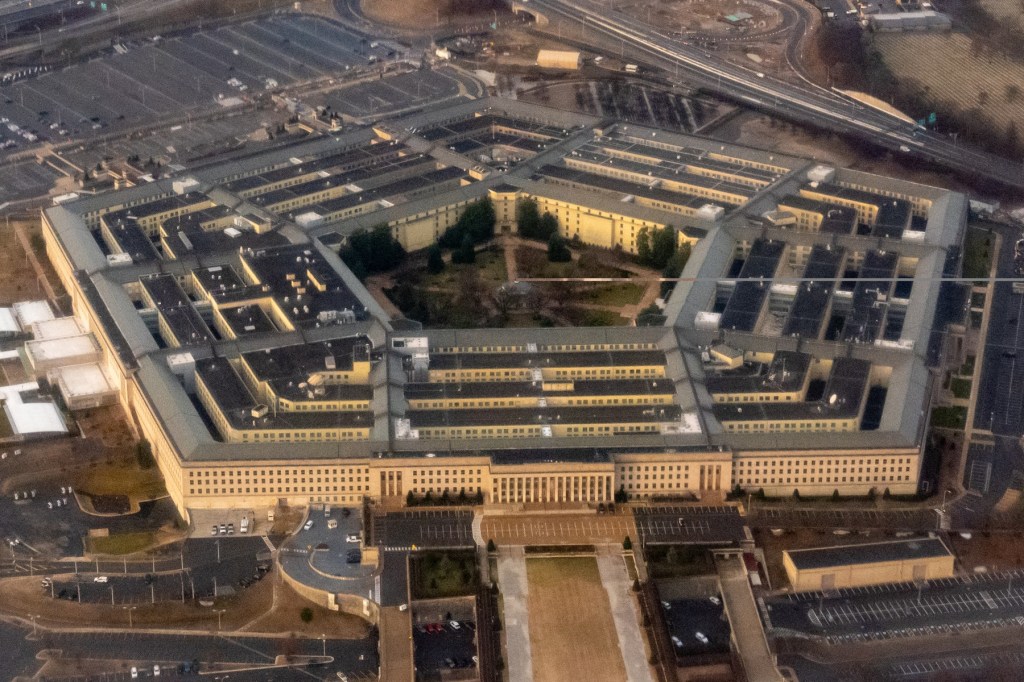 New US Defense Strategy Brings Historic Change: Threat Hierarchy Completely Changed, While Europe Gets a Warning
The head of diplomacy said that this “means an increased need for own investments and this is also reflected in its own budget allocation, it is also reflected in European instruments, such as the SAFE instrument, from which Romania benefits from 16.8 billion euros as sources of financing, both for purchases and for local production”.
Țoiu also referred to an older concern of Romania in the bilateral relationship with the USA, saying that he wants a stronger economic component.
“This partnership had a strong security axis and will continue to have it, but both from the perspective of Romania and the USA, we have a greater economic potential than what we have managed to translate over time into investments or bilateral trade,” said the Foreign Minister.