
Diplomatic tensions between Tbilisi and Berlin: Germany's ambassador, convened by the Georgian authorities and accused of promoting a “radical agenda” before local elections in the country


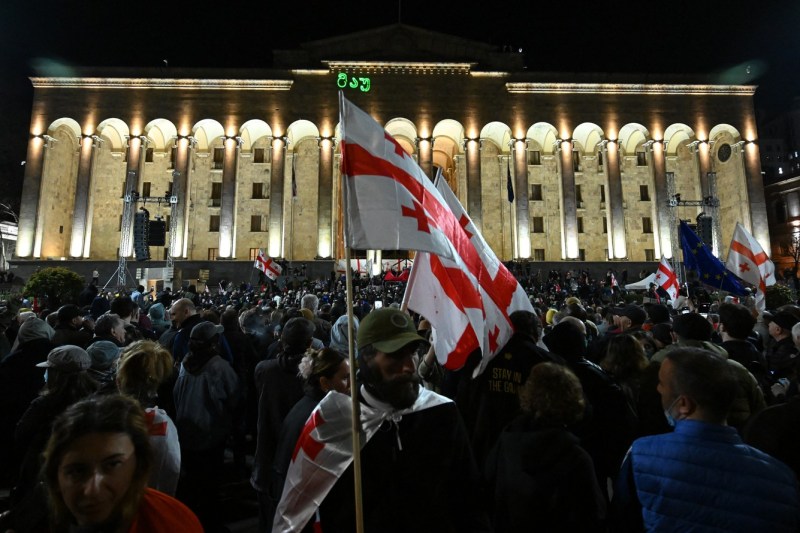
Anti-government protest at Tbilisi Photo: Vano Shlamov / AFP / Profimedia
Georgia's Foreign Ministry convened on Wednesday on the German ambassador, accusing him of being involved in attempts to promote a “radical agenda” in the country before next month's local elections, considered extremely important, notes Reuters.
In a statement, Tbilisi warned the ambassador Peter Fischer not to mix in Georgia's internal affairs.
“At the meeting it was emphasized that the Georgian side is worried about attempts to promote a radical agenda in the country, which, in turn, contravenes democratic principles and feeds the polarization of society,” the statement said.
In a post on the X platform, the German Foreign Ministry transmitted: “We firmly reject the continuous aggressive rhetoric of the representatives of the Georgian dream party to the German ambassador”, referring to the formation in government.
Authorities in this country have intensified measures against the pro-EU opposition and protesters who have been in the street almost every night, after the challenged parliamentary elections since October last year and after the Government's decision to stop negotiations for accession to the European Union.
Some Western ambassadors, including Fischer, have aroused the dissatisfaction of the government through the support given to the protesters, including by participating in their processes.
Fischer said that his summons represents a “new minimum point” in bilateral relations and qualified the accusations against him as “unfounded”.
The tensions between Tbilisi and the European embassies have amplified in recent weeks, against the background of the accusations made by the Governor Party, the Georgian dream, who claims that Western diplomats would have violated the Vienna Convention through meetings with opposition parties, thus trying to influence the elections scheduled on October 4.
Twenty-six European embassies, including Germany, as well as the European Union delegation in Georgia, rejected these accusations on Wednesday in a common statement.
The opposition parties did not recognize the results of last year's parliamentary elections and accuse the Georgian dream of electoral fraud, accusations rejected by the Government. The approaching municipal election has deepened even more the divisions among the Georgian opposition, some formations announcing Boicot, while others have designated their candidates.


