The warrior famous throughout Europe to whom Romania dedicated the year 2026. How Romanian or how Hungarian was Iancu de Hunedoara and what merits he had

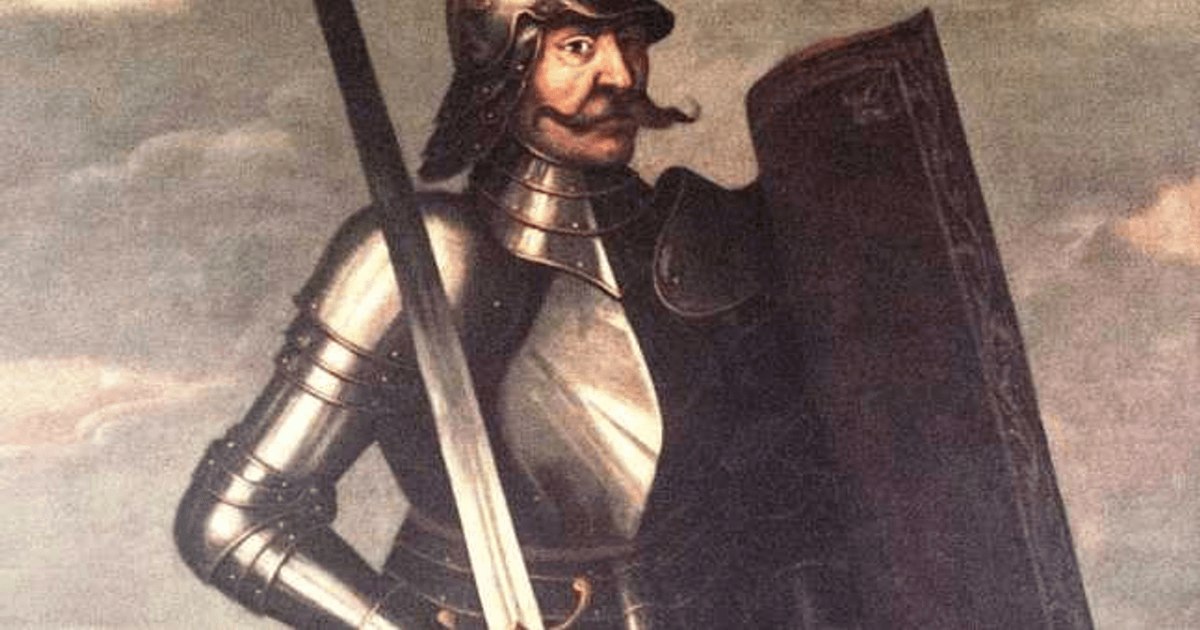
The year 2026 was officially declared “The Year of Iancu de Hunedoara” in Romania. Iancu de Hunedoara is an emblematic character of the Central Middle Ages and is European, a personality claimed by two countries, managing to create a link between Romania and Hungary.
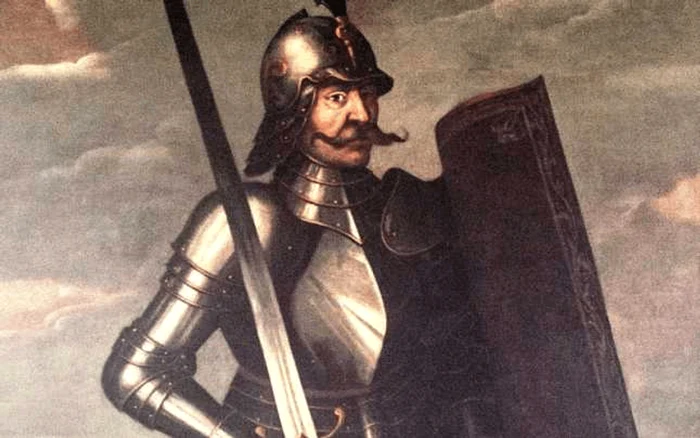
Iancu de Hunedoara PHOTO wikipedia
On January 14, the President of Romania, Nicușor Dan, promulgated law no. 10/2026, whereby the year 2026 becomes the “Year of Iancu de Hunedoara”, with multiple manifestations and cultural events dedicated to this prominent personality of the Eastern and Central European Middle Ages. Iancu de Hunedoara is one of the historical personalities claimed by two countries at the same time: Romania and Hungary. For a long time, its origin gave rise to controversy and academic disputes. How Romanian was Iancu de Hunedoara and how Hungarian? It is a question that specialists and historical documents have tried to answer over time.
Romanian, Hungarian or Cuman?
Iancu de Hunedoara lived between 1407 and 1456 and was one of the most important personalities of medieval Europe. Also known as John of Hunedoara or Janos Hunyadi, he was a great army commander, a crusader warrior, a good politician of his time and a man who encouraged culture. Throughout his life he advanced incredibly in his military and political career, becoming ban de Severin, voivode of Transylvania and governor and later regent of Hungary (1446-1453). He also served as captain general of the kingdom of Hungary, between 1453-1456, and his son, Matei Corvin, became king of Hungary, the only monarch with Romanian origins on the Hungarian throne. Considering the scope of his personality, Iancu de Hunedoara was claimed both by Romanian and Hungarian historiography.
Romanian specialists say that Iancu de Hunedoara was the product of a Romanian aristocracy that produced many notable people, both military and political. Precisely for this reason, his ethnic origin represented a controversy, especially in the academic environment, since the 19th century. A part of Hungarian historiography believes that Iancu de Hunedoara was actually called Janos Hunyadi and that he had Hungarian origins. “It is well known that Romanian historiography considers the Huniads to be Romanians. This false opinion is widespread in Romanian historical research and in school textbooks. The name of János Hunyadi's father and grandfather (Vajk and Šorbe) and the use of the raven in the family coat of arms clearly show us the Tatar-Cuman origin of the Hunyadi family”stated László Rásony, in his study “The old Hungarian name Vajk. On the side of the surname Hunyadi”.
Other Hungarian historians believe that he was at least half-Hungarian, from his mother's side, Elisabeta de Morsinai, who was actually called Erzsébet Morzsinai. On the other hand, Romanian historiography shows that Iancu de Hunedoara was the descendant of an important family of Transylvanian Romanians from the land of Hațeg, which received numerous feudal benefits and recognition for their merits in the defense of the borders and services rendered to the Hungarian crown. “At the head of the villages and the Romanian troops in Hunedoara, as in Banat, Maramureş or other parts, were representatives of the local population, called knezi. Some of them were recognized by the king as leaders of local communities and were endowed with certain rights. These were so-called royal knezis. Many of the royal knezis were distinguished by their military services to the king and were rewarded with estates, entering the ranks of the small nobility”wrote Camil Muresanu, in “Iancu de Hunedoara”.
Other specialists believe that Iancu de Hunedoara came from a family of mountain refugees who came under the protection of the Hungarian crown and brought him important civil and military services. Nicolae Iorga believed that they came from the village of Corbeni, in the Argeș area, as evidenced by the family coat of arms: a raven. Medieval documents provide overwhelming and revealing evidence in favor of Iancu de Hunedoara's Romanian ethnic origins. Numerous chroniclers, including Hungarians, admit that Iancu was ethnically Romanian. Iancu's father was called Voicu, his grandfather Şerb and he would have come from a family of Romanian Cnezi from the area of Haţeg or Hunedoara. The renowned historian Camil Mureşan wrote that Iancu de Hunedoara's mother was called Elisabeta Muşina and she was the daughter of a small Hunedoara noble of Romanian origin, Catholicized and entered the Hungarian feudal system.
Phillipe de Commine, a Burgundian diplomat, contemporary with Iancu de Hunedoara, said that he was, like his father, of “Wallachian” descent. In fact, he called him in his writings “Le chavalier blanc de la Valachie”. Other documents of the time called him, in turn, Johannes Valachus, meaning the Romanian. Pope Silvio Piccolomini wrote in his turn, about Iancu de Hunedoara, that “he did not increase the glory of the Hungarians as much as of the Romanians among whom he was born”. Last but not least, according to the information provided by the Hungarian chronicler Thuroczi in “Chronica Hungarorum”, published in 1488 in Brno, Voicu, Iancu's father, would have come to Transylvania from Wallachia, crossing the mountains. The specialists who support this theory say that Voicu, Radu and Mogoş would have come from Wallachia after the battle of Ruvine, accompanying Mircea the Elder, a wanderer at that time, to Transylvania. Dlugosz or Bonfinus also talk about Iancu's Romanian origin.
Educated and promoted on the social and political scale in the Kingdom of Hungary
Although Iancu de Hunedoara was ethnically Romanian, either from Wallachia or, most likely, from Hațeg, by training and education he was a subject of the Hungarian crown. For at least three generations his family had been in the service of the kings of Hungary and had been integrated into their feudal system. To integrate more easily, they had embraced the Catholic religion. Most likely, the language they spoke most often was Hungarian, and they spoke Romanian with the common people on the estate, with the Transylvanian soldiers of Romanian ethnicity and in the extended family.
Considering that he was also in the service of Sigismund of Luxemburg, king of Hungary and Roman-German emperor, traveling a lot in the German area, Iancu also spoke German well. He was born in 1407, on the domains of his father Voicu, in a Wallachian family ennobled by the Hungarian king Sigismund of Luxemburg for special merits in the wars with the Turks. Sigismund of Luxemburg had adopted a strategy of strengthening the border by promoting these warrior tribes who were loyal to the crown and had a special military contribution to the border skirmishes.
On October 18, 1409, Sigismund of Luxemburg gave Voicu and his brothers Mogoş and Radu, as well as Voicu's son, Ioan, the lands of Hunedoara, including the castle located on this domain, plus the town, 35 villages, customs, gold, salt, silver and iron mines. It was a fortune that had propelled the family of Ioan de Hunedoara among the middle nobility of Transylvania. Later, Iancu (or Ioan) chose the profession of weapons that he felt attracted to since childhood and for which he had a native ability. The only chance for a young noble, especially of Wallachian origin, was to enter the service of the great Hungarian feudal lords and integrate into the cultural and political world of the Kingdom of Hungary. This is how he became a knight in the service of several Hungarian nobles and King Sigismund of Luxembourg, who appreciated his intelligence, skill in the craft of arms and ambition to climb the social and political ladder. “He didn't learn a lot of books. He may have been guided by the parish priest of Hunedoara or the chaplain of the castle, but he never got to know Latin very well. At a very young age he left home, being sent, according to the custom of small nobles, to complete his military education in the service of a great baron”wrote Camil Mureşan, in “Iancu de Hunedoara”.
He served under Pipo Spano, the Florentine in the service of Hungary, then he was a knight in the service of the Csáki and Ujlaki families, but he was received for 4 years in the company of the Serbian despot Ştefan Lazarevici, until 1427. In 1431, at the age of 24, Iancu de Hunedoara was a knight in the service of King Sigismund of Luxembourg, whom he would accompany throughout Europe. Sigismund later sends him to Italy, to the Duke of Milan, Filipo Visconti. Iancu de Hunedoara became a veteran of the battlefields, an experienced and highly intelligent warrior who learned from every battle he took part in. By the time he reached adulthood, he had already fought with the Turks, alongside the Italian condottieri and in the Hussite wars. Considering the connections he had and his military experience, Iancu climbed the steps of the social and political hierarchy.
The first Romanian get-beget who led Hungary
In 1438, Albert of Austria appointed Iancu de Hunedoara ban de Severin, with the task of defending the fortresses on the Danube against Ottoman attacks. Later, after he managed to stand out as a defender of Hungary and Christendom in the face of strong Turkish invasions, Iancu de Hunedoara also got involved in Hungary's internal politics. More precisely, it helped extinguish the civil strife that would have thrown the kingdom into chaos. After the death of Albert of Hasburg, only the widowed Queen Elisabeth and a minor child, Ladislaus V Posthumous, remained. The great Hungarian magnate families supported the widow and her minor son precisely because they could control them better. Iancu de Hunedoara, on the other hand, led the party of the small and middle nobility, more numerous, who wanted a king in the true sense of the word, capable of fighting anti-Ottoman battles.
Iancu supports the candidacy of the Polish king Vladislav III Jagello. His party imposed its point of view. Vladislav III became, after the coronation, Vladislav I of Hungary. Iancu de Hunedoara supported him and fought with all the enemies, including Frederic III of Habsburg, but also with the rebels who challenged the king. As a reward, Iancu was appointed, in 1441, voivode of Transylvania. He became the king's chief adviser. In the battle of Varna, on November 10, 1444, Vladislav dies, and civil war and struggles for the throne broke out again in Hungary. The supporters of Ladislaus Posthumus occupied several domains and fortresses. In 1445, the Diet elected Iancu de Hunedoara as governor of the kingdom during the minority of Ladislaus. The Transylvanian voivode managed to extinguish again the anarchy that had broken out in Hungary.
The only Romanian for whom all the bells rang in Europe
Iancu de Hunedoara stood out as a great military and political personality at the European level. He was a great commander of armies and a fierce defender of the gates of Central Europe in the face of Ottoman attacks. He repeatedly beat the Turks who had invaded Transylvania, tried to establish order south of the Carpathians and put only people loyal to the anti-Ottoman cause on the throne of Wallachia, and, more than that, organized crusades south of the Danube. In 1456, while regent of Hungary, he gained European fame after he managed to defeat the Turks in Belgrade.
If the fortress had fallen, then the whole of Central Europe would have been threatened. In honor of this victory, processions were organized from England to Italy. Pope Calixtus III ordered that all the bells in Europe ring for Iancu de Hunedoara at lunchtime. He was also of Hungary, through education and career, and of Romanians through his ethnic origin and strong ties with the Romanian aristocracy that had survived in Transylvania after the conquest of Transylvania by the Hungarian tribes. Beyond claims and disputes, Iancu de Hunedoara was a prominent personality, from the political and military point of view of Christian Europe.