How the authorities argue the decision to leave the Turkish citizen convicted of murder on parole: “Very good conduct” / 24 permits and 72 rewards during detention

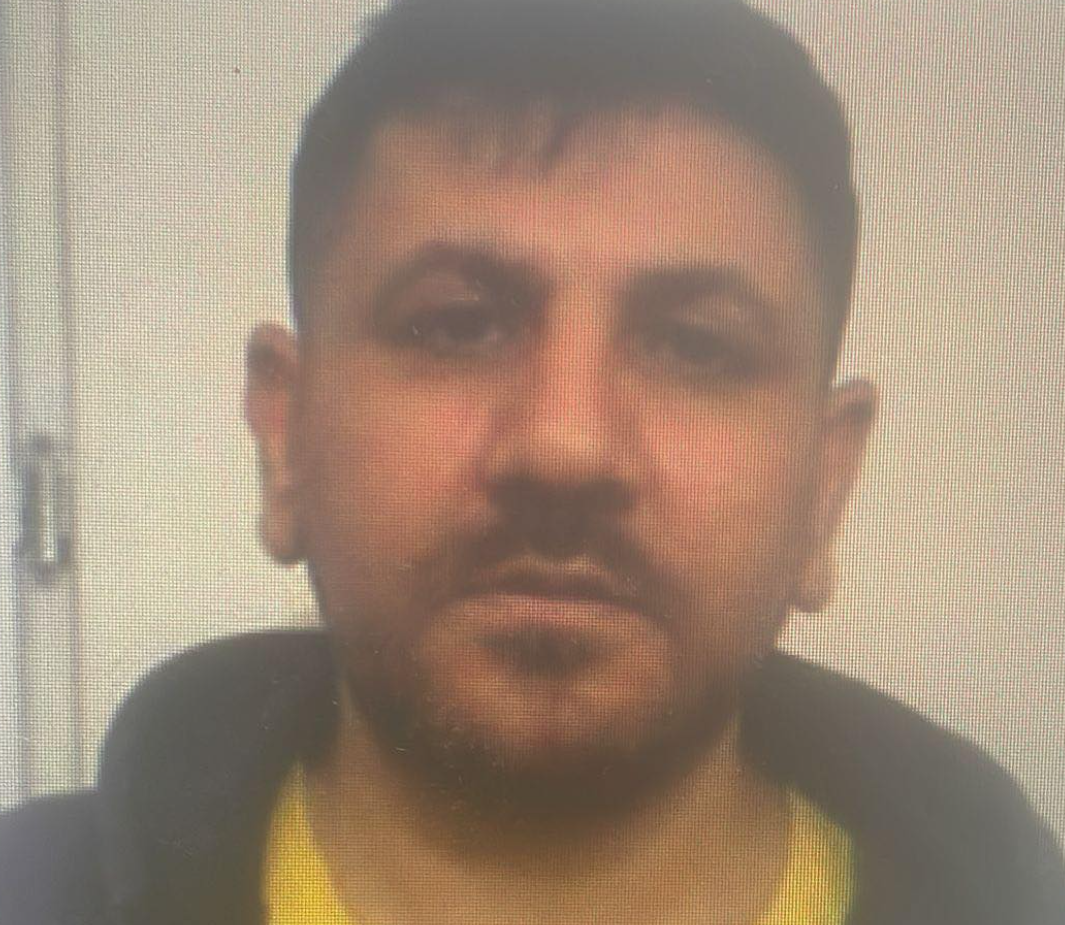
Atas Abdullah met all conditions to receive approval to leave Rahova Penitentiary for four days, prison representatives tell HotNews. The Turkish citizen sentenced to 22 years and ten months in prison after killing a traffic policeman in 2015 has received 24 permits and 72 rewards in recent years, having a “very good conduct”, according to prison representatives.
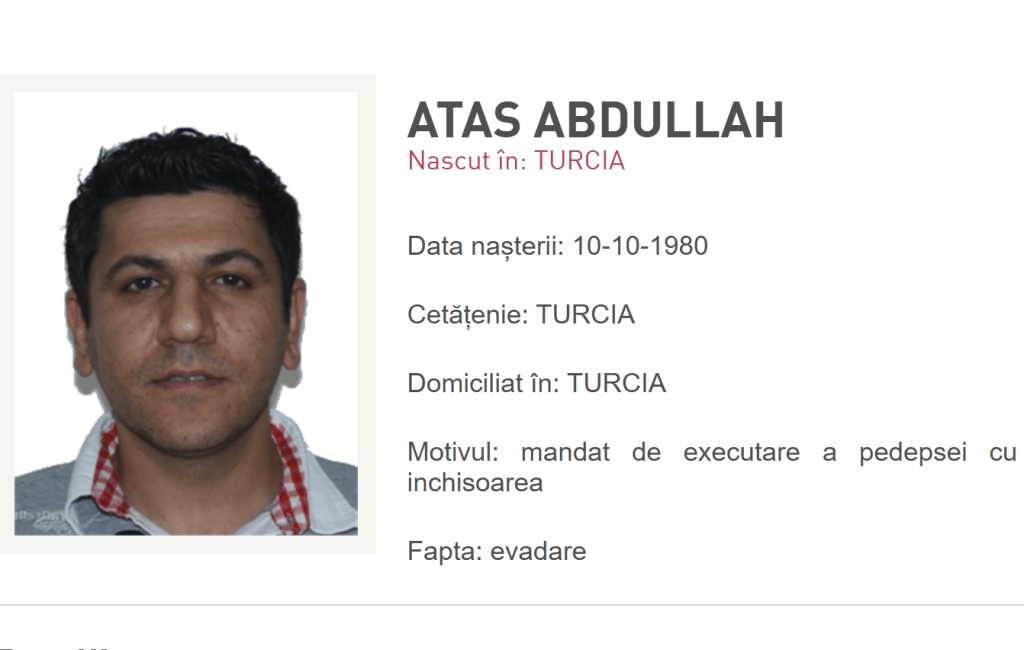 Turkish businessman convicted after killing a traffic policeman in 2015, wanted by the Police. He was placed on leave and has not returned to the penitentiary / Authorities suspect he has left the country
Atas Abdullah is wanted nationally, after he escaped from Rahova Penitentiary. He benefited from permission between January 23-26, 2026, but he did not return to prison, the Rahova Penitentiary alerted the Police. The man was searched at home, in the town of Voluntari, without being found.
The Turkish citizen was serving 22 years and 10 months in prison for murder at the Rahova Penitentiary, after in 2015 he killed a policeman from the Road Brigade who tried to stop him for a check.
HotNews contacted the representatives of the Rahova Penitentiary to find out what were the conditions under which the man was granted the permits, considering the act for which he was convicted.
“He was a prisoner of very good conduct”
Asked to explain the policy by which permits are granted to prisoners, Georgiana Ivănescu, spokeswoman for the Rahova Penitentiary, explained that they are granted “depending on the behavior of the prisoner”.
“And depending on the credits he has. (Atas Abdullah) was a prisoner with a very good conduct, he was also at the Nottara Theater, he was in plays, he had countless outings in the community, he also previously had permission to leave the penitentiary,” Georgiana Ivănescu, spokeswoman for the Rahova Penitentiary, told HotNews.
In the period after the final conviction, the Turkish citizen had, so far, 24 permits and 72 rewards, the spokeswoman of the penitentiary also said.
“According to the legislation, the rewards can be several: from additional right to the package and visits or online conversations, and they are given in stages,” Ivănescu also said.
Asked if these permits are granted to all inmates, regardless of what they have done, the prison spokeswoman said the “execution regime has changed” and the prison is approaching the “reintegration into society” method.
“He had permits before, it was also a semi-open regime. The execution regime has changed, he had a good conduct, on the one hand we are also in the area of reintegration into society, we cannot say that even if he had committed a more serious deed, he can never benefit from this reward. On the one hand, at a given moment, he would still have been set free”, Ivănescu said.
He explained that the prisoner must meet certain criteria, such as “the execution regime, the number of credits he has, have good conduct, and participate in lucrative activities inside the penitentiary.”
Credits are granted for gainful activities, for socio-educational activities – that is, participation in courses, explained the representative of the penitentiary.
What does the Minister of Justice say?
“Through the passage of time and his good behavior up to this point, it was decided to move him into a semi-open regime. He was rewarded 72 times in the penitentiary system, he had 24 permits to leave the penitentiary, without anything having happened until now,” said Radu Marinescu, the Minister of Justice, about the Turkish businessman currently wanted by the police.
Where did Atas Abdullah say he was going on his last leave
However, the inmate must notify the prison where he is going when he is on leave.
“He must declare the address to which he is moving, and get a visa from the police in that locality”, explained Ivănescu.
Last time, Attache Abdullah said he was going “to a relative's house”.
“We are looking at all the addresses we know, at all the relatives,” she said.
What does the Minister of Justice say?
The Minister of Justice, Radu Marinescu, explained to Digi24 that the criminal policy of the Romanian state also has a “restorative component”, which gives the possibility of re-educating a person “even in the case of committing very serious crimes”.
He said there are specialized staff in prisons around the country who assess inmates “on behavior” and determine whether an inmate has changed his attitude “toward social values” and whether he can transition “to more relaxed forms of deprivation of liberty.”
“This happens in stages. This man had served 10 years of his sentence. He was evaluated over time, during those 10 years, through his systematic evaluation. The evaluation is done by specialists, studying his behavior, attitude, participation in other activities in the penitentiary (…)
Through the passage of time and through the good behavior up to this point, which he had, it was decided to move him into a semi-open regime. He was rewarded 72 times in the penitentiary system, he had 24 permits to leave the penitentiary, without anything having happened until now,” declared Radu Marinescu.
He also said that there will be “very thorough checks” at the level of the Prahova Penitentiary and that the “firmest measures” will be taken if problems are identified.
Who is Atas Abdullah?
In August 2015, Atas Abdullah hit a policeman from the Road Brigade, Gheorghe Ionescu, 44 years old, with his car during a traffic control. The policeman was dragged on the hood of the car for hundreds of meters and died in hospital after three weeks in a coma.
The Turkish citizen was sent to court for aggravated murder, driving under the influence of alcohol and leaving the scene of the accident. In 2017, he was definitively sentenced by the Bucharest Court of Appeal to 22 years and 10 months in prison for killing the policeman.
Abdullah was the owner and manager of a lighting business in Bucharest and Ilfov, with local stores and supply contracts for hotels, clinics and other firms, according to Digi24.