A few numbers highlight the spectacular transformation of the world. At the turn of the millennium, when the West dominated the globe, the seven largest Western industrialized countries (G7) comprised almost 67 percent world economy. The five largest developing countries (BRICS) had only 8%. Today, after a quarter of a century, this global proportion is 43%. up to 22 percent
The BRICS countries (Brazil, Russia, India, China and South Africa) currently account for 22.4% of global economic output. G7 countries – only for 42.5%.. And today the West must be divided into two blocs: United States – with 26.4 percent global economy – and the remaining six G7 countries (Germany, France, Great Britain, Italy, Canada and Japan), which together account for only 16.1 percent.
The West's rivals, it seems unexpectedly found themselves in the point they had been striving for for decades: in a “multipolar world”. These two words have always been a code used by developing countries to conceal their ambitions to break the dominance of the West.
The BRICS countries, which over time have become political powers, are watching a spectacle in which Trump is driving a wedge into Western unity — and single-handedly driving a multipolar world. For the last three decades, the word “multipolar” has been included in no strategic document in Beijing, Moscow or Delhi.
For example, in 2000, shortly after Vladimir Putin came to power, the Russian concept of foreign policy stated: “There is a tendency towards a unipolar structure of the world with political and economic domination by the USA. Russia should strive for a multipolar system of international relationsthat reflects the diversity of the modern world and the multiplicity of interests.
The article continues below the video
This strategic slogan has survived to this day. In a 2024 document, China's Ministry of Foreign Affairs called for “a just and orderly multipolar world and universally beneficial and inclusive economic globalization.” On the path to a world of multiple centers of power, Donald Trump's “America First” policy is acting as a catalyst.
— We see the president and the government moving towards multipolarity, a this suits India very well — said Subrahmanyam Jaishankar, India's foreign minister, last year, referring to the American president's foreign policy.
The West's rivals are still not sure whether Trump's policy will pay off for them
However, the world's new global powers always think in the perspective of decades – and realize their ambitions carefully, step by step. Which is why They are cautious about the unpredictable actions of the US president. India and Brazil have reacted very restrainedly to this week's transatlantic dispute.
However, stronger signals came from China and Russia there, too, there were doubts as to whether the events were really in their interest. Beijing noted that Trump justified his desire to take control of Greenland with the desire to prevent China and Russia from entering the Arctic.
— All states have the right and freedom to act lawfully in the Arctic. This should be respected, said Chinese Foreign Ministry spokeswoman Mao Ning. — The United States should not use other countries as an excuse to pursue its own interests.
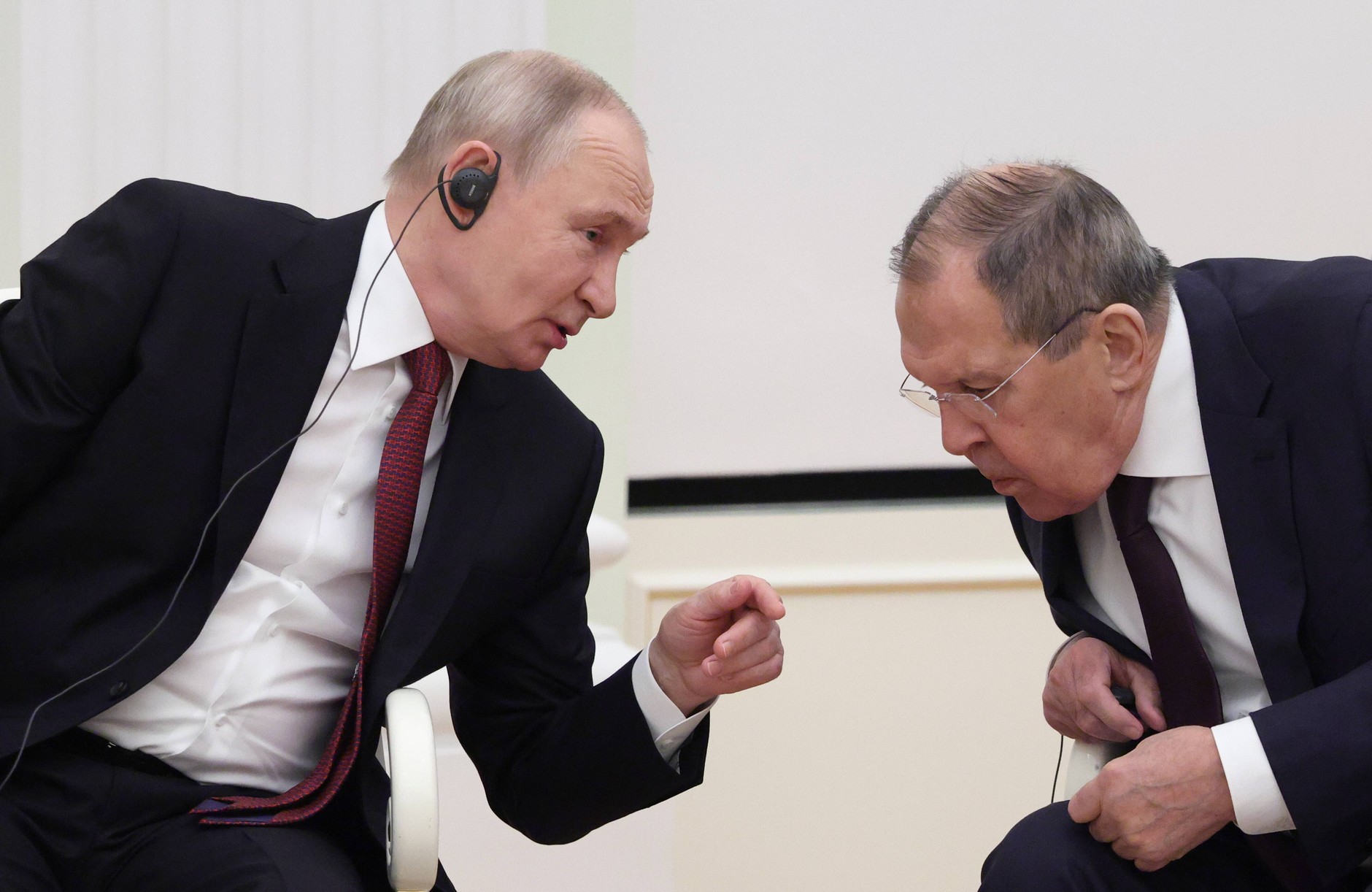
In Russia, reactions to Trump's actions were, as usual, undiplomatic and ambiguous. On the one hand, Foreign Minister Sergei Lavrov emphasized similarities between the US president's ambitions towards Greenland and the annexation of Crimea by Putin in 2014. “Crimea is no less important to Russia's security than Greenland is to the United States,” he said.
Vladimir Putin, President of Russia, and Sergei Lavrov, Minister of Foreign Affairs. Moscow, January 22, 2026EPA/RAMIL SITDIKOV/REUTERS / POOL / PAP
However, former president and currently one of the Kremlin's main “hawks”, Dmitry Medvedev, spoke more cautiously. In his opinion, there is a fundamental difference in relation to Crimea: – Greenland has never been directly related to the United States, even though they tried to buy it several times – he argued.
Recently, the West's rivals have had to admit that Trump is now completely open to the concept of “multipolarity.” This is clearly visible in the new US National Security Strategy (NSS).
“After the end of the Cold War, U.S. foreign policy elites convinced themselves that continued American domination of the world was in our country's best interests,” we read in the introduction to the NSS. “We are interested in the affairs of other countries only when their actions directly threaten our interests“.
Trump quickly moved from words to deeds, declaring Latin America and the Arctic as U.S. spheres of influence — and therefore areas closed to China and Russia. The US intervention in Venezuela cuts off an important source of cheap oil to Western rivals, which has so far supported authoritarianism through the gray zone. Although the dispute over Greenland is taking place primarily between the US and Europe, in the long run it may harm China and Russia in particular.
This was confirmed by a comment by the popular pro-government Russian newspaper Moskovsky Komsomolets. The Arctic is turning from a region of cooperation into an arena of confrontation. “The Northern Fleet will be at risk. New obstacles to economic projects will appear. Nuclear deterrence will weaken,” the daily wrote. Russia will be strategically isolated. “Greenland is not just an island with an area of 2 million square kilometers that Trump desires. It is an icy noose around Russia's neck. And Trump has already started to tighten it,” warns a pro-government newspaper.
I’m Ashley Davis as an editor, I’m committed to upholding the highest standards of integrity and accuracy in every piece we publish. My work is driven by curiosity, a passion for truth, and a belief that journalism plays a crucial role in shaping public discourse. I strive to tell stories that not only inform but also inspire action and conversation.