Work and travel USA 2026. How tempting the American dream has remained for Romanians: “They are once-in-a-lifetime experiences”


The “Work and Travel” program in the United States of America annually attracts thousands of Romanian students, eager to work and travel across the ocean during the summer, but the temptation to live the “American dream” has become a subject of controversy.
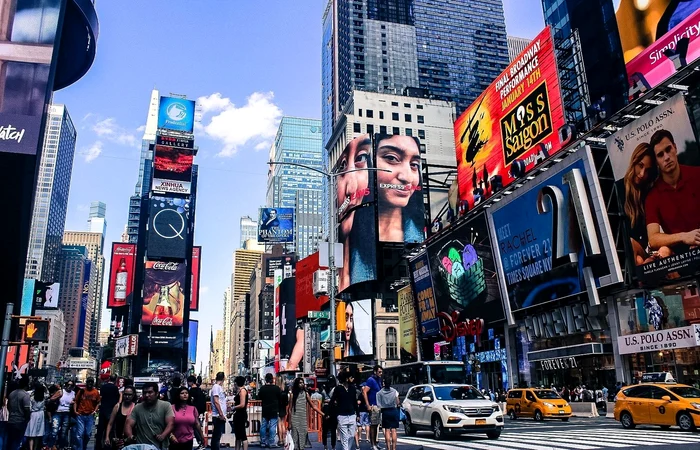
New York, one of the most admired American cities. Photo: Pixabay.com
The United States of America annually opens the way for thousands of Romanian students willing to work and travel here, seasonally, through the “Work and Travel” program.
Thousands of students, invited to the US to work during the summer
Enthusiasm for this program had reached its highest levels in the 2000s, but it decreased as the countries of Western Europe offered more and more opportunities to young people from Romania. Job offers for students who want to spend their vacation in the USA are diverse, especially in the field of tourism services, and can bring them to popular cities, resorts, amusement parks and nature reserves.
According to recruitment agencies participating in the program, in the US, the average salary can be up to six times higher than in Romania, and shopping prices are much lower compared to income.
“The minimum wage established by the government is $7.25/hour. You cannot be hired for less than this amount, except for tipped positions, such as server or bartender. Many states in America have set a higher minimum wage, which can reach up to $16-17/hour. This is, of course, also explained by the higher costs in those areas.” transmits the GTS (Go To USA) platform.

New York train station. Photo: Pixabay.com
Most jobs are offered between June and September, and many have already been booked. For others, Romanian students who apply for the Work and Travel program are expected to have interviews online or through agencies, with employers, to obtain them. These usually take place until May.
Starting in June, students can pack their bags for the summer experience in the US, but the expenses they will have to bear are generally estimated at $3,500–$5,000. They include agency and administrative support fees of up to $2,000, visa fee of $185, round-trip airfare of $800-$1,500, medical insurance of $200-$400, lodging of $100-$200 per week depending on location or employer's offer, food and various other expenses of several hundred dollars.
Incomes are also variable, depending on the employers' offer, but also on the students' willingness to work. Some take on two jobs to make sure they take home a few thousand dollars, while others prefer a more relaxed schedule with more free time but less income. In general, the expenses are covered by the wages received.
How tempting work in the USA has remained for Romanians
Some Romanians who claim to have applied for “Work and Travel” 2026 are skeptical of the current situation in the United States of America, stating that they fear they could end up in places that do not offer them the safety and stability they desire.
“I think the bigger risk is not related to conflicts with other countries, but to the anti-immigration policy in the United States of America. You have to be prepared for the option that, at any moment, Donald Trump will announce something like: that those from Work and Travel are “stealing Americans' jobs”, and the program will be stopped on the spot”. writes a Romanian on the Reddit platform.
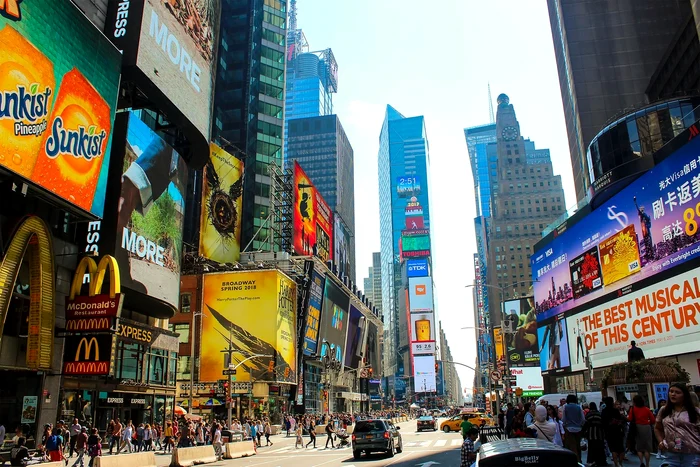
New york. Photo: Pixabay.com
Someone else ironically asks on the same platform if it's worth working two jobs all summer for the money you can make at a seasonal job in Western Europe. For others, however, income is less important.
“It's an opportunity to see the USA, because in Western Europe I get there immediately, whenever I want”, says someone else.
A Romanian who spent several years in the United States, however, claims that he was not impressed by America's tourist attractions, because, although they are spectacular, he spent hours on the roads to see them.
A young woman recommends Romanians to look for countries that could offer them more social security and free education.
“The risks are high, living conditions are poor for the middle class, and medical costs can quickly become overwhelming. If you do get attached to someone and want to stay in the United States, there are other serious obstacles: huge education costs, the lack of a real social safety net, persistent racial tensions, and an increasingly polarized political climate.” believe this.
A Romanian says that students who choose their destinations effectively can return home with substantial sums, but on the condition that they have several jobs.
“I was in California this summer and I came home with $12,000 from two jobs. I was working my first job from 7 to 3, and my second job from 4 to 8, 9 or 10, depending on how much it took me. I didn't travel, I didn't buy things, and I didn't order food online.” add this one.
Another Romanian says that he was, several years ago, in the United States of America through this program and managed to collect 6,500 dollars, having only one job. More importantly, he adds, was the fact that he made lasting friendships with former co-workers. “These are once-in-a-lifetime experiences that have helped me in my career”he says.
Romanians, attracted to work in the USA for over a century
For almost a century and a half, the United States of America has been a destination that has awakened the fascination of Romanians.
Thousands of families from the historical regions of Transylvania and Banat left to work in America since the end of the 19th century, and by the start of the First World War the Romanian population settled on the American continent had reached almost 150,000 people.
Newspapers from the early years of the 20th century announced that migration had led to the emptying of some villages with a majority Romanian population. Going to work in America then involved fewer formalities, but the journey was much more difficult and took several weeks.
Most of the Romanian emigrants went to Budapest and Vienna, where they could find companies that recruited the necessary workers in the United States of America. From the two cities of the Austro-Hungarian Empire, they continued their way to the German ports of Bremen and Hamburg or to the port of Fiume (currently Rijeka).
In the overcrowded ports, people waited for days to get a seat on the ships that, with more than 1,200 passengers on board, were transporting them to New York. The voyage from the port of Fiume to New York took about 21 days, and from German ports overseas less than two weeks. Those who arrived in America were checked again, and if they were not considered fit for work they were forced to return.
Many Romanians were farmers (ploughmen), but once they arrived in the US they had to quickly learn much more grueling trades. Metallurgical plants were most often where they were employed, but many struggled to cope with the harsh conditions in the steelworks.
Others looked for work in cement factories and stone quarries, in coal mines, in slaughterhouses, in canneries or in the construction of railways. Women could be employed in tobacco, silk, pulp and paper factories, and some worked side by side with men in tin and iron factories or in slaughterhouses, the press of the 1900s reported.
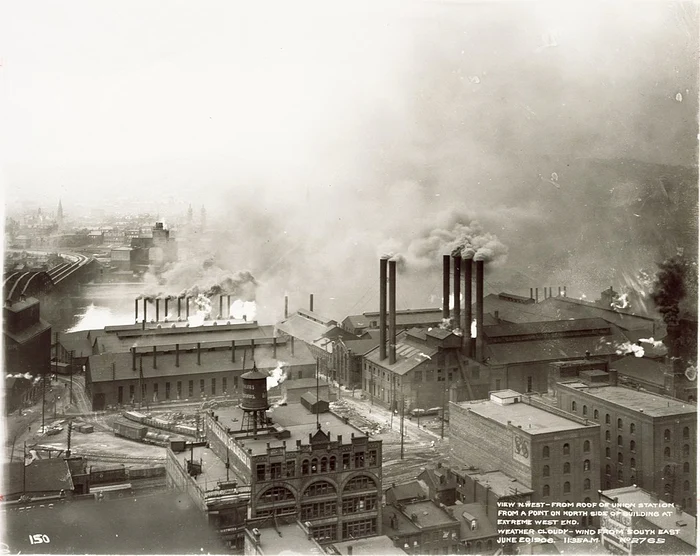
The Strip District Factories, Pittsburgh. Wikipedia.
Many emigrants then lived in squalid conditions, in buildings called “borts”, where 20–30 people shared a few rooms. America, however, remained a “promised land”, where many Romanians could secure their future.
After the First World War, the Romanian population continued to grow, reaching 200,000–250,000 migrants at the end of the 1920s, according to the statistics of the time. In recent years, over 360,000 US residents have declared their Romanian origin.
According to the Embassy of Romania in the United States of America, the number of Romanians living in the USA is much higher, estimated at approximately one million people, taking into account the fact that the declaration of origin in the census is not mandatory, the flow of immigration from Romania continues, and many of those settled in the USA have not yet acquired American citizenship.