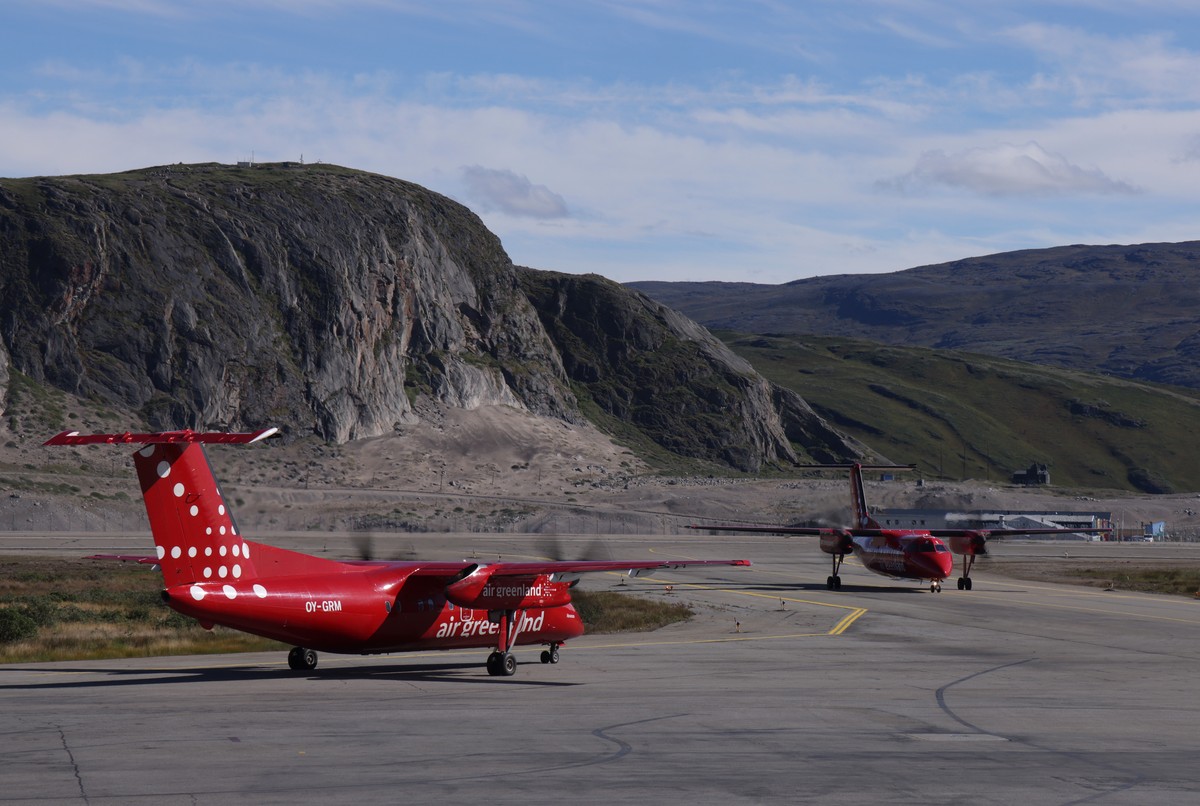
There is a great race of giants going on in the world to build infrastructure for AI. One of the participants in this race is Drew Horn's company, which wants to build a giant data center in Greenland. It is to be located in the area of Kangerlussuaq – a small settlement located at the end of a fjord on the southwestern coast of the island, equipped with a small airport. A building permit for the center has not been issued yet, but there is already an ambitious plan to achieve a capacity of 1.5 gigawatts by the end of 2028. – reports CNBC.
See also: After Venezuela, Donald Trump has his eye on Greenland. Three scenarios of what might happen soon
Investment in Greenland without permits, but with an ambitious plan
The data center is expected to operate at 300 megawatts (MW) by mid-2027, before further expansion will allow it to reach 1.5 gigawatts (GW) by the end of 2028. This would be several times more powerful than any active data center in the world. The project is expected to cost billions of dollars, Drew Horn told CNBC. However, the former Trump official refused to reveal all the companies involved in the venture.
The moment for this type of investment is critical – on the one hand, there is a race of investors in the AI industry (including technological giants such as OpenAI), on the other – Greenland has recently become the center of a geopolitical dispute, after Donald Trump again announced that the island should belong to the US.
See also: The head of the AI giant warns of a market bubble. 'Unsustainable' investments
Work on plans for the Greenland data center project began a year ago, and Horn told CNBC he has already secured technical partners to help build, operate and supply power. Now everything depends on the authorities in Greenland. “The issue is primarily a diplomatic one,” Horn told CNBC, pointing to geopolitical tensions around Greenland. — “We spent about a year creating everything from the power supply to the technological components, and we also have a Greenlandic partner on site. We are currently waiting for approvals from the Greenlandic side,” he added.
He also emphasized that a big challenge for a project of this type in Greenland is access to energy. In the first phase of the project, which aims to generate a capacity of 300 MW, it was planned to use specialized barges carrying liquefied natural gas to the fjord. The plan is also to build a hydroelectric power plant to power the second phase, which would allow the data center to reach a capacity of 1.5 GW.