Casey Christie, managing director of Christie and Associates in London and originally from South Africa, is a prominent figure in the field of international security. His expertise, featured in renowned publications such as the London Times and the South African Sunday Times, reflects his deep commitment and understanding of global security challenges.
If Britain's intelligence services had concluded that China's proposed mega embassy in London posed an unacceptable risk to national security, it would not have been approved. This deserves respect. However, this does not end the matter.
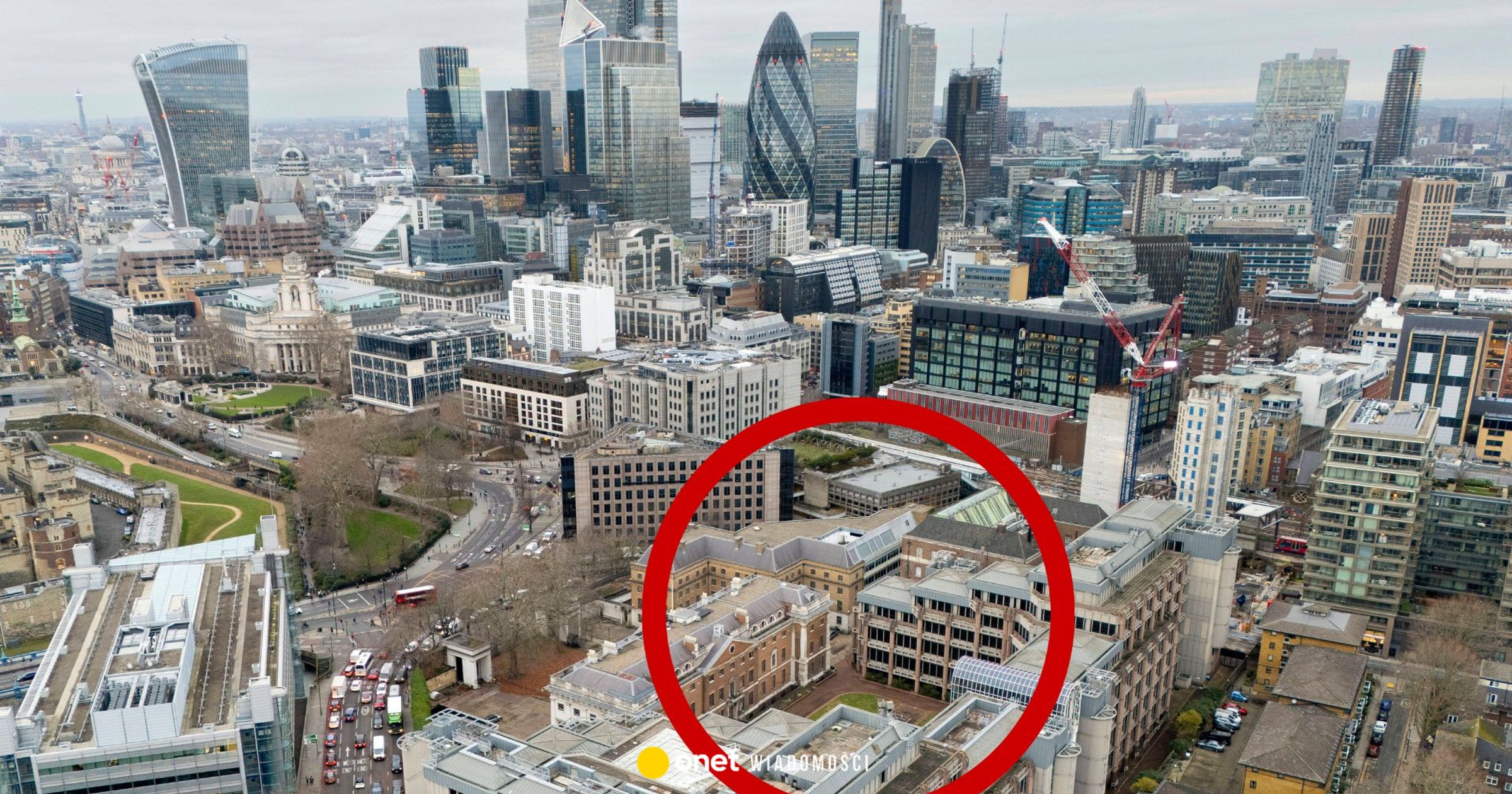
The formal approval of the Royal Mint Court project (formerly home to the Royal Mint, sold to Beijing in 2018) – which is expected to become China's largest diplomatic mission in Europe – is a turning point. It's a decision based on the risky assumption that Britain can cope with a sustained expansion of Chinese state power at the heart of its capital, even as the geopolitical situation changes.
Safety calculation
MI5 (British counterintelligence) and GCHQ (British cyber intelligence) argued that consolidating China's diplomatic presence from seven scattered locations into a single five-acre complex provided a “clear security advantage.” It is easier to monitor one fortress than seven small, scattered outposts.
Size, however, changes the strategic equation. A new complex with an area of over 20,000 m2. m2 will be almost 10 times larger than the current Chinese facility in Portland Place and approximately 18%. larger than the American Embassy at Nine Elms. As anyone who has ever stood in front of the American embassy in London knows, such buildings are not just offices – they are enormous symbols of power.
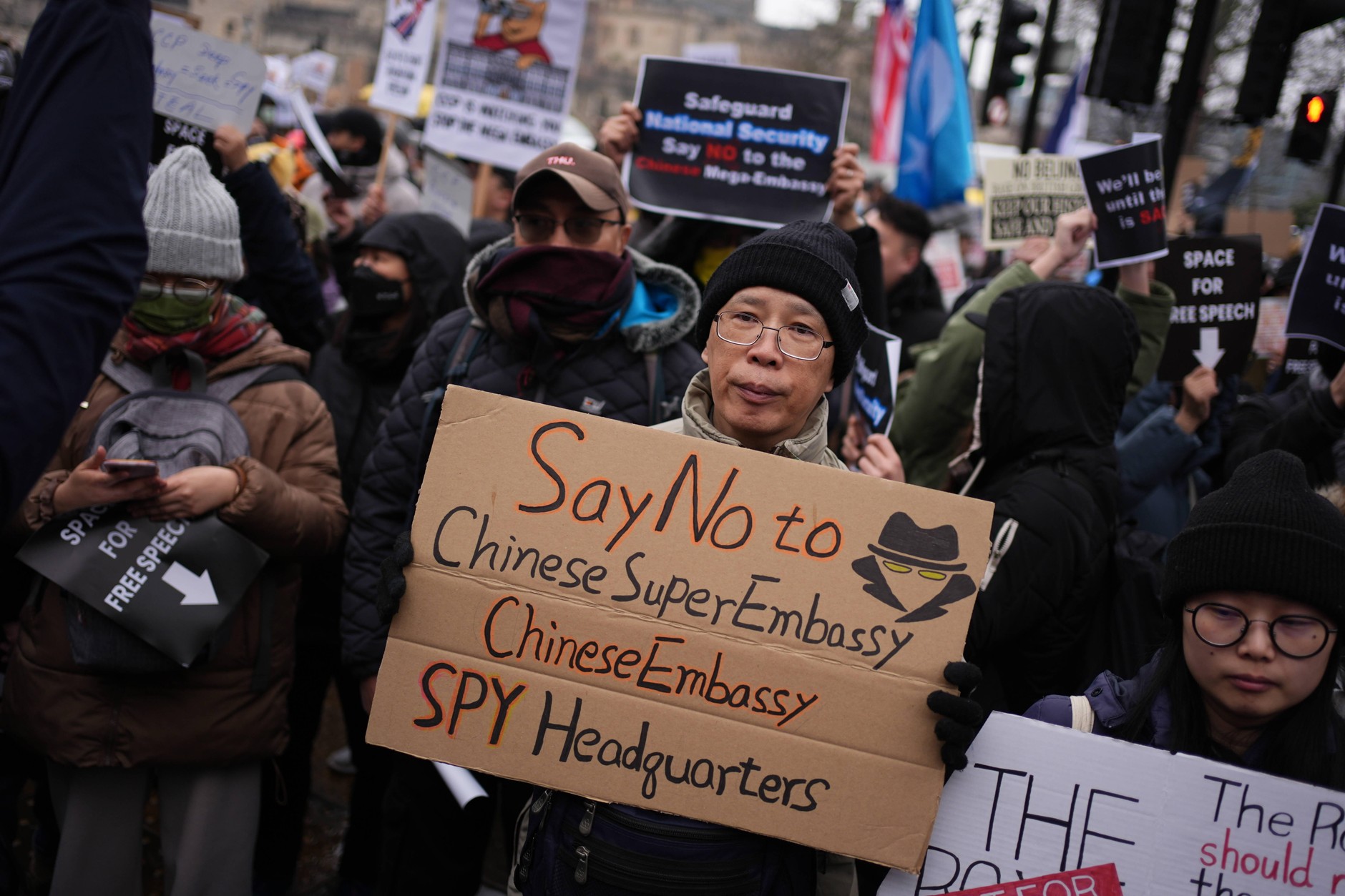
Protesters against the construction of a new Chinese embassy at the Royal Mint Court in central London, England, February 8, 2025.Jordan Pettitt / PAP
Hidden rooms in the Mansell Street embassy
The biggest cause for concern is not only who is in the building, but also what lies beneath it. As The Telegraph recently revealed in a landmark investigation, uncensored plans of the facility show a network of 208 secret rooms, including a “hidden chamber” located disturbingly close to critical infrastructure.
The Royal Mint Court site sits directly above the fiber optic arteries that carry sensitive financial data between the City of London and Canary Wharf (London's business centers). While ministers say the risks can be “satisfactorily mitigated,” counterintelligence experts point to the physical proximity of these undisclosed basement rooms – some of which are said to be just over a meter from the cables.
Connecting to fast data streams does not always require physical “cutting in”; requires proximity and advanced signal processing. In this context, an embassy is not just a building; is a permanent listening station placed at the heart of British finance.
A dead zone at the heart of London's finances
Once the 'hidden chambers' become operational, the UK's ability to respond to technical threats will be paralyzed by international law. Pursuant to Art. 22 of the Vienna Convention on Diplomatic Relations, the premises of a diplomatic mission are “inviolable”.
Agents of the British state – whether police or GCHQ technicians – cannot enter the embassy without the express permission of the Chinese ambassador. This creates a legal dead zone in the heart of London.
Even if the UK detects suspicious signal processing or cable interference originating from the Mansell Street basement, it cannot cross the (embassy) threshold to inspect or dismantle the equipment. By approving this location, the UK has effectively provided Beijing with a permanent, off-limits sanctuary directly adjacent to its most sensitive economic infrastructure.
The article continues below the video
Long-term risk
Infrastructure is a slow-moving force. Once built, it cannot be liquidated without completely cutting off diplomatic relations. Decisions made in 2026 rarely seem to matter until the geopolitical climate intensifies in 2030 or 2035. By then, choices will have narrowed and reversibility (of decisions) has disappeared.
British security services believe the current risk is manageable. By agreeing to this lasting strategic advantage, Britain has exposed itself to long-term risks, the cost of which may only become apparent when today's assumptions are tested by tomorrow's crises.
History shows that such choices are judged not by the reasons for which they were made, but by the moment at which they can no longer be undone. By approving the construction of a Chinese mega embassy in London, the UK did more than just allow the building to be constructed. She assumed that the risk she considered manageable today would remain at a level she could control tomorrow. Perhaps it is so. Or maybe this is the moment when control was quietly relinquished.
I’m Ashley Davis as an editor, I’m committed to upholding the highest standards of integrity and accuracy in every piece we publish. My work is driven by curiosity, a passion for truth, and a belief that journalism plays a crucial role in shaping public discourse. I strive to tell stories that not only inform but also inspire action and conversation.