The shocking secret of Hitler's super soldiers. The “Blitzkrieg” and German victories were largely due to a powerful drug


One of the dark secrets of the Nazi victories in the early years of World War II was methamphetamine, a powerful drug that was given in abundance to German soldiers sent to the front. With its help, the Germans could fight and march for days without sleep.
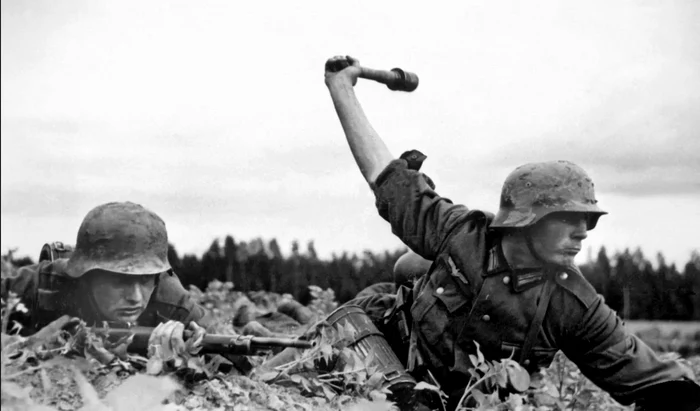
Many German soldiers used methamphetamines on the front PHOTO britannica.com
The Nazi invasion of Poland and the rapid campaigns of the German army shocked all of Europe. The Great Powers of the time remained almost unresponsive to such swift, deadly and precise attacks by the German war machine. It was a tactic known in history as Blitzkerieg, which means “Lightning War”, a strategy doubled by military technology and discipline, which did not give any chance to the attacked states. In the early years of World War II it seemed that nothing could stand in the way of Hitler's armies.
From September 1939 until April 1941, Nazi Germany had conquered Poland, Denmark, Norway, Belgium, Holland, France, Yugoslavia, Greece and annexed Austria. At the same time, he had wreaked havoc in North Africa and launched an absolutely murderous campaign against the USSR, the famous Operation Barbarossa. The Blitzkreig was all about speed, with the German army relentlessly advancing with tanks, armor, military equipment, artillery and soldiers, day and night. German tanks covered 385 km of difficult terrain, including the Ardennes Forest, in just 11 days, bypassing British and French forces who had mistakenly assumed that the Ardennes Mountains were impassable and the famous Maginot Line (an area of French fortifications and casemates) was impenetrable. German paratroopers sometimes landed ahead of the advance, causing chaos behind enemy lines.
No one could handle such speed and unleashing of forces. The German troops attacked with indescribable force and determination, as if defying death. “It was like they were high on drugs, fearless and crazy“, wrote the British press after the attack on France.
For his part, the great statesman Winston Churchill, former prime minister of Great Britain, declared himself shocked by what had happened and especially by the speed with which the French and British troops had been attacked. “I was stunned. I never expected to be faced with the invasion of the entire communication route and the entire countryside by an irresistible incursion of armored vehicles. I admit it was one of the biggest surprises I have had in my life”stated in his diary, Winston Churchill.
Well, experts and studies show that the Nazis had a dark secret for this incredible speed, relentless assault and insane courage of the soldiers. They basically proved the British journalists of the time right. Many of the German soldiers sent by Hitler to conquer Europe were on drugs. That is, they were widely using drugs, such as amphetamine, in the form of pills. To top it off, the supplier of drugs was Nazi Germany itself, which bombarded its soldiers with narcotics to avoid fatigue, fear, sleep and hunger. They were able to march day and night, almost non-stop for more than 48 hours. Hitler's super soldiers were actually Hitler's drugged soldiers.
The trauma of war and a narcotics explosion in Europe
The impression that drugs are a recent story, a symbol of the decadence of modern civilization, is totally wrong. Man has consumed hallucinogenic substances since ancient times. Indeed, there were times when, without strict control of drug production and consumption, things got out of control. Little known to the general public is the fact that drugs such as methamphetamine were freely available on the German market, with the possibility of purchasing them directly from pharmacies.
There were even huge billboards advertising opioid products. There were also sweets containing narcotics. And Germany's pharmaceutical industry was top at the European level. Even before the First World War it was much more advanced than that of other European countries. Advances in chemistry but also superior financing gave Germany a world monopoly.
And in the German pharmaceutical industry, hallucinogenic substances, sedatives or very strong analgesics with psychotropic effects had a particularly important role. For example, morphine was invented by E. Merck from Darmstadt, being the first to produce and market it worldwide since 1827. At the same time, the Bayer pharmaceutical company discovered and marketed heroin since 1898. Initially, it was considered an effective medicine against coughs and other ailments, peaking as a substitute for morphine. Because it would have given less addiction. In a short time it was found that the addiction to heroin was very severe.
After World War I, Germany continued research into painkillers and other opioid-derived drugs. And that's because there was a very high demand among the population, due to the trauma and the number of wounded caused by the First World War. Some of the German veterans treated with morphine continued to take the drug for pain relief and later to avoid withdrawal. Obviously, addiction had set in. At that time, drug use and addiction were not considered as serious as they are today, and symptoms were often misdiagnosed as the result of other conditions.
“World War II probably gave the greatest impetus to date to legal, medically authorized, as well as illicit black market abuse of these pills on a worldwide scale”, wrote Lester Grinspoon and Peter Hedblom in their study “Speed culture”
Meth, the new face of Nazi Germany
Some of the Japanese, American and British militaries used large amounts of amphetamines, for example, but the Germans were the most enthusiastic consumers of a derivative called methamphetamine. This product is a powerful, highly addictive synthetic stimulant that affects the central nervous system. Depending on its form, the drug can be swallowed, inhaled through the nose, smoked or injected. Smoking or injecting produces immediate, intense, but short-lived effects.
Methamphetamine works by releasing high levels of neurotransmitters such as dopamine and norepinephrine in the brain, causing a feeling of pleasure that can last for hours. Methamphetamine was first synthesized by Japanese chemists in the late 19th century, and its production process was patented by the German pharmaceutical company Temmler in 1937. Marketed since 1938 under the name Pervitin, it was promoted as a home remedy for a number of ailments.
In other words, Germans could consume meth pills freely in Nazi Germany. They were even prescribed by doctors. Large advertisements of Pervitin were found throughout the major cities. No one realized that its negative effects can be devastating. Especially since it was addictive. Since 1937, however, Pervitin has been very popular. Students preparing their homework for exams, ambitious managers and even depressed housewives have all appreciated its effects. Chocolates with pervitin were also made for women.
Its main effect was that it kept you awake for a long time, and 48 hours, without feeling tired. In addition, it gave energy and a superior ability to concentrate. It didn't take long for consumers to start complaining of severe side effects. That is from palpitations and pre-infarction to anxiety, paranoia and depression. Not to mention the fact that the body was effectively drained of energy due to lack of sleep and overwork. Obviously, addiction had begun to set in for many consumers. That is precisely why, from 1941, Pervitin was only available by prescription in pharmacies in Germany. However, this did not stop the Temmler-Werke company from continuing to produce them in large numbers. Many were given “under the hand”, others ended up on the “black market”.
The Dark Secrets of Hitler's 'Super Soldiers'
If among the population an attempt was made to limit the consumption of methamphetamine, by introducing the purchase based on a prescription, in the army amphetamine was as important as water and food. It was viewed as a miracle product by some Nazi leaders, themselves heavy drug users. They hoped that Pervitin, or more specifically methamphetamine, would give the soldiers superhuman powers. As Norman Ohler shows in his book Blitzed: Drugs in Nazi Germany, methamphetamine was the privileged exception in Nazi Germany.
While other drugs were banned or discouraged, methamphetamine was glorified. It was energizing, confidence-boosting, insanely courageous, made soldiers march without sleep and for three days at a time, contributing to the Third Reich's obsession with physical and mental superiority. Unlike drugs like heroin or alcohol, methamphetamines were not related to the pleasure of escape but rather to the desired effectiveness on the battlefield. From the point of view of Nazi ideologues, weak people took drugs like opium to escape reality, while strong people took methamphetamine to feel even stronger. The one who fueled this dangerous illusion was a doctor himself. This is Dr. Otto F. Ranke, director of the Defense Physiology Research Institute.
After testing the drug on a group of medical officers, Ranke believed that Pervitin would be “an excellent substance to rouse a weary division. We can understand what a far-reaching military significance it would have if we succeeded in removing natural fatigue by medical methods”said Ranke, himself a heavy user of Pervitin.
“With Pervitin you can continue to work for 36 to 50 hours without feeling any visible fatigue”he added. In this context, the soldiers who went to the front in September 1939 to invade Poland were given Pervitin. Tankists had tried since 1938, when they went to occupy Czechoslovakia. Pervitin's effects on the battlefield were incredible, at least in the early years. Germany went bust, giving rise to the famous “Blitzkrieg.”
“Blitzkrieg was founded on methamphetamine”
With amazing speed, battleships, soldiers and the general German war machine swept Europe in three years. At least during 1939-1940, German speed surprised everyone. It was humanly impossible to march with such speed, to fight with such lightness and ferocity. Between April and July 1940 alone, the German military received over 35 million methamphetamine tablets. The drug was even distributed to pilots and tank crews in the form of chocolate bars known as Fliegerschokolade (airmen's chocolate) and Panzerschokolade (tanker's chocolate).
“The Blitzkrieg was coordinated by methamphetamine. Not to say the Blitzkrieg was founded on methamphetamine,” said medical historian Peter Steinkamp. For the needs of the army, the Temmler-Werke factory produced 833,000 Pervitin tablets per day. “They distributed it to the troops. 90% of their army had to march on foot day and night. It was more important for them to keep fighting and marching during the Blitzkrieg than to sleep well. The whole army was in top shape. That was one of the secrets of the Blitzkrieg”said historian Shelby Stanton, for “Time”.
That is precisely why the Belgian soldiers reported that the Germans were fearlessly attacking the machine-gun nests in the Ardennes. To understand the effects of this drug in the context of the German offensive, we can say that through the effects produced by Pervitin, the Germans achieved in three days what they had failed to do in all four years of the First World War. The Pervitine miracle at the beginning of the war ended in a dismal failure in terms of side effects.