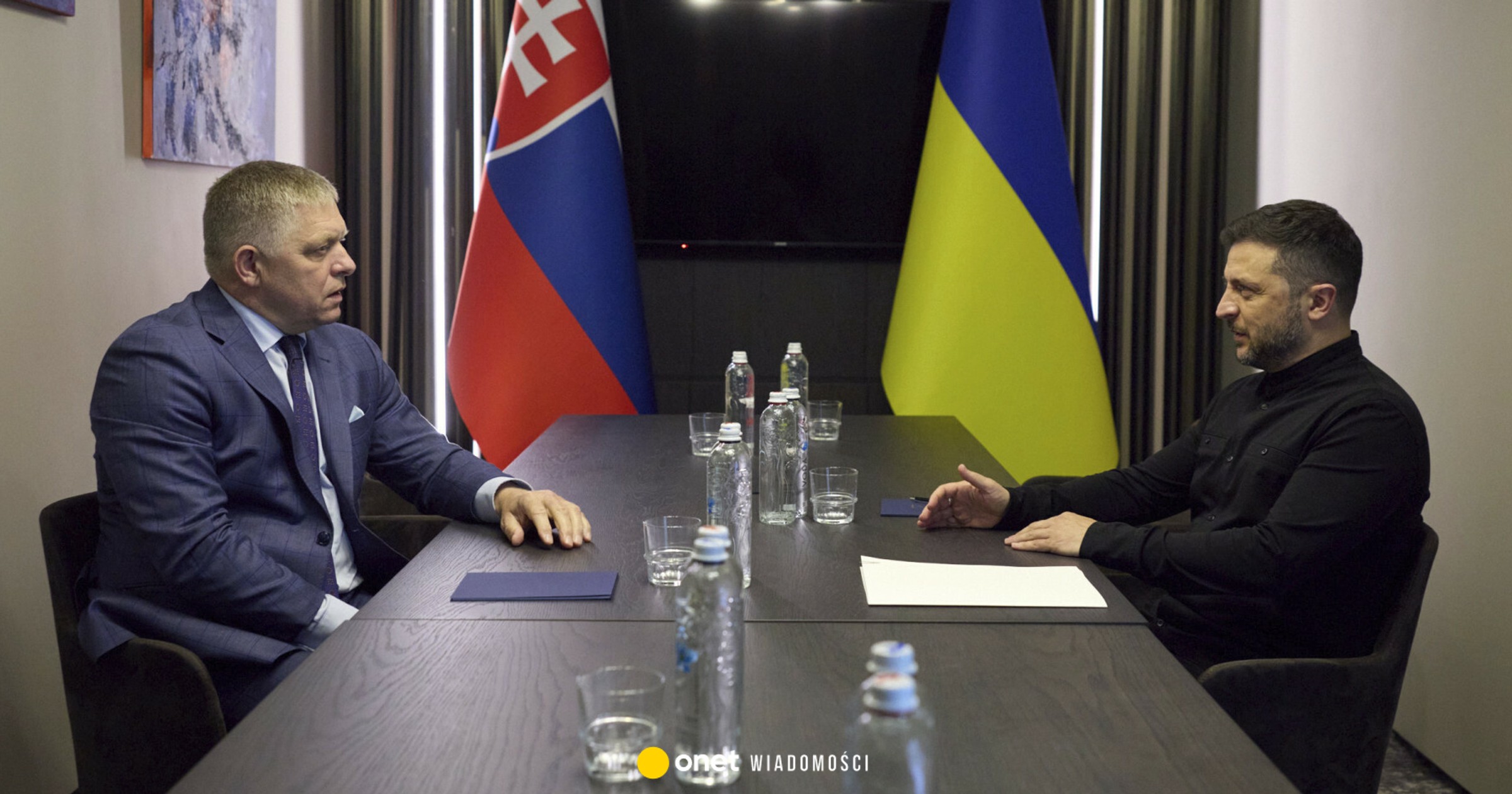
The new citizenship law adopted by Ukraine removes Romania from the list of countries with which it accepts dual citizenship, but the MFA claims that Ukrainian Romanians will not be affected.
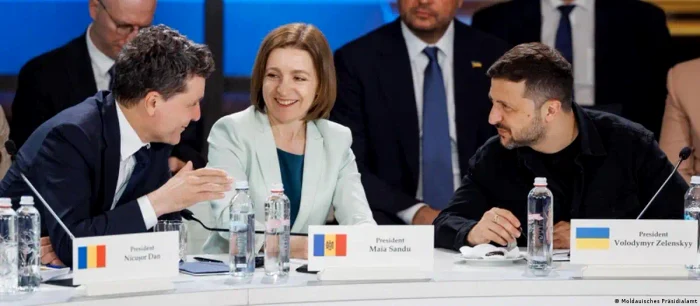
Presidents Nicușor Dan, Volodimir Zelenski and President Maia Sandu, at the Odesa summit
Although Romania supported Ukraine materially and morally after the Russian invasion, relations between Kyiv and Bucharest did not progress much. The concessions in favor of the Romanian minority in Ukraine are minimal, while the officials in Bucharest fail to do much in their favor.
Ukraine's new Citizenship Law, which came into force at the end of last week, specifies the conditions under which dual citizenship can be obtained and the list of the five countries for which Kyiv accepts dual citizenship: the Czech Republic, Poland, Germany, the United States and Canada.
In Ukraine there are important minorities from all the neighboring states: Russia, Belarus, Poland, Hungary, Slovakia, Romania, Republic of Moldova.
How the Ministry of Foreign Affairs from Bucharest sees things
The Ministry of Foreign Affairs in Bucharest claims, however, that the Law adopted by Kiev refers to the facilitation of obtaining Ukrainian citizenship: “during the last three years, the Ukrainian legislation regarding citizenship has undergone several amendments, aimed at facilitating the obtaining of Ukrainian citizenship, without renouncing the other citizenships held, by foreign citizens who fight as volunteers in the Ukrainian armed forces or carry out humanitarian activities on the territory of Ukraine”.
The Romanian Ministry of Foreign Affairs also states that the law, adopted in June 2025 and entered into force on January 16, does not apply to people who already have Ukrainian citizenship, because it “mainly, although not exclusively, targets Ukrainian communities abroad”, and the list of five states includes the countries where the largest Ukrainian communities live abroad.
The normative act adopted by the authorities in Kyiv stipulates the conditions under which multiple citizenship can be acquired, and on November 5, 2025, when Ukraine announced the list of states with which multiple citizenship will be applied, the Ministry of Foreign Affairs in Kyiv emphasized that “priority will be given to those countries that are among the closest and safest allies.”
The Ukrainian lawyer of Romanian origin, Eugen Pătraș, told Agerpres that Ukraine's decision to limit the list of countries for which dual citizenship is accepted to five is a form of underappreciation of Romania: “After the Russians, the Romanian community is the second in terms of numbers and, considering the unconditional support that Romania gives to Ukraine in the current conflict and considering the hundreds of ethnic Romanians who fell in line on the Russian-Ukrainian front, it was normal, natural and expected that Romania was also included on that list”.
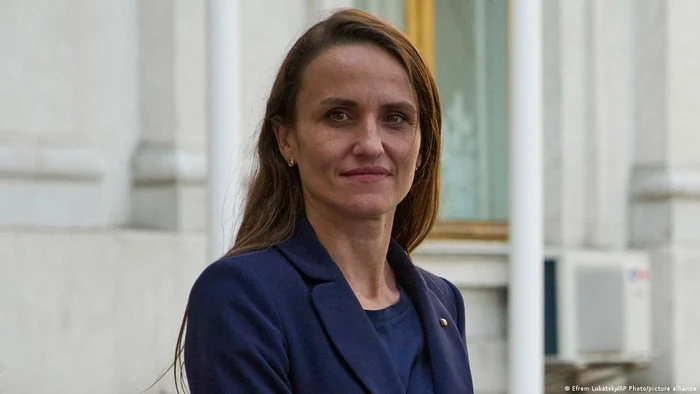
Oana Țoiu claims that the new law would not cover the dual citizenship of Romanians in Ukraine
The Minister of Foreign Affairs, Oana Țoiu, contradicts him and insists that “if there was to be a problem, then it would target exclusively Romanians who would like to keep their citizenship from home and ask for Ukrainian citizenship” and that it would not be about the dual citizenship of Romanians in Ukraine. It is not certain, however, that in the future the dual citizenship of those from the Romanian communities will be accepted. The answer to this question is not very clear.
Kiev's reserves vis-à-vis Romania?
This is not the first situation in which Kiev shows its reservations towards Romania. Very difficult and after great interventions, the Parliament of Ukraine adopted at the end of 2024 a law that removes the “Moldovan language” from the protected languages and replaces it with Romanian. Then, the Education Law, modified after long negotiations, continues not to protect the children who want to learn in Romanian.
In fact, in a memorandum sent by the Bessarabia Association in Ukraine to the president Nicușor Dan, rather gloomy statistics are included: for example, in the 2024-2025 school year, in Romanian communities, only one out of three children could learn in their mother tongue. In comparison, ten years ago, three out of four children were learning in Romanian.
Under pressure from the European Union, which required important changes in relation to minorities in Ukraine, Kyiv changed the Education Law in December 2023 in such a way that it could continue teaching in Romanian. Thus, the Ukrainian Parliament repealed the provisions that obliged all schools teaching in minority languages to gradually introduce the Ukrainian language for the teaching of basic subjects, from 20% in the 5th grade to 60% in the 11th grade.
Romanian schools are disappearing slowly, slowly, with the new reform imposed by Kiev, as the representatives of Romanian organizations in Quadrilater complain. Most of the Romanian schools in this region are certified in the middle of the 19th century, but none of the 18 high schools with full teaching in the Romanian language that existed in 1991 in Quadrilater received high school status after the new reform, so that, after finishing the gymnasium, the students in the Romanian classes are obliged to continue in the Ukrainian language. Besides, there is no longer any Baccalaureate in Romanian.
Hungary has pretexted several times at the top meetings of the European Union that it opposes Ukraine's advance towards the EU because this country does not respect the rights of ethnic Hungarians. Romania, on the other hand, tried to resolve all grievances in bilateral meetings and made concessions in favor of this country that is facing a humanitarian crisis due to the war.
The Bîstroe Canal was thus allowed to operate, which ecologists say is destroying the Danube Delta, and transport specialists point out that its operation boycotts the Sulina branch, the only one recognized as navigable by the EU.
In the end, all this, including the list for which Ukraine accepts the dual citizenship agreement, along with the relative response of Romanian diplomacy, blows into the sails of the extremists from the AUR and those inclined to join their camp, a trend already noted by opinion polls.
Sabina Fati – DW