
Denmark's Prime Minister warns: Europe must remain united and strong in the face of external pressures


Denmark's Prime Minister Mette Frederiksen warned on Thursday ahead of the EU summit in Brussels that recent developments are a clear signal to Europe: unity and firmness are essential, otherwise the consequences will be inevitable.
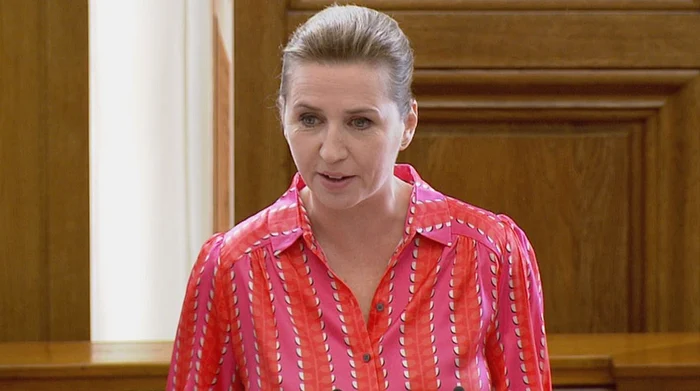
The Prime Minister of Denmark, Mette Frederiksen. PHOTO: X
“When Europe is not divided, when we are united and clear, including about the will to defend ourselves, the results appear”Frederiksen stated, adding that the past few weeks have been “a lesson” for European leaders.
The statements were made in the context of tense discussions on Greenland and transatlantic relations. Asked if the island could host sovereign American bases, the head of government in Copenhagen firmly ruled out the possibility, stressing that Danish sovereignty “it is not negotiable and cannot be changed”.
However, Mette Frederiksen stated that Denmark and Greenland are willing to work with the United States to update the 1951 defense agreement that allows the American military presence on Greenland's territory. “If this agreement can be extended, it is not something we would reject either from the Danish side or from the Greenlandic side,” she stated, insisting that any changes must be made through a fair process involving all parties.
The Prime Minister of Greenland, Jens-Frederik Nielsen, emphasized, for his part, that only Greenland and the Kingdom of Denmark can decide on the agreements concerning the territory of the island.
“First, only Greenland and Denmark can enter into agreements concerning Greenland,” Nielsen said in a press conference in Nuuk.
However, he said he was satisfied that Donald Trump ruled out the use of military force in his Davos speech, although he criticized the US president's tough rhetoric on Greenland. “I'm glad what he said”said the Greenlandic prime minister.
Thursday night's informal meeting of the European Council was called to discuss transatlantic relations, from the Greenland situation to the Middle East. Although it has no formal agenda, the meeting is seen as a test of European cohesion in an increasingly complicated geopolitical context. EU leaders are also set to address the possibility of resuming trade negotiations with the United States after Washington dropped threats of tariffs.
Donald Trump's ambition to gain control of Greenland has raised major concerns in Europe, being perceived as a threat to the transatlantic alliance and the stability built after the Second World War. Mette Frederiksen said there had been no negotiations with NATO on the island's sovereignty, but admitted the situation remained “difficult and serious”.
In this context, the Danish prime minister called for a more consistent NATO presence in the Arctic region, including around Greenland, underlining the importance of common security in the face of threats from Russia and China.
The 1951 agreement between Washington and Copenhagen, which is still in force, allows the United States to build military bases and move freely in Greenland, provided the Danish and Greenlandic authorities are informed. The US currently operates a military base at Pittufik in the north of the island.
On Thursday, Donald Trump claimed the United States had gained expanded access to Greenland through a framework agreement with NATO, while the alliance's secretary-general called for a step-up in the alliance's commitment to Arctic security. The announcement came in parallel with the abandonment of trade threats and the explicit exclusion of military intervention, offering a brief respite to transatlantic relations, which have been under pressure in recent months.


