Cisnădie, the Saxon fortress transformed into the textile city. How the ancient carpet tradition was lost


Cisnădie, an old settlement of the Saxons, is among the few cities in Romania whose population has grown rapidly in recent years. The town near Sibiu, however, has a turbulent history, “betrayed” by its contrasting appearance.
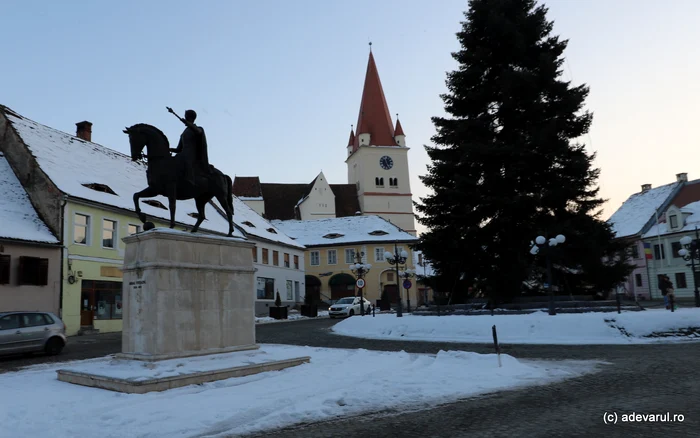
Cisnadie. Photo: Daniel Guță. TRUTH
Located in the immediate vicinity of the city of Sibiu, the city of Cisnădie (22,000 inhabitants) has a history of over eight centuries, mostly linked to the German community that lived there.
The Saxons, Germanic populations from the area of the Rhine, Luxembourg and Flanders, arrived in Transylvania starting from the 12th century, colonized by the kings of Hungary, who offered them privileges in exchange for the defense of the kingdom's borders.
Sibiu, the most representative city for the history of the Saxons, was attested as the first Saxon seat around the year 1325. In its vicinity, Cisnădia was mentioned in a document for the first time in 1323, under its German name of Heltau. A century earlier, according to historians, there had been a settlement here called Rivetel or Ruetel, devastated by Mongol raids.
Since the 13th century, the town has developed around a fortified church, used when needed as a place of refuge for the community. The evangelical church, formerly Roman Catholic, adorned with an eight-century-old clock tower, remained the emblem of the town at the foot of Făgăraș, but the fame of the settlement was given by its weavers.
Cisnădie, the city of carpet and carpet factories
In a land where shepherding was an ancient tradition, wool processing has become one of the crafts for which the locals of Cisnădie have been famous for centuries. At the beginning of the 20th century, the largest textile factory in Transylvania operated in Cisnădie, as well as one of the largest textile schools in Romania. In the interwar period, the factories of postav, silk, Persian carpets were among the most appreciated in Romania.
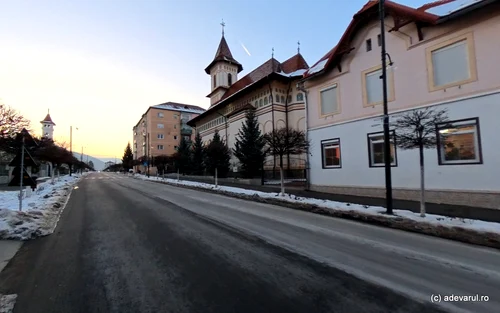
Image 1/12:
Cisnadie Photo Daniel Guță THE TRUTH (12) jpg
Around 1944, the town, with over 5,000 inhabitants at the time, mostly Saxons, had over 130 workshops and small textile factories. In almost every Saxon household there was at least one loom, with families engaged in spinning yarn and making cloth, carpets, bast, blankets and knitwear.
Shortly after the Second World War, the locality became a city, but it would go through the most brutal transformations in its recent history. Numerous Saxon families were expelled or deported to the USSR, and family workshops and factories were confiscated, nationalized and merged into large textile enterprises.
In the years that followed, the number of Saxons, from nearly 4,000 before the war, continued to decline, with many managing to leave the country. With their departure, the traditional craft that defined their community gradually dissipated. The remaining ones came to the attention of the communist authorities, being accused of not collaborating with the new regime. A general hatred against them was maintained by the press loyal to the communist regime in the early years after the Second World War.
Craft workshops, replaced by businesses
The small town of craftsmen has meanwhile turned into an industrial center, with fewer and fewer German families. The old manufactories disappeared, merged into the large enterprise “Textila”, and the traditional houses were surrounded by blocks and workers' dormitories of little comfort, built in haste to house workers from all corners of the country.
A similar phenomenon happened in the town of Avrig in Sibiu, famous for its glass workshops. For the past two centuries, the city's economy has been largely based on the operation of its glass factory, attested as far back as the 17th century, according to some historians. The enterprise was expanded in communism, and the blocks of reduced comfort grew around it and the old hearth of the village.
In Cisnădie, a museum also recalled the long tradition of weavers, preserving the old tools used by the Saxons to process wool and other textiles.
“In our years, at the urging of socialism, the old workshops gathered in three large enterprises: “Textile Factories”, “Red Silk” and “June 11″, all equipped with machinery at the height of the era and the current technique. The fame of Cisnadia carpets crossed the border, reaching Poland, Denmark, Norway, Finland and the USSR; it even reached the land of the enchanted carpet in Iran, until the shores of the distant Land of the Rising Sun, in Japan, or in Latin America”, noted the Flacăra Sibiului newspaper in 1967.
During the communist period, Cisnădie was called the city of textile workers, and its factories had almost 5,000 employees. The carpets woven here were most often sent outside the country, and waiting lists were sometimes made for those that reached the Romanian market.
“Before the Revolution, we worked for the People's House: carpets with a width of 14 meters and very long lengths. We made them in pieces, because there were no such wide looms, and then they were sewn in the swimming pool in Sibiu. We also made gifts for Elena and Nicolae Ceaușescu”. recalled Nicolae Dumbravă, former employee of the Covtex enterprise from Cisnădie.
In the mid-1990s, the Covtex textile factory, with 2,500–3,000 employees, was privatized, and by the end of the first decade after the Revolution it went bankrupt.
The city of Cisnădie, helped by Sibiu to expand
The former town of textile workers is now sought after by tourists for its historic centre, reminiscent of the Saxon community. The medieval church is the stopping place of most of the travelers. In front of it, the equestrian statue of Mihai Viteazu completes the picture of the square. A textile museum can also be visited here, dedicated to the tradition that made the city famous in the past. Around the fortified church, the streets wind among old, but imposing houses, specific to the architecture of the Transylvanian Saxons.
A few blocks away, the picturesque landscape changes. The concrete blocks, many dilapidated, and the halls of former enterprises remind of the communist period of the city. In the vicinity of Cisnădia, other picturesque settlements, such as Rășinari, Boita, Şelimbăr, Cisnădioara and Sadu, have preserved their historical charm of the past.
The city of Cisnădie is currently almost adjacent to Sibiu, and the new industrial platforms opened after 1990 in the south of Sibiu ensure its development. Its population has grown by nearly 60 percent in the past decade, even as the number of Saxons has dwindled to a few dozen families.